

class: Primary Two
Term: first Term
Subject: History
Curriculum Theme:
Previous Lesson:
Topic: Indigenous People Of The State
Content/Learning Area: Identifying artifacts with their names
Time Allocation: 40 minutes
performance Objectives
By the end of the lesson,pupils should be able to:
- Cognitive Domain:
1. Identify various past artifacts from Nigeria.
2. explain the significance of past artifacts in understanding the past.
3.Describe at least three different historical artifacts and their cultural context.
- Psychomotor Domain:
1. Draw or sketch simple representations of historical artifacts.
- Affective Domain:
1.Show gratitude for nigeria’s rich cultural heritage.
2. Demonstrate an interest in learning more about history.
- Social Domain:
1. Participate actively in class discussions.
2. Work collaboratively with peers in group activities (if applicable).
Reference Materials
- 9 – Years Basic Education Curriculum
- Abuja Educational Resource Center scheme of work
- NAPPS National Unified Scheme of Work
- Online Details
- Relevant Textbooks
instructional Materials
To deliver this lesson, the teacher will use the following materials:
- Pictures or images of various historical artifacts.
- Whiteboard or chart paper.
- Markers or crayons.
Rationale for the Lesson
Understanding historical artifacts helps pupils connect with their heritage and appreciate the achievements of past generations. This lesson lays a foundation for future learning about Nigerian history and culture.
Prerequisite/Previous Knowledge
The teacher will begin by asking pupils what they no about things from the past. The teacher will then introduce the concept of historical artifacts as special objects from long ago that tell stories. A captivating image of a historical artifact will be shown.
Lesson Content
What are Historical Artefacts?
Historical artifacts are objects made by people a long time ago. They help us understand how people lived, what they made, and what was crucial to them.
Examples of Historical Artefacts
Historical artifacts are objects from the past that provide insights into human history and culture. Examples are:
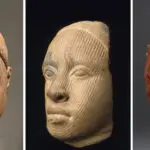
- Nok Terracottas: ancient clay figures with big eyes, made over 2,000 years ago in Nigeria.
- Igbo-Ukwu Bronzes: Shiny metal artworks from Nigeria, showing ancient skills in making pots and jewelry.
- Benin Bronzes: Metal plaques and sculptures that decorated a king’s palace, telling stories of their history.
- ife terracottas and Bronzes: Realistic-looking people made of clay and metal from Ife, Nigeria, created between 800 and 500 years ago.
- Owo Terracottas: Unique clay artworks from Owo, Nigeria, influenced by Ife but with their own style.
- esie Soapstone Figures: Over a thousand stone statues found in esie, Nigeria, the largest collection of such carvings in Africa.
- tsoede Bronzes: Large, detailed sculptures made by the Nupe people in Nigeria, showing their artistry.
- Dufuna Canoe: The oldest boat discovered in Nigeria, made from a single tree trunk about 8,000 years ago.
- Queen Idia Mask: A beautiful ivory mask of the Benin Empire’s queen mother, symbolizing power and beauty.
- Sungbo’s Eredo: Ancient system of defensive walls and moats located in present-day Ogun State, Nigeria.
- Osun-Osogbo Sacred Grove: A sacred grove along the banks of the Osun River, located just outside the city of Osogbo, Nigeria.
These artifacts show Nigeria’s rich history and cultural achievements.
Teaching Methods
To deliver this lesson, the teacher will adopt the following methods: Discussion, Visual aids, Question and answer
Instructional Procedures
To deliver this lesson, the teacher will adopt the following steps:
Step 1: Introduction
Time: 5 minutes
Teaching Skill: Set Induction
Teacher’s Activity: Introduces the topic, engages pupils with questions about the past.
Pupils’ Activity: Respond to questions,share prior knowledge.
Step 2: description of Key Concepts
Time: 10 minutes
Teaching Skill: Explaining, defining
Teacher’s Activity: Defines historical artifacts, provides examples.
pupils’ Activity: Listen attentively,ask clarifying questions.
Step 3: Demonstration/guided Practice
Time: 10 minutes
Teaching Skill: Demonstrating,guiding
Teacher’s Activity: Shows pictures of artifacts,explains their significance.
Pupils’ Activity: Observe, participate in discussions.
Step 4: Independent Practice
Time: 5 minutes
teaching Skill: Monitoring, providing feedback
Teacher’s Activity: Asks pupils to identify artifacts from images.Pupils’ Activity: Identify artifacts, answer questions.
Step 5: Note-Taking
Time: 5 minutes
Teaching Skill: Guiding note-taking
Teacher’s Activity: Guides pupils in taking notes on key artifacts.Pupils’ Activity: Take notes on key artifacts.
Step 6: Evaluation/review
Time: 5 minutes
Teaching Skill: Questioning, summarizing
Teacher’s Activity: Asks review questions, summarizes key points.
Pupils’ Activity: Answer review questions, participate in summary.
Objective-aligned checks:
- Identify various past artifacts from Nigeria.
- explain the significance of past artifacts in understanding the past.
- Describe at least three different historical artifacts and their cultural context.
Step 7: Conclusion
Time: 5 minutes
Teaching Skill: Summarizing, assigning homework
Teacher’s Activity: Reviews key artifacts, assigns homework.
Pupils’ Activity: Participate note homework.
Lesson Keywords
- Artifact – An object made by a human being,typically an item of cultural or historical interest.
- Terracotta – A type of earthenware, typically brownish-red in color and unglazed, used for pottery and building.
- Bronze – An alloy of copper and tin.
- Sculpture – The art of making two- or three-dimensional representative or abstract forms, especially by carving stone or wood or by casting metal or plaster.
- Heritage – property that is or might potentially be inherited; an inheritance.
Lesson Evaluation
to evaluate the learning, the teacher asks pupils to:
- Name three historical artifacts discussed in class.
- Why are historical artifacts vital?
- Describe one artifact and what it tells us about the people who made it.
- How can we preserve historical artifacts?
- Why is it critically important to learn about our country’s history?
Assignment/Homework
- Draw yoru favorite historical artifact.
- Ask your parents or grandparents about old objects they have at home and share their stories in the next class.
Differentiation
- For slower learners: Provide one-on-one assistance and simplified explanations.
- For advanced learners: Encourage further research and exploration of specific artifacts.
- For visual/auditory/kinesthetic learners: Use a variety of visual aids, discussions, and hands-on activities to cater to different learning styles.
note for Teachers
Ensure to bring visual aids to class.Encourage pupils to participate actively by asking questions and sharing their thoughts. Be patient and provide clear explanations to support understanding.
Community Join the conversation Open discussion +