

Class: Primary Two
Term: First Term
Subject: History
Curriculum Theme:
Previous Lesson: Indigenous People Of The State, VIII, Important Places and Values
Topic: Indigenous People Of The State
Content/Learning Area: Location, Norms, types of norms
time Allocation: 40 minutes
Performance Objectives
By the end of the lesson, pupils should be able to:
- Cognitive Domain:
1. Identify the location of Indigenous People Of the state.
2. Define norms and their importance.
3. Differentiate between folkways, mores, taboos, and laws.
- Affective Domain:
1. Show respect for the cultural norms of indigenous people Of The State.
- Psychomotor Domain:
1. Point to the location of their state on a map.
- Social Domain:
1. Participate actively in class discussions.
Reference Materials
- 9 – Years Basic Education Curriculum
- Abuja educational Resource Centre Scheme of Work
- NAPPS national Unified Scheme of Work
- relevant Textbooks
Instructional Materials
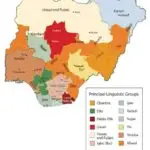
To deliver this lesson, the teacher will use the following materials: A map of the state, charts showing different types of norms, pictures depicting cultural practices.
Rationale for the Lesson
Understanding the Indigenous People Of the State fosters recognition for diverse cultures and promotes social harmony. This knowledge is crucial for building a cohesive society and understanding history.
Prerequisite/Previous Knowledge
The teacher will start by asking pupils where they live and what makes their community unique. A brief discussion about community rules will follow,leading into the lesson on Indigenous People Of the State.
Lesson Content
Indigenous People Of The State
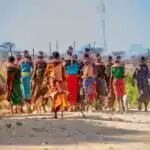
The Indigenous People Of The State are the original inhabitants of a specific region, living there for many generations and passing down their traditions and culture.
Location
Location is the exact place where something or someone is found. Such as,the location of your school is [insert the location of the school].
Norms
Norms are the accepted rules or behaviors in a society or community that people follow to maintain harmony. These include greetings,public behavior,and interactions.
Types of Norms
Norms are the accepted rules or behaviors in a society or community that people follow to maintain harmony. these include:
- Folkways: These are everyday customs and behaviors considered normal and polite. Examples include greetings, dress, and table manners. In some cultures, removing shoes before entering a home is a folkway.
- Mores: These are more crucial norms based on moral values and beliefs. stealing and lying are examples of violating mores.
- Taboos: These are unacceptable behaviors in a culture. Examples include eating certain foods or performing specific actions. Incest and cannibalism are examples of taboos.
- Laws: These are formal rules enforced by the government to protect people and property and maintain order. Driving without a license is against the law. Laws protect us.
Teaching methods
To deliver this lesson, the teacher will adopt the following methods: Discussion, Question and Answer, Use of visual Aids.
Instructional Procedures
To deliver this lesson, the teacher will adopt the following steps:
Step 1: Introduction
Time: 5 minutes
teaching Skill: Set Induction
TeacherS Activity: Asks pupils about their communities and the rules they follow.
Pupils’ Activity: Respond to the teacher’s questions and share their experiences.
Step 2: Description of Key Concepts
Time: 10 minutes
Teaching skill: Explanation
Teacher’s Activity: Explains the meaning of “Indigenous People Of The State,” “location,” and “norms.” Uses the map and charts to illustrate.
Pupils’ Activity: Listen attentively and ask clarifying questions.
Step 3: Demonstration/Guided Practice
Time: 10 minutes
Teaching Skill: Demonstration
Teacher’s Activity: Shows examples of folkways, mores, taboos, and laws using pictures and real-life scenarios.
Pupils’ Activity: Participate in discussions and provide examples from their own experiences.
Step 4: independent Practice
Time: 5 minutes
Teaching Skill: Guided Practice
Teacher’s Activity: Guides pupils in identifying types of norms in given scenarios.
Pupils’ Activity: Work individually or in pairs to complete the activity.
Step 5: Note-Taking
Time: 5 minutes
Teaching Skill: Note-Taking
Teacher’s Activity: Guides pupils in taking notes on key concepts.
Pupils’ Activity: Write down crucial points in their notebooks.
Step 6: Evaluation/Review
Time: 5 minutes
Teaching Skill: Questioning
Teacher’s Activity: Asks evaluation questions to assess understanding.
Pupils’ activity: Answer the evaluation questions.
Objective-aligned checks:
- Identify the location of Indigenous People Of the state.
- Define norms and their importance.
- Show respect for the cultural norms of indigenous people Of The State.
Step 7: Conclusion
Time: 5 minutes
Teaching Skill: Summarizing
Teacher’s Activity: Summarizes the key concepts and assigns homework.
Pupils’ Activity: Listen to the summary and note the homework assignment.
Lesson Keywords
- Indigenous – Native or original to a place.
- Norms – Accepted rules or behaviors.
- Folkways – Everyday customs.
- Mores – Important norms based on moral values.
- taboos – Unacceptable behaviors.
- Laws – formal rules enforced by the government.
Lesson Evaluation
To evaluate the learning,the teacher asks pupils to:
- Can you point to your state’s location on the map?
- Explain what folkways are and give an example.
- Name one taboo in your society and explain why it’s considered a taboo.
- What is the importance of norms in a society?
- Can you give an example of a law in your community?
Assignment/Homework
- Research and write about a specific norm in your community.
- List three examples of folkways you observe in your daily life.
- Explain the difference between mores and laws.
Differentiation
- For slower learners: Provide one-on-one assistance and simplified explanations.
- For advanced learners: Encourage them to research and present details on specific Indigenous People Of The State.
- For visual/auditory/kinesthetic learners: Use visual aids, discussions, and hands-on activities to cater to different learning styles.
Note for Teachers
Ensure to use local examples and visual aids to make the lesson relatable and engaging for the pupils. Encourage active participation and provide constructive feedback.
Community Join the conversation Open discussion +