

Class: Primary Six
Term: First Term
Subject: National Values Education
Curriculum Theme: security Education
Previous Lesson: Concept Of Personal Security
Topic: Personal Security Precautions
Content/Learning Area: Precautions for Personal Security
Time Allocation: Not Specified
Performance Objectives
By the end of the lesson, pupils should be able to:
- Cognitive Domain:
– List five precautions to take in personal security.
- Affective Domain:
– Show awareness of the importance of personal security.
- Psychomotor Domain:
– Demonstrate one safety precaution that ensures personal security.
- Social Domain:
– Collaborate with peers to discuss ways to protect themselves and their neighbors.
Reference Materials
- 9 – Years Basic Education Curriculum
- Abuja Educational Resource Center Scheme of work
- NAPPS National Unified Scheme of Work
- Online Facts from UCLA Police Department – Personal safety Tips
- Relevant Textbooks
Instructional Materials
To deliver this lesson, the teacher will employ the help of the following materials:
- Flashcards with images of safety precautions
- Charts showing neighborhood watch programs
- Videos or animations on personal safety measures
- A whistle (as a security signal)
Rationale for the Lesson
This lesson is vital for equipping pupils with practical safety measures. Knowing how to stay safe empowers them to make responsible decisions and contributes to a safer community.
Prerequisite/Previous Knowledge
Pupils have basic knowledge of safety rules at home and school.
Lesson Content
Precautions To Take In Personal Security
We must take precautions to stay safe. This involves being aware of our surroundings and knowing how to react in risky situations.
Precautions to take in personal security:
The following are precautions to take in personal security:
- Be aware of your surroundings: Always pay attention to your habitat.
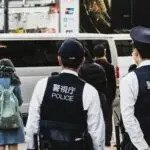
- Report suspicious activities: Tell a grown-up or the police if you see something strange.
- Stay in groups: Walking with friends or family is safer,especially at night.
- Use security tools: Carry a whistle or alarm to call for help.
- Lock doors and windows: Keep your home secure by locking doors and windows.
- Avoid dark or isolated places: Stay in well-lit and populated areas to reduce risk.
- Keep personal information private: Do not share your address, phone number, or other sensitive details with strangers.
- Trust your instincts: If a situation feels unsafe, remove yourself from it promptly.
Teaching Methods
To deliver this lesson, the teacher will adopt the following methods: Question and answer, explanation, presentation, group work, and note-taking.
Instructional Procedures
To deliver this lesson, the teacher will adopt the following steps:
Step 1: Introduction
Time: 5 minutes
Teaching skill: Set Induction
TeacherS Activity: Asks open-ended questions about safety.
Pupils’ Activity: Respond to questions, sharing their experiences.
step 2: Explanation of Key Concepts
Time: 10 minutes
Teaching Skill: Explaining
Teacher’s Activity: Explains five key precautions for personal security using visual aids.
Pupils’ Activity: Listen attentively and observe visual aids.
Step 3: Presentation/guided Practice
Time: 7 minutes
Teaching skill: Demonstrating
Teacher’s Activity: Demonstrates the use of a whistle as a safety tool.
Pupils’ Activity: Imitate the teacher’s actions.
Step 4: Self-reliant Practice
Time: 8 minutes
Teaching Skill: Facilitating group work
Teacher’s activity: Guides pupils in group discussions about community safety.
Pupils’ Activity: Discuss and share ideas within their groups.
Step 5: note-Taking
Time: 5 minutes
Teaching Skill: Note-taking
Teacher’s Activity: Guides pupils in writing key points in their notebooks.
Pupils’ Activity: Copy important notes.
Step 6: Evaluation/Review
Time: 3 minutes
Teaching Skill: Questioning
Teacher’s Activity: Asks review questions to assess understanding.
Pupils’ Activity: Answer questions.
Step 7: Conclusion
Time: 2 minutes
Teaching skill: Summarizing
Teacher’s Activity: Summarizes the lesson and highlights key takeaways.
Pupils’ Activity: Listen and reflect on the lesson.
Lesson Keywords
- Personal Security – Measures taken to protect oneself from harm.
- Precautions – Actions taken in advance to prevent something dangerous or unpleasant from happening.
- Suspicious activities – Unusual or questionable actions that may indicate a potential threat.
- awareness – Being conscious of one’s surroundings and potential dangers.
- Safety Tools – Items used to enhance personal security, such as whistles or alarms.
Lesson Evaluation
To evaluate the learning, the teacher asks pupils to:
- List five precautions for personal security.
- explain why staying in groups is important for safety.
- Demonstrate how to use a whistle during an emergency.
- What should you do if you notice suspicious activity in your neighborhood?
- Why is it important to lock doors and windows at home?
Assignment/Homework
- Research and write down three additional safety measures not discussed in class.
- Discuss with your family the safety precautions you can take together at home and in your community.
- Create a poster illustrating the importance of personal security and display it in your home.
Differentiation
- For slower learners: Provide one-on-one assistance and simplified explanations.
- For advanced learners: Advanced pupils can research additional safety measures and present their findings to the class.
- For visual/auditory/kinesthetic learners: Use visual aids, auditory cues, and hands-on activities to cater to different learning styles.
Note for Teachers
Encourage pupils to share personal experiences related to safety, creating a supportive and interactive learning environment. Emphasize the importance of reporting any concerns to trusted adults.
Community Join the conversation Open discussion +