

Class: Junior Secondary School 2 (JSS2, JSS 2)
Term: 1st Term
Week: 10
Age: 13 years
Duration: 45 minutes
Subject: National Values Education
Curriculum Theme: Civic Education
Previous Lesson:
Topic: Nigeria As a Federation
Subject Matter: Meaning of a Federation and Nigeria as a Federation during the colonial era, Need for a Federation, National Integrity, Unity in diversity and controlling activities of state.
Specific Objectives
By the end of the lesson, pupils should be able to:
- Cognitive Domain:
(a) Explain Nigeria as a federation during the colonial era.
(b) Identify the need for a federation in Nigeria.
(c) State ways of promoting national integrity and unity in diversity. - Affective Domain:
(a) Appreciate the importance of unity in Nigeria despite differences in culture and ethnicity.
(b) Develop respect for national integrity and shared values. - Psychomotor Domain:
(a) Demonstrate through group discussions how to uphold national unity.
(b) Create posters or slogans that encourage unity in diversity. - Social Domain:
(a) Work cooperatively in groups to discuss controlling activities of states in a federation.
(b) Share ideas on how to live harmoniously in a diverse society.
Reference Materials
The following resources was used in planning this lesson:
- 9 Years Basic Education Curriculum
- Lagos State Unified Scheme of work for Junior Secondary Schools
- Wikipedia – Federation
- Relevant Textbooks
Instructional Materials
The teacher will teach this lesson with the aid of:
- Map of Nigeria showing regions and states
- Chart illustrating Nigeria’s federal structure
- Flashcards showing key concepts like integrity, unity, federation
- Short video/documentary on Nigeria’s colonial history
- Whiteboard and markers
Rationale for the Lesson
The lesson enables pupils to understand the nature of Nigeria’s federal system, appreciate the importance of unity in diversity, and recognize the role of integrity in national development.
Prerequisite/Previous Knowledge
Pupils have basic knowledge of Nigeria’s political history, colonial experience, and government structure as introduced in earlier civic education lessons.
Lesson Content/Board Summary
Nigeria as a Federation
Nigeria is a federation, meaning power is shared between a central government and state governments. During the colonial era, Nigeria was brought together as one country through the amalgamation of 1914 by Lord Lugard. This laid the foundation for federalism.
The following are features of Nigeria as a federation during the colonial era:
- The country was divided into regions (North, East, West, later Mid-West).
- Each region had its own government and legislature.
- The central government handled matters like defense and foreign relations.
- Resources were controlled largely by the regions.
Need for a Federation
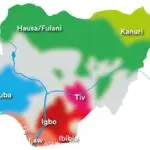
Nigeria is made up of many ethnic groups, cultures, and languages. A federal system helps in managing these diversities by giving powers to both the central and state governments.
The following are the needs for a federation in Nigeria:
- To bring different ethnic groups together under one government.
- To promote peaceful coexistence among diverse people.
- To allow states manage their local affairs.
- To prevent domination of one group over others.
- To encourage balanced development across regions.
National Integrity
National integrity means honesty, fairness, and transparency in managing the affairs of the country. It involves leaders and citizens acting with truthfulness for the good of Nigeria.
The following are ways of promoting national integrity:
- Obeying the laws of the land.
- Leaders being accountable and transparent.
- Avoiding corruption and dishonesty.
- Promoting justice and fairness.
- Respecting the rights of others.
Unity in Diversity
Unity in diversity means living peacefully and working together despite differences in ethnicity, culture, or religion. Nigeria is made up of more than 250 ethnic groups, yet we remain one nation.
The following are ways to promote unity in diversity:
- Respecting other people’s culture and traditions.
- Celebrating national events together like Independence Day.
- Promoting tolerance and peaceful coexistence.
- Using common symbols like the flag, anthem, and pledge.
- Encouraging inter-ethnic marriages and friendships.
Controlling Activities of States in a Federation
In a federation, the central government ensures that state governments follow national laws and policies. This prevents abuse of power and ensures unity.
The following are ways the activities of states are controlled in a federation:
- The constitution clearly states the powers of the federal and state governments.
- Federal laws override conflicting state laws.
- The judiciary settles disputes between the central and state governments.
- Federal allocations are used to support state projects.
- National security is controlled by the central government.
Teaching Methods/Instructional Techniques:
Discussion, Lecture, Explanation, Storytelling, Question and Answer, Group Work, Visual Aids
Instructional Procedures
To deliver this lesson, the teacher will adopt the following steps:
Step 1: Introduction
Time: 5 minutes
Teaching Skill: Set Induction
Teacher’s Activity: Teacher recalls the previous lesson by asking pupils questions on Nigeria’s system of government before independence. Teacher introduces the topic using the map of Nigeria.
Pupils’ Activity: Pupils respond to questions and observe the map.
Learning Point: Pupils are prepared to understand Nigeria as a federation.
Step 2: Nigeria as a Federation
Time: 8 minutes
Teaching Skill: Explanation
Teacher’s Activity: Teacher explains Nigeria as a federation during the colonial era and highlights its features.
Pupils’ Activity: Pupils listen, take notes, and ask questions.
Learning Point: Pupils understand the foundation of Nigeria’s federal system.
Step 3: Need for a Federation
Time: 7 minutes
Teaching Skill: Discussion
Teacher’s Activity: Teacher discusses reasons Nigeria needs a federal system, using examples from ethnic and cultural diversity.
Pupils’ Activity: Pupils contribute examples and share their understanding.
Learning Point: Pupils appreciate why Nigeria operates a federal system.
Step 4: National Integrity, Unity in Diversity, and State Control
Time: 15 minutes
Teaching Skill: Explanation and Group Work
Teacher’s Activity: Teacher explains the importance of national integrity, unity in diversity, and how state activities are controlled. Teacher divides class into groups to discuss practical ways of promoting unity.
Pupils’ Activity: Pupils participate in group discussions and share points.
Learning Point: Pupils understand how to uphold integrity, unity, and state control in Nigeria.
Step 5: Note-Taking
Time: 5 minutes
Teaching Skill: Explanation
Teacher’s Activity: Teacher dictates or writes the board summary for pupils to copy.
Pupils’ Activity: Pupils write notes in their exercise books.
Learning Point: Pupils have a written record of the lesson.
Step 6: Evaluation/Review
Time: 3 minutes
Teaching Skill: Questioning
Teacher’s Activity: The teacher evaluates the learning by asking the following questions:
- State two features of Nigeria as a federation during the colonial era.
- Mention three reasons Nigeria needs a federation.
- List two ways of promoting national integrity.
- Give two ways unity in diversity can be promoted.
- State two ways the central government controls state activities.
Pupils’ Activity: Pupils respond to the evaluation questions.
Learning Point: Pupils demonstrate understanding of the lesson.
Step 7: Conclusion
Time: 2 minutes
Teaching Skill: Reinforcement
Teacher’s Activity: Teacher summarizes the lesson and encourages pupils to practice unity and integrity in their daily lives.
Pupils’ Activity: Pupils listen and reflect.
Learning Point: Pupils are encouraged to live as responsible citizens.
Lesson Keywords
- Federation – a system where power is shared between central and state governments
- Integrity – being honest and truthful in actions
- Unity – being together as one despite differences
- Diversity – variety of ethnic, cultural, and religious differences
- Constitution – the supreme law guiding a country
Differentiation
Teacher simplifies explanations with real-life examples for slow learners, while advanced learners are given group leadership roles to guide discussions.
Note for teachers using this lesson plan
Use maps, stories, and group work to make the lesson engaging. Encourage participation from all pupils and ensure examples reflect Nigeria’s cultural diversity.


Community Join the conversation Open discussion +