

Note for teachers using this lesson plan
This lesson introduces Senior Secondary 1 Physics students to the foundational concepts of fundamental and derived quantities and their respective SI units. Teachers should prepare by gathering the listed measuring instruments to allow for practical demonstrations and hands-on activities. Emphasize the importance of SI units for consistency in scientific measurements. By the end of the lesson, learners should be able to confidently identify, define, and differentiate between these quantities and their units.
Class: SS 1
Term: First Term
Week: 1
Age: 15 years
Duration: 60 minutes
Subject: Physics
Curriculum Theme: Interaction of matter, space, and time
Focal competence: Identifying the fundamental and derived quantities and their units
Key competencies/values: Critical Thinking; Collaboration
Skills:
- Identifying fundamental and derived quantities and their units.
- Converting units from m.k.s to SI unit
- Measuring some physical quantities using meter rule, balances, stop watch, etc
Previous Lesson:
Topic: Fundamental And Derived Quantities And Units
Subject Matter: Meaning of fundamental quantities
Specific Objectives
By the end of the lesson, pupils/students should be able to:
Cognitive Domain
- Define fundamental quantities and their corresponding units.
- Define derived quantities and their corresponding units.
- Differentiate between fundamental and derived quantities.
- Identify different simple measuring instruments like meter rule, stop watch, and spring balance.
- Relate shapes to charge distribution.
Psychomotor Domain
- Convert units from m.k.s to SI units.
- Use a meter rule, balances, and a stopwatch to measure some physical quantities.
Reference Materials
The following resources were used in planning this lesson:
- 2025 New Revised Senior Secondary Education Curriculum (SSEC)
- Relevant State Unified Scheme of Work
- The HeadTeacher Scheme of work For The New Revised Senior Secondary Education Curriculum (SSEC)
- A suitable Physics textbook for Senior Secondary 1
Instructional Materials
The teacher will teach this lesson with the aid of:
- Meter rule
- Tapes
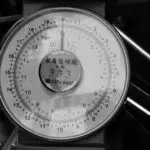
- Spring balance
- Chemical balance
- Venire calipers
- Stopwatch
- Charts showing examples of fundamental and derived quantities and their units
Rationale for the Lesson
This lesson provides the foundational understanding of physical quantities, which is essential for all subsequent topics in Physics. It enables students to accurately describe and measure phenomena in the physical world, fostering precision and critical thinking. Understanding these concepts is crucial for performing experiments and solving problems in science and engineering.
Prerequisite/Previous Knowledge
Students should have a basic understanding of measurement from their Junior Secondary School science classes.
Lesson Content/Board Summary
Fundamental and Derived Quantities and Units
Physical Quantities
A physical quantity is any quantity that can be measured. Physical quantities are classified into two main types: fundamental quantities and derived quantities.
Fundamental Quantities
Fundamental quantities are basic physical quantities that are independent of other physical quantities and cannot be expressed in terms of other physical quantities. They form the building blocks for all other physical quantities.
The corresponding units for fundamental quantities are called fundamental units.
Examples of fundamental quantities and their SI units:
- Length (L): The measure of distance or extent in space. Its SI unit is the metre (m).
- Mass (M): The amount of matter contained in a body. Its SI unit is the kilogram (kg).
- Time (T): The duration of an event. Its SI unit is the second (s).
- Electric Current (I): The rate of flow of electric charge. Its SI unit is the Ampere (A).
- Temperature ((Theta)): The degree of hotness or coldness of a body. Its SI unit is the Kelvin (K).
- Luminous Intensity (J): The power emitted by a light source in a particular direction. Its SI unit is the Candela (cd).
- Amount of Substance (N): The number of constituent particles (atoms, molecules, ions, etc.) in a substance. Its SI unit is the Mole (mol).
Derived Quantities
Derived quantities are physical quantities that are obtained by combining two or more fundamental quantities through multiplication or division. They depend on fundamental quantities.
The corresponding units for derived quantities are called derived units.
Examples of derived quantities and how they are formed from fundamental quantities:
- Area (A): Length (times) Length. Its SI unit is square metre ((m^2)).
- Volume (V): Length (times) Length (times) Length. Its SI unit is cubic metre ((m^3)).
- Speed (v): Distance (Length) / Time. Its SI unit is metre per second (m/s).
- Density ((rho)): Mass / Volume. Its SI unit is kilogram per cubic metre ((kg/m^3)).
- Force (F): Mass (times) Acceleration (Length / Time(^2)). Its SI unit is Newton (N) or (kg cdot m/s^2).
- Pressure (P): Force / Area. Its SI unit is Pascal (Pa) or (N/m^2).
- Work (W): Force (times) Distance (Length). Its SI unit is Joule (J) or (N cdot m).
Distinction Between Fundamental and Derived Quantities
- Fundamental Quantities are independent and cannot be expressed in terms of other quantities, while Derived Quantities depend on fundamental quantities and are formed by combining them.
- There are seven fundamental quantities, but there are numerous derived quantities.
- Fundamental units are basic and cannot be broken down further, while derived units are combinations of fundamental units.
SI Units (Système International d’Unités)
The International System of Units (SI) is the modern form of the metric system and is the most widely used system of measurement. It provides a consistent and coherent set of units for all physical quantities.
Conversion of Units (m.k.s to SI Units)
The m.k.s system (metre-kilogram-second) is a coherent system of units, and its base units for length, mass, and time are the same as the SI base units. Therefore, for these quantities, m.k.s units are already SI units. However, other units might need conversion to SI for consistency.
Note: When converting from smaller units to larger units, divide. When converting from larger units to smaller units, multiply.
Examples of common conversions:
- Length:
- 1 kilometre (km) = 1000 metres (m)
- 1 centimetre (cm) = 0.01 metres (m)
- 1 millimetre (mm) = 0.001 metres (m)
- Mass:
- 1 tonne = 1000 kilograms (kg)
- 1 gram (g) = 0.001 kilograms (kg)
- Time:
- 1 hour = 3600 seconds (s)
- 1 minute = 60 seconds (s)
Measuring Instruments for Physical Quantities
Different instruments are used to measure various physical quantities:
- Length: Meter rule, measuring tape, vernier calipers, micrometer screw gauge.
- Mass: Beam balance, chemical balance, spring balance.
- Time: Stopwatch, clock.
- Temperature: Thermometer.
- Electric Current: Ammeter.
Relationship Between Shapes and Charge Distribution
In electrostatics, the distribution of electric charge on the surface of a conductor depends on its shape. Charges tend to accumulate more at points of higher curvature (sharper points) on a conductor. For a spherical conductor, the charge is uniformly distributed over its surface. For an irregularly shaped conductor, the charge density is highest at the sharpest points.
Teaching Methods/Instructional Techniques
Discussion, Explanation, Question and Answer, Demonstration, Guided Practice, Group Work
Instructional Procedures
Step 1: Introduction
Time: 5 minutes
Teaching Skill: Engaging/Questioning
Teacher’s Activity: The teacher greets the students and asks them to mention some things they can measure in the classroom (e.g., length of desk, time taken to write, mass of a book). The teacher then introduces the topic: Fundamental and Derived Quantities and Units.
Pupils’ Activity: Pupils respond to the questions and listen attentively.
Learning Point: Introduction to measurement
Step 2: Meaning of Fundamental Quantities
Time: 10 minutes
Teaching Skill: Explanation/Definition
Teacher’s Activity: The teacher explains what fundamental quantities are, emphasizing that they are independent and cannot be broken down further. The teacher then lists and explains the seven fundamental quantities (length, mass, time, electric current, temperature, luminous intensity, amount of substance) and their SI units.
Pupils’ Activity: Pupils listen, ask questions for clarification, and note down definitions.
Learning Point: Definition of fundamental quantities
Step 3: Examples of Fundamental Quantities and Units
Time: 10 minutes
Teaching Skill: Demonstration/Illustration
Teacher’s Activity: The teacher uses instructional materials like the meter rule, stopwatch, and chemical balance to demonstrate the measurement of length, time, and mass, highlighting their fundamental nature and SI units. The teacher ensures students understand the symbols for each quantity and unit.
Pupils’ Activity: Pupils observe the demonstrations and identify the instruments and units.
Learning Point: Fundamental quantities and SI units
Step 4: Meaning and Examples of Derived Quantities
Time: 10 minutes
Teaching Skill: Explanation/Derivation
Teacher’s Activity: The teacher explains that derived quantities are formed by combining fundamental quantities. The teacher then gives examples like area, volume, speed, and density, showing how their units are derived from fundamental units (e.g., speed = distance/time, so m/s).
Pupils’ Activity: Pupils listen, take notes, and participate in deriving units for simple derived quantities.
Learning Point: Understanding derived quantities
Step 5: Differentiating Quantities and Unit Conversion
Time: 10 minutes
Teaching Skill: Guided Discussion/Problem Solving
Teacher’s Activity: The teacher guides students in a group discussion to differentiate between fundamental and derived quantities. The teacher then guides students to work in groups to convert units from m.k.s to SI units, providing conversion examples (e.g., cm to m, g to kg, minutes to seconds).
Pupils’ Activity: Pupils engage in group discussions, differentiate quantities, and practice unit conversions in groups.
Learning Point: Differentiation and unit conversion
Step 6: Measuring Instruments and Charge Distribution
Time: 5 minutes
Teaching Skill: Identification/Explanation
Teacher’s Activity: The teacher displays various measuring instruments (meter rule, vernier calipers, spring balance, stopwatch) and asks students to identify them and state what they measure. The teacher also briefly explains the concept of charge distribution on different shapes of conductors, referring to the principle that charge accumulates at sharper points.
Pupils’ Activity: Pupils identify instruments and listen to the explanation on charge distribution.
Learning Point: Measuring tools and charge distribution
Step 7: Evaluation/Review
Time: 5 minutes
Teaching Skill: Questioning/Assessment
Teacher’s Activity: The teacher evaluates the learning by asking the following questions:
- What are fundamental quantities? Give two examples.
- Define derived quantities and give two examples.
- Differentiate between fundamental and derived quantities.
- Convert 500 cm to metres.
- Name two instruments used to measure length.
Pupils’ Activity: Pupils answer orally and in writing.
Learning Point: Assessment of understanding
Step 8: Note-Taking
Time: 10 minutes
Teaching Skill: Guided Writing
Teacher’s Activity: The teacher guides pupils/students to copy the essential Board Summary notes on fundamental and derived quantities and their units into their notebooks.
Pupils’ Activity: Pupils/students copy the notes carefully into their notebooks.
Learning Point: Recording lesson content
Step 9: Conclusion
Time: 5 minutes
Teaching Skill: Summarizing
Teacher’s Activity: The teacher briefly summarizes the lesson by reiterating the importance of fundamental and derived quantities as the basis of all physical measurements and encourages students to practice identifying them and converting units.
Pupils’ Activity: Pupils listen and ask any final questions.
Learning Point: Consolidation of concepts
Continuous Assessment/Further Study
Type: Homework
Instruction: Answer the following questions in your Physics notebook.
- List the seven fundamental quantities and their SI units.
- Give three examples of derived quantities, state their formulas, and show how their units are derived from fundamental units.
- Convert the following to SI units:
- 2.5 hours to seconds
- 500 grams to kilograms
- 1.5 kilometres to metres
- Explain why charges tend to accumulate at sharper points on an irregularly shaped conductor.
Lesson Keywords
- Fundamental Quantities – Basic physical quantities that are independent of others.
- Derived Quantities – Physical quantities formed by combining fundamental quantities.
- SI Units – The International System of Units, a standard system of measurement.
- Metre (m) – SI unit of length.
- Kilogram (kg) – SI unit of mass.
- Second (s) – SI unit of time.
- Ampere (A) – SI unit of electric current.
Differentiation
Support: Provide simpler examples and more guided practice for students struggling with unit conversion. Use visual aids like charts to help them distinguish between fundamental and derived quantities.
Extension: Challenge advanced students to research and present on other derived quantities (e.g., momentum, energy, power) and how their units are derived. They can also explore the historical development of the SI unit system.
Suggested Lesson Videos
For further understanding, students can search on YouTube for:

Community Join the conversation Open discussion +