

Class: Senior Secondary School 1 (SS1, SS 1, SSS1, SSS 1)
Term: 1st Term
Week: 6
Age: 15 years
Duration: 45 minutes
Subject: Physics
Curriculum Theme: Physics
Previous Lesson: Motion, Examples, Contact Force, Force Fields and Friction.
Topic: SPEED AND VELOCITY
Subject Matter: Concept of speed, concept of velocity, uniform speed and non-uniform speed, uniform velocity and non-uniform velocity, distance or displacement-time graph, calculating speed from distance and time, interpreting simple motion graphs
Specific Objectives
By the end of the lesson, pupils should be able to:
Cognitive Domain:
- Define speed and velocity.
- Differentiate between speed and velocity.
- Explain uniform and non-uniform speed and velocity.
- Calculate speed given distance and time.
- Interpret simple distance-time graphs for different types of motion.
Affective Domain:
- Appreciate the importance of understanding speed and velocity in daily activities.
- Show interest in solving problems related to motion.
Psychomotor Domain:
- Measure distance and time accurately using appropriate instruments.
- Plot simple distance-time graphs from given data.
- Calculate speed from measured values.
Social Domain:
- Collaborate with peers to conduct simple experiments.
- Participate actively in class discussions about motion.
Reference Materials
The following resources were used in planning this lesson:
- 9 Years Basic Education Curriculum for Physics (Senior Secondary Education).
- State Unified Scheme of Work for Physics.
- New School Physics by M.W. Anyakoha.
Instructional Materials
The teacher will teach this lesson with the aid of:
- Measuring tape/meter rule
- Stopwatch
- Toy car or ball
- Graph paper
- Ruler
- Chalkboard
Rationale for the Lesson
This lesson helps pupils understand how objects move around them every day. Knowing about speed and velocity enables them to describe and predict motion, which is important for understanding transport, sports, and other real-world events.
Prerequisite/Previous Knowledge
Pupils have a basic understanding of distance, time, direction, and simple graphs from their earlier science classes.
Lesson Content/Board Summary
SPEED AND VELOCITY
Concept of Speed
Speed is the rate at which an object covers distance. It is a scalar quantity, meaning it only has magnitude (size) but no direction.
The formula for speed is:
- Speed = Distance / Time
The SI unit of speed is metres per second (m/s).
Concept of Velocity
Velocity is the rate of change of displacement. It is a vector quantity, meaning it has both magnitude and direction.
The formula for velocity is:
- Velocity = Displacement / Time
The SI unit of velocity is metres per second (m/s), with a specified direction.
Difference between Speed and Velocity
The key differences are:
- Speed is a scalar quantity, while velocity is a vector quantity.
- Speed describes how fast an object is moving, while velocity describes how fast and in what direction an object is moving.
Uniform Speed
An object has uniform speed if it covers equal distances in equal intervals of time, regardless of how small the time intervals are.
Non-Uniform Speed
An object has non-uniform speed (or variable speed) if it covers unequal distances in equal intervals of time, or equal distances in unequal intervals of time.
Uniform Velocity
An object has uniform velocity if it covers equal displacements in equal intervals of time and moves in a constant direction.
Non-Uniform Velocity
An object has non-uniform velocity (or variable velocity) if its speed changes, or its direction of motion changes, or both change.
Calculating Speed from Distance and Time
To calculate speed, divide the total distance covered by the total time taken. Ensure units are consistent (e.g., meters for distance, seconds for time).
Interpreting Simple Motion Graphs (Distance-Time Graphs)
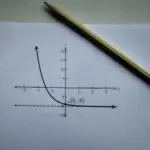
Distance-time graphs show how the distance covered by an object changes over time.
Key interpretations include:
- Horizontal line: The object is at rest (zero speed).
- Straight line sloping upwards: The object is moving at a constant (uniform) speed. A steeper slope means higher speed.
- Curved line sloping upwards: The object is moving with non-uniform speed (accelerating or decelerating).
Teaching Methods/Instructional Techniques
Discussion, Lecture, Demonstration, Question and Answer, Visual Aids
Instructional Procedures
Step 1: Introduction
Time: 5 minutes
Teaching Skill: Set Induction
Teacher’s Activity: The teacher greets the pupils and asks them how they describe the movement of a car, a running athlete, or a falling object. The teacher then introduces the topic “Speed and Velocity” as ways to describe such movements.
Pupils’ Activity: Pupils respond to questions and listen attentively.
Learning Point: Pupils recall prior knowledge of movement and are prepared for the lesson.
Step 2: Concept of Speed
Time: 7 minutes
Teaching Skill: Explanation/Demonstration
Teacher’s Activity: The teacher defines speed as the rate of covering distance and demonstrates by rolling a toy car over a measured distance, timing it with a stopwatch. The teacher guides pupils to calculate the speed. The teacher emphasizes that speed is a scalar quantity.
Pupils’ Activity: Pupils observe the demonstration, participate in measuring and timing, and define speed in their own words.
Learning Point: Pupils understand the definition and calculation of speed.
Step 3: Concept of Velocity
Time: 7 minutes
Teaching Skill: Explanation/Questioning
Teacher’s Activity: The teacher defines velocity as the rate of change of displacement, explaining that it includes both magnitude and direction. The teacher provides examples like “50 km/h North” versus “50 km/h”.
Pupils’ Activity: Pupils listen, ask questions for clarity, and define velocity.
Learning Point: Pupils understand that velocity is a vector quantity with both magnitude and direction.
Step 4: Differentiating Speed and Velocity
Time: 7 minutes
Teaching Skill: Comparison/Discussion
Teacher’s Activity: The teacher leads a discussion on the differences between speed and velocity, using examples to highlight the importance of direction for velocity. The teacher writes the key differences on the board.
Pupils’ Activity: Pupils contribute to the discussion and note the differences between speed and velocity.
Learning Point: Pupils can clearly distinguish between speed and velocity.
Step 5: Uniform and Non-Uniform Speed/Velocity
Time: 6 minutes
Teaching Skill: Explanation/Examples
Teacher’s Activity: The teacher explains uniform and non-uniform speed and velocity with simple examples, such as a car moving at a steady rate on a straight road (uniform velocity) versus a car accelerating or turning (non-uniform velocity).
Pupils’ Activity: Pupils listen, identify examples, and understand the concepts.
Learning Point: Pupils can explain uniform and non-uniform motion.
Step 6: Calculating Speed and Interpreting Distance-Time Graphs
Time: 8 minutes
Teaching Skill: Demonstration/Problem Solving
Teacher’s Activity: The teacher works through a sample calculation of speed on the board. The teacher then draws simple distance-time graphs on the board (at rest, uniform speed, non-uniform speed) and guides pupils on how to interpret them, emphasizing the slope.
Pupils’ Activity: Pupils copy calculations, interpret graphs, and ask questions.
Learning Point: Pupils can calculate speed and interpret basic distance-time graphs.
Step 7: Evaluation/Review
Time: 5 minutes
Teaching Skill: Questioning/Assessment
Teacher’s Activity: The teacher evaluates the learning by asking the following questions:
- Define speed and state its SI unit.
- What is velocity? Is it a scalar or vector quantity?
- State two differences between speed and velocity.
- A car travels 120 meters in 10 seconds. Calculate its speed.
- Describe the motion represented by a horizontal line on a distance-time graph.
Pupils’ Activity: Pupils answer orally and in writing.
Learning Point: Pupils demonstrate understanding of the lesson.
Step 8: Conclusion
Time: 2 minutes
Teaching Skill: Summarization
Teacher’s Activity: The teacher summarizes the main points of the lesson, reiterating the definitions of speed and velocity, their differences, and how to interpret distance-time graphs. The teacher assigns homework: “Draw a distance-time graph for a person walking 5m in 2s, then resting for 3s, then walking another 10m in 5s.”
Pupils’ Activity: Pupils listen to the summary and copy the homework.
Learning Point: Pupils consolidate their learning and prepare for independent practice.
Lesson Keywords
- Speed – The rate at which an object covers distance.
- Velocity – The rate of change of displacement, including direction.
- Scalar quantity – A quantity that has only magnitude.
- Vector quantity – A quantity that has both magnitude and direction.
- Uniform motion – Motion with constant speed or velocity.
- Non-uniform motion – Motion with changing speed or velocity.
- Distance-time graph – A graph showing how distance changes over time.
Differentiation
For pupils who grasp concepts quickly, the teacher can introduce problems involving average speed or ask them to predict the motion from a more complex graph. For pupils needing more support, the teacher can provide simpler calculations and pre-drawn graphs to interpret, offering one-on-one guidance during practical activities.
Note for teachers using this lesson plan
Ensure that pupils actively participate in the measurement and calculation activities to gain practical experience. Emphasize the real-world applications of speed and velocity to make the lesson more relatable. Encourage questions and peer-to-peer learning during graph interpretation.


Community Join the conversation Open discussion +