

Class: Senior Secondary School 2 (SS2 / SSS2)
Term: 1st Term
Week: 1
Age: 16 years
Duration: 45 minutes
Subject: Technical Drawing
Curriculum Theme: Geometric Constructions
Previous Lesson: .
Topic: SPECIAL CURVES
Subject Matter: Meaning of special curves (locus definition and idea of paths traced by moving points), practical applications of special curves (parabola in architraves, hyperbola in engineering forms, involutes in gears, cycloids in motion paths)
Specific Objectives
By the end of the lesson, pupils should be able to:
Cognitive Domain:
- Define locus and explain the meaning of special curves.
- Identify various types of special curves.
- State practical applications of parabola, hyperbola, involute, and cycloid.
Affective Domain:
- Appreciate the importance of special curves in engineering and design.
- Show interest in exploring the properties of different curves.
Psychomotor Domain:
- Sketch basic representations of special curves.
- Identify examples of special curves in real-world objects.
Social Domain:
- Participate actively in discussions about special curves.
- Collaborate with peers to identify applications of special curves.
Reference Materials
The following resources were used in planning this lesson:
- Senior Secondary Schools Education Curriculum
- State Unified Scheme of Work
- Technical Drawing for Senior Secondary Schools by P.N. Okeke
Instructional Materials
The teacher will teach this lesson with the aid of:
- Models of objects with special curves (e.g., parabolic dish, gear wheel)
- Charts showing different special curves and their applications
- Posters illustrating the formation of special curves
Rationale for the Lesson
This lesson helps pupils understand the fundamental concepts of special curves, which are essential in various fields of engineering, architecture, and design. Knowledge of these curves enables pupils to better interpret and create technical drawings used in practical applications.
Prerequisite/Previous Knowledge
Pupils should have basic knowledge of geometric shapes, points, lines, and simple drawing instruments.
Lesson Content/Board Summary
SPECIAL CURVES
1. Meaning of Locus
Locus refers to the path traced by a point moving according to a given rule or condition. For example, a circle is the locus of a point moving at a fixed distance from a fixed point.
2. Meaning of Special Curves
Special curves are geometric curves that are formed by the locus of a point moving under specific conditions. They are distinct from basic geometric shapes like circles and straight lines and have unique properties and applications in engineering and design.
3. Examples and Practical Applications of Special Curves
The following are common special curves and their applications:
-
Parabola – This curve is formed when a point moves such that its distance from a fixed point (focus) is equal to its distance from a fixed straight line (directrix).
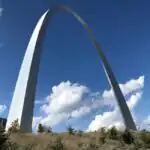
- Applications: Architraves, satellite dishes, car headlights, bridge arches, solar concentrators.
-
Hyperbola – This curve is formed when a point moves such that the difference of its distances from two fixed points (foci) is constant.
- Applications: Cooling towers in power plants, gear designs, navigation systems (LORAN), sound wave propagation.
-
Involute – This curve is the path traced by the end of a string as it is unwound from a circle or polygon, keeping the string taut.
- Applications: Tooth profiles of gears (involute gears), cam profiles, design of cutting tools.
-
Cycloid – This curve is the path traced by a point on the circumference of a circle as it rolls along a straight line without slipping.
- Applications: Design of internal combustion engine valves, pendulum clocks, paths of rolling objects.
Teaching Methods/Instructional Techniques
Discussion, Lecture, Demonstration, Question and Answer, Visual Aids
Instructional Procedures
Step 1: Introduction
Time: 5 minutes
Teaching Skill: Set Induction
Teacher’s Activity: The teacher greets the pupils, reviews the previous lesson briefly, and then introduces the topic “Special Curves” by asking pupils to identify curved shapes in the classroom or everyday objects.
Pupils’ Activity: Pupils respond to greetings, recall previous knowledge, and identify various curved shapes.
Learning Point: Pupils are prepared for the lesson and connect to prior knowledge.
Step 2: Explanation of Locus
Time: 7 minutes
Teaching Skill: Explanation/Definition
Teacher’s Activity: The teacher explains the concept of locus, using simple examples like a circle as the locus of a point equidistant from a fixed point.
Pupils’ Activity: Pupils listen attentively, ask questions for clarification, and state the definition of locus.
Learning Point: Pupils understand the meaning of locus.
Step 3: Explanation of Special Curves
Time: 7 minutes
Teaching Skill: Explanation/Demonstration
Teacher’s Activity: The teacher explains what special curves are, contrasting them with basic geometric shapes, and shows charts illustrating their general forms.
Pupils’ Activity: Pupils observe the charts and listen to the explanation, noting the differences.
Learning Point: Pupils grasp the concept of special curves.
Step 4: Parabola and its Applications
Time: 7 minutes
Teaching Skill: Illustration/Discussion
Teacher’s Activity: The teacher explains the parabola, its formation, and uses models and charts to show its practical applications in architraves, satellite dishes, and headlights.
Pupils’ Activity: Pupils identify the parabola in the models and charts and discuss its uses.
Learning Point: Pupils understand the parabola and its real-world relevance.
Step 5: Hyperbola and its Applications
Time: 7 minutes
Teaching Skill: Illustration/Discussion
Teacher’s Activity: The teacher explains the hyperbola, its formation, and shows examples of its applications in cooling towers and gear designs using visual aids.
Pupils’ Activity: Pupils observe the illustrations and discuss the applications of the hyperbola.
Learning Point: Pupils understand the hyperbola and its engineering applications.
Step 6: Involutes and Cycloids and their Applications
Time: 7 minutes
Teaching Skill: Explanation/Demonstration
Teacher’s Activity: The teacher explains involutes and cycloids, demonstrating their formation with simple analogies or diagrams, and discusses their applications in gears, cams, and motion paths.
Pupils’ Activity: Pupils listen, observe the demonstrations, and note the applications.
Learning Point: Pupils understand involutes, cycloids, and their practical uses.
Step 7: Evaluation/Review
Time: 5 minutes
Teaching Skill: Questioning/Assessment
Teacher’s Activity: The teacher evaluates the learning by asking the following questions:
- Define locus.
- What are special curves?
- Mention two practical applications of a parabola.
- State one application of an involute curve.
- List two examples where a hyperbola is used.
Pupils’ Activity: Pupils answer orally and in writing.
Learning Point: Pupils demonstrate understanding of the lesson.
Step 8: Conclusion
Time: 2 minutes
Teaching Skill: Summarization
Teacher’s Activity: The teacher summarizes the key points of the lesson on special curves and their applications, then assigns relevant homework.
Pupils’ Activity: Pupils listen to the summary and copy the assigned homework.
Learning Point: The lesson is reinforced, and pupils are given follow-up tasks.
Lesson Keywords
- Locus – The path traced by a moving point under specific conditions.
- Special Curves – Geometric curves formed by the locus of a point under specific rules.
- Parabola – A curve where any point is equidistant from a fixed point (focus) and a fixed line (directrix).
- Hyperbola – A curve where the difference of the distances from two fixed points (foci) is constant.
- Involute – The curve traced by the end of a taut string unwound from a circle or polygon.
- Cycloid – The curve traced by a point on the circumference of a circle rolling along a straight line.
Differentiation
The teacher will provide visual aids like models and charts to support visual learners. Peer discussion and group activities will be encouraged to support collaborative learning. Pupils who grasp the concepts quickly can be challenged to research additional applications of special curves.
Note for teachers using this lesson plan
Teachers should ensure all instructional materials are readily available before the lesson. Encourage pupils to relate the concepts to real-life examples they encounter daily. Emphasize drawing simple sketches of these curves to aid understanding, even if complex constructions are not the focus of this particular lesson.



Community Join the conversation Open discussion +