

Class: Senior Secondary School 1 (SS1, SS 1, SSS1, SSS 1)
Term: Second Term
Week: 10
Age: 15 years
Duration: 45 minutes
Subject: Home Management
Curriculum Theme: Home Management
Previous Lesson: Family House: Choice, Design and Security.
Topic: Setting up a home
Subject Matter: meaning of a home, difference between a house and a home, furniture and fixtures for functional areas, guidelines for arranging furniture and fixtures, practical arrangement of furniture and fixtures
Specific Objectives
By the end of the lesson, pupils should be able to:
Cognitive Domain:
- Define a home.
- Differentiate between a house and a home.
- List furniture and fixtures suitable for different functional areas in a home.
- State at least three guidelines for arranging furniture and fixtures.
Affective Domain:
- Appreciate the importance of a well-arranged and functional home.
- Show interest in creating comfortable and aesthetically pleasing living spaces.
Psychomotor Domain:
- Participate in a practical arrangement of furniture and fixtures in a simulated home setting.
- Sketch a simple floor plan showing furniture arrangement.
Social Domain:
- Collaborate with peers during group activities related to home arrangement.
- Communicate ideas effectively about home setup and design.
Reference Materials
The following resources were used in planning this lesson:
- 9 Years Basic Education Curriculum for Senior Secondary Schools.
- State Unified Scheme of Work for Home Management SSS 1.
- Anyanwu, A.C. (2018). Home Management for Senior Secondary Schools 1-3. Learn Africa Plc.
- https://www.google.com/search?q=home+management+textbooks+nigeria
- https://www.youtube.com/results?search_query=home+management+nigeria+ss1
Instructional Materials
The teacher will teach this lesson with the aid of:
- Pictures of various houses and homes.
- Charts showing different types of furniture and fixtures.
- Diagrams of room layouts.
- Small-scale models of furniture or cut-outs for practical arrangement.
- Whiteboard and markers.
Rationale for the Lesson
This lesson helps pupils understand the difference between a physical structure and a living space with emotional value. It equips them with practical skills to arrange their home environment to be comfortable, functional, and pleasant, contributing to their well-being and that of their family.
Prerequisite/Previous Knowledge
Pupils have basic knowledge of different rooms in a house and some common household items.
Lesson Content/Board Summary
Setting up a Home
Meaning of a Home
A home is more than just a building; it is a place where people live, feel safe, comfortable, and belong. It is associated with family, warmth, and personal memories.
Difference between a House and a Home
A house is a physical structure or building, while a home is the feeling, comfort, and emotional connection associated with that physical structure. A house becomes a home when it is occupied by people who share a bond and create memories within it.
The following are key differences:
- House: A concrete, brick, or wooden structure; a dwelling place.
- Home: A place of emotional attachment, belonging, comfort, and family life.
Furniture and Fixtures for Functional Areas
Furniture refers to movable items that support human activities (e.g., sitting, sleeping, eating). Fixtures are items permanently attached to the house (e.g., sinks, light fittings, built-in cabinets).
The following are examples for different areas:
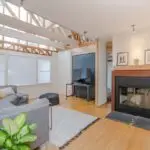
- Living Room: Sofas, armchairs, center table, side tables, television stand, rug, curtains, wall clock.
- Bedroom: Bed, wardrobe, dressing table, bedside cabinet, study desk, chair, mirror, curtains.
- Kitchen: Cooker, refrigerator, sink, kitchen cabinets, shelves, dining table (if open plan).
- Dining Area: Dining table, dining chairs, sideboard, display cabinet.
- Bathroom: Toilet, washbasin, shower or bathtub, mirror, towel rail.
Guidelines for Arranging Furniture and Fixtures
Proper arrangement of furniture and fixtures makes a home functional and appealing. The following are important guidelines:
- Consider Traffic Flow: Ensure clear paths for movement through the room.
- Create Conversation Areas: Group seating arrangements to facilitate interaction.
- Balance the Room: Distribute visual weight evenly throughout the space.
- Identify a Focal Point: Arrange furniture around a central feature like a window, fireplace, or television.
- Ensure Adequate Lighting: Position furniture to benefit from natural light and ensure good artificial lighting.
- Consider Size and Proportion: Choose furniture that fits the scale of the room.
- Allow for Ease of Cleaning: Avoid overcrowding to make cleaning easier.
- Functionality: Arrange items for their intended use and convenience.
Practical Arrangement of Furniture and Fixtures
This involves applying the guidelines to physically or visually place furniture and fixtures in a room. It helps in creating a comfortable, aesthetic, and efficient living space.
Teaching Methods/Instructional Techniques
Discussion, Lecture, Demonstration, Question and Answer, Visual Aids
Instructional Procedures
Step 1: Introduction
Time: 5 minutes
Teaching Skill: Set Induction
Teacher’s Activity: The teacher greets the pupils and asks them to mention items they find in their living room. The teacher then relates their answers to the topic by explaining that these items need proper arrangement to make the house comfortable.
Pupils’ Activity: Pupils mention various items found in their homes and listen to the teacher’s explanation.
Learning Point: Pupils are introduced to the topic and its relevance.
Step 2: Meaning of a Home
Time: 5 minutes
Teaching Skill: Explanation/Definition
Teacher’s Activity: The teacher explains the meaning of a home, emphasizing the emotional and comfort aspects beyond a mere structure. The teacher writes the definition on the board.
Pupils’ Activity: Pupils listen attentively, ask questions for clarity, and copy the definition into their notebooks.
Learning Point: Pupils understand the concept of a home.
Step 3: Difference between a House and a Home
Time: 7 minutes
Teaching Skill: Comparison/Differentiation
Teacher’s Activity: The teacher uses pictures of houses and charts of homes to differentiate between a house (physical structure) and a home (place of comfort and belonging). The teacher lists the differences on the board.
Pupils’ Activity: Pupils observe the pictures, contribute to the discussion, and note down the differences.
Learning Point: Pupils can distinguish between a house and a home.
Step 4: Furniture and Fixtures for Functional Areas
Time: 8 minutes
Teaching Skill: Listing/Identification
Teacher’s Activity: The teacher discusses different functional areas in a home (living room, bedroom, kitchen, etc.) and asks pupils to mention specific furniture and fixtures for each. The teacher supplements with charts and lists examples on the board.
Pupils’ Activity: Pupils actively participate by mentioning items and copying the lists from the board.
Learning Point: Pupils can identify appropriate furniture and fixtures for various rooms.
Step 5: Guidelines for Arranging Furniture and Fixtures
Time: 8 minutes
Teaching Skill: Explanation/Instruction
Teacher’s Activity: The teacher explains key guidelines for arranging furniture and fixtures, such as traffic flow, focal points, balance, and proportionality. The teacher illustrates with simple diagrams or by rearranging small items.
Pupils’ Activity: Pupils listen to the explanations, observe the demonstrations, and note down the guidelines.
Learning Point: Pupils learn the principles of effective furniture arrangement.
Step 6: Practical Arrangement of Furniture and Fixtures
Time: 7 minutes
Teaching Skill: Demonstration/Application
Teacher’s Activity: The teacher divides pupils into small groups and provides each group with a floor plan diagram and cut-outs of furniture. The teacher instructs them to arrange the furniture according to the guidelines learned.
Pupils’ Activity: Pupils work in groups to arrange the furniture cut-outs on their floor plans, applying the guidelines.
Learning Point: Pupils apply learned guidelines in a practical scenario.
Step 7: Evaluation/Review
Time: 5 minutes
Teaching Skill: Questioning/Assessment
Teacher’s Activity: The teacher evaluates the learning by asking the following questions:
- Define a home.
- State two differences between a house and a home.
- List three pieces of furniture suitable for a living room.
- Mention two important guidelines for arranging furniture in a room.
Pupils’ Activity: Pupils answer orally and in writing.
Learning Point: Pupils demonstrate understanding of the lesson.
Step 8: Conclusion
Time: 3 minutes
Teaching Skill: Summarization/Reinforcement
Teacher’s Activity: The teacher summarizes the key points of the lesson, reiterating the importance of a well-arranged home for comfort and functionality. The teacher assigns homework: “Draw a simple floor plan of your bedroom and arrange the furniture in it, indicating the traffic flow.”
Pupils’ Activity: Pupils listen to the summary and copy the homework assignment.
Learning Point: Pupils consolidate their learning and are given an opportunity for further practice.
Lesson Keywords
- Home – A place of comfort, belonging, and emotional attachment, where people live and share experiences.
- House – A physical structure or building designed for human habitation.
- Furniture – Movable items used to support human activities, such as chairs, tables, and beds.
- Fixtures – Items permanently attached to a building, such as sinks, light fittings, and built-in cabinets.
- Traffic Flow – The clear paths or routes for movement within a room or space.
Differentiation
For pupils who grasp concepts quickly, the teacher can challenge them to design a multi-purpose room. For those who need more support, the teacher can provide simpler diagrams or work with them individually on identifying basic furniture items and their placement.
Note for teachers using this lesson plan
Encourage pupils to share examples from their own homes to make the lesson relatable. Emphasize that practical application of these principles contributes significantly to a comfortable living environment. Ensure that visual aids are clear and large enough for all pupils to see.



Community Join the conversation Open discussion +