

Class: Senior Secondary School 2 (SS2 / SSS 2)
Term: 1st Term
Week: 8
Age: 16 years
Duration: 45 minutes
Subject: English Language
Curriculum Theme: English Language Studies
Previous Lesson: Listening for Details, Spelling Practice, Summary Writing and Narrative Essays.
Topic: Speech
Subject Matter: Speech: Vowels /e/ and /ɜ:/ pronunciation with word examples and sentence use, Structure: Adverbial phrases and their grammatical functions, Comprehension: Reading chapters of books and making notes with purpose and approach, Writing: Formal letter writing with letter of complaint and features of formal letters
Specific Objectives
By the end of the lesson, pupils should be able to:
Cognitive Domain:
- Identify adverbial phrases in sentences and state their grammatical functions.
- Differentiate between formal and informal letters.
- Explain the purpose and approach of making notes from a text.
Affective Domain:
- Appreciate the importance of correct pronunciation in communication.
- Value clear and concise note-making for academic success.
- Understand the importance of formal letter writing in official communication.
Psychomotor Domain:
- Pronounce the vowels /e/ and /ɜ:/ correctly in words and sentences.
- Make notes from a chapter of a book by selecting and organizing key points.
- Write a well-composed formal letter of complaint.
Social Domain:
- Engage in discussions about effective communication strategies.
Reference Materials
The following resources were used in planning this lesson:
- 9 Years Basic Education Curriculum
- State Unified Scheme of Work
- New Oxford English Course for Senior Secondary Schools 2
- https://www.usingenglish.com/articles/the-importance-of-adverbial-phrases-in-english.html
- https://www.bbc.co.uk/bitesize/guides/zxq7k7h/revision/1
Instructional Materials
The teacher will teach this lesson with the aid of:
- Pronunciation word list
- Grammar examples
- Textbook chapter
- Note template
- Sample formal letters
- Past question prompts
- Dictionary
Rationale for the Lesson
This lesson helps pupils to develop essential English language skills needed for effective communication in various contexts. Understanding pronunciation, grammatical structures, comprehension, and formal writing enables pupils to express themselves clearly and succeed academically and professionally.
Prerequisite/Previous Knowledge
Pupils have basic knowledge of parts of speech, simple sentence structure, letter writing, and general reading comprehension.
Lesson Content/Board Summary
Speech, Structure, Comprehension, and Writing Skills
Vowels /e/ and /ɜ:/ Pronunciation
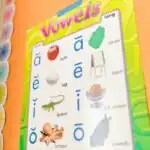
Vowels are speech sounds produced with an open vocal tract, without obstruction of the airflow. Correct pronunciation of vowels is important for clear speech.
The following are examples of words containing the vowels /e/ and /ɜ:/:
- /e/ (short ‘e’ sound): pet, bed, men, sell, friend, said
- /ɜ:/ (long ‘er’ sound): bird, learn, turn, nurse, journey, word
Adverbial Phrases and their Grammatical Functions
An adverbial phrase is a group of words that functions as an adverb, modifying a verb, an adjective, or another adverb. It tells us how, when, where, or to what extent an action is performed.
The following are common functions of adverbial phrases:
- Modifying a verb: Describes the action of the verb (e.g., “She sang with great passion.”)
- Modifying an adjective: Provides more information about an adjective (e.g., “The car was fast beyond belief.”)
- Modifying another adverb: Changes the meaning of another adverb (e.g., “He ran quickly for a short distance.”)
Examples:
- “He arrived at the station.” (Adverbial phrase of place)
- “She studies every night.” (Adverbial phrase of time)
- “They worked with enthusiasm.” (Adverbial phrase of manner)
Comprehension: Reading Chapters and Making Notes
Note-making is the process of writing down key information from a text in a concise and organized way. It helps in understanding, remembering, and revising information.
The following are the purpose and approach to note-making:
- Purpose: To summarize main ideas, highlight important details, prepare for exams, and aid retention.
- Approach: Read the chapter actively, identify main headings and subheadings, look for topic sentences, use keywords and short phrases, paraphrase information, and organize notes logically (e.g., using bullet points, numbering, mind maps).
Note-making differs from reading in that reading involves understanding the text, while note-making involves extracting and structuring the most important parts for future reference.
Writing: Formal Letter Writing (Letter of Complaint)
A formal letter is a letter written for official purposes, maintaining a professional tone and structure. A letter of complaint is a type of formal letter written to express dissatisfaction or concern about a product, service, or situation.
The following are key features of formal letters:
- Sender’s address
- Date
- Recipient’s address
- Salutation (e.g., Dear Sir/Madam, Dear Mr./Ms. [Surname])
- Formal subject line
- Formal language and tone
- Clear, concise, and objective content
- Logical organization of paragraphs
- Complimentary close (e.g., Yours faithfully, Yours sincerely)
- Sender’s full name and signature
Teaching Methods/Instructional Techniques
Discussion, Lecture, Demonstration, Question and Answer, Visual Aids
Instructional Procedures
Step 1: Introduction
Time: 5 minutes
Teaching Skill: Set Induction
Teacher’s Activity: The teacher greets the pupils and introduces the day’s topic by asking questions related to communication and common grammatical errors. The teacher explains that the lesson will cover various aspects of English language to improve their overall proficiency.
Pupils’ Activity: Pupils respond to questions and listen attentively to the introduction.
Learning Point: Pupils are prepared for the lesson and understand its relevance.
Step 2: Presentation of Vowels /e/ and /ɜ:/
Time: 10 minutes
Teaching Skill: Modeling/Drilling
Teacher’s Activity: The teacher writes words containing /e/ and /ɜ:/ on the board from the pronunciation word list. The teacher models the correct pronunciation of each vowel sound and drills the pupils, ensuring they repeat correctly. The teacher then asks pupils to provide their own examples and use them in simple sentences.
Pupils’ Activity: Pupils listen, repeat the words, provide their own examples, and use them in sentences.
Learning Point: Pupils learn to pronounce /e/ and /ɜ:/ accurately.
Step 3: Presentation of Adverbial Phrases
Time: 10 minutes
Teaching Skill: Explanation/Demonstration
Teacher’s Activity: The teacher defines adverbial phrases and explains their functions using prepared grammar examples. The teacher writes sentences on the board and asks pupils to identify the adverbial phrases and state what they modify.
Pupils’ Activity: Pupils listen to the explanation, identify adverbial phrases in sentences, and state their functions.
Learning Point: Pupils understand what adverbial phrases are and how they function in sentences.
Step 4: Presentation of Note Making
Time: 7 minutes
Teaching Skill: Explanation/Guidance
Teacher’s Activity: The teacher explains the purpose and approach of note-making from a textbook chapter. The teacher demonstrates how to identify key points and use a simple note template. Pupils are guided to practice making notes from a short paragraph provided from the textbook chapter.
Pupils’ Activity: Pupils listen, observe the demonstration, and attempt to make notes from the given paragraph.
Learning Point: Pupils learn effective strategies for making notes from texts.
Step 5: Presentation of Formal Letter Writing (Letter of Complaint)
Time: 8 minutes
Teaching Skill: Explanation/Illustration
Teacher’s Activity: The teacher explains the features of a formal letter, focusing on a letter of complaint. Using sample formal letters and past question prompts, the teacher illustrates the structure and appropriate language. The teacher highlights the differences between formal and informal letters.
Pupils’ Activity: Pupils listen, observe the sample letters, and identify the features of formal letters.
Learning Point: Pupils understand the structure and characteristics of formal letters, especially letters of complaint.
Step 6: Guided Practice
Time: 5 minutes
Teaching Skill: Application
Teacher’s Activity: The teacher provides a short task for pupils to either identify adverbial phrases in new sentences or list three features of a formal letter. The teacher walks around to provide support and feedback.
Pupils’ Activity: Pupils attempt the given task, applying the knowledge gained from the lesson.
Learning Point: Pupils consolidate their understanding through practical application.
Step 7: Evaluation/Review
Time: 5 minutes
Teaching Skill: Questioning/Assessment
Teacher’s Activity: The teacher evaluates the learning by asking the following questions:
- Pronounce two words containing the /e/ sound and two words containing the /ɜ:/ sound.
- Define an adverbial phrase and give one example.
- State two differences between note-making and just reading a text.
- Mention three essential features of a formal letter.
Pupils’ Activity: Pupils answer orally and in writing.
Learning Point: Pupils demonstrate understanding of the lesson.
Step 8: Conclusion
Time: 2 minutes
Teaching Skill: Summarization/Assignment
Teacher’s Activity: The teacher summarizes the key points of the lesson, emphasizing the importance of correct pronunciation, effective use of grammar, good comprehension skills, and proper formal writing. The teacher assigns homework: Write a formal letter of complaint to the school principal about a specific issue in the school.
Pupils’ Activity: Pupils listen to the summary and copy the homework assignment.
Learning Point: Pupils recall the main aspects of the lesson and are given an opportunity to apply their learning.
Lesson Keywords
- Vowel – A speech sound produced with an open vocal tract.
- Adverbial Phrase – A group of words acting as an adverb, modifying a verb, adjective, or another adverb.
- Note-making – The process of extracting and organizing key information from a text.
- Formal Letter – A letter written for official purposes, following a specific structure and tone.
- Letter of Complaint – A formal letter written to express dissatisfaction.
Differentiation
For pupils who grasp concepts quickly, the teacher can provide more complex sentences for identifying adverbial phrases or challenge them to write a longer complaint letter. For those needing extra support, the teacher can provide simplified word lists for pronunciation practice or offer a guided template for note-making and letter writing, encouraging peer-assisted learning.
Note for teachers using this lesson plan
Teachers should adapt the pace and examples to suit the specific needs and prior knowledge of their pupils. Encourage active participation and provide constructive feedback throughout the lesson. Practical activities and real-life examples will enhance understanding and retention.


Community Join the conversation Open discussion +