

Class: Senior Secondary School 2 (SS2 / SSS2)
Term: 1st Term
Week: 11
Age: 16 years
Duration: 45 minutes
Subject: English Language
Curriculum Theme: English Language Studies
Previous Lesson: Vowels /i/ and /i:/, Determiners, Critical Reading and Formal Letters.
Topic: Speech, Comprehension, and Writing
Subject Matter: Speech: Vowels /u/ and /u:/ identification, pronunciation and differentiation, Comprehension: Word substitution in passages using context-based meaning, Writing: Revision of formal letters including complaint, request, application and apology letters
Specific Objectives
By the end of the lesson, pupils should be able to:
Cognitive Domain:
- Identify and differentiate between the vowel sounds /u/ and /u:/.
- Recall the features and types of formal letters.
- Explain how to substitute words in a passage based on context.
Affective Domain:
- Appreciate the importance of correct pronunciation for clear communication.
- Develop an interest in writing accurate and effective formal letters.
- Participate actively in class discussions and exercises.
Psychomotor Domain:
- Pronounce words containing /u/ and /u:/ sounds correctly.
- Substitute underlined words in given passages with appropriate synonyms.
- Write a formal letter following the correct format and conventions.
Social Domain:
- Communicate effectively using correctly pronounced words.
- Collaborate with peers to identify suitable word substitutions.
Reference Materials
The following resources were used in planning this lesson:
- 9 Years Basic Education Curriculum
- State Unified Scheme of Work
- New Oxford Secondary English Course for SS2
- https://www.usingenglish.com/articles/pronunciation-lesson-plan-short-u-long-u.html
- https://www.bbc.co.uk/bitesize/guides/z26kqp3/revision/1
Instructional Materials
The teacher will teach this lesson with the aid of:
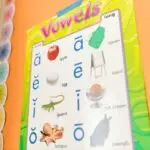
- Vowel chart
- Word lists containing /u/ and /u:/ sounds
- Substitution passages (prepared worksheets)
- Samples of formal letters (complaint, request, application, apology)
- Dictionary
Rationale for the Lesson
This lesson helps pupils to improve their spoken and written English. Learning to pronounce vowel sounds correctly enhances clarity in speech, while mastering word substitution improves comprehension and vocabulary. Additionally, knowing how to write formal letters correctly is essential for effective communication in academic and professional settings.
Prerequisite/Previous Knowledge
Pupils have prior knowledge of basic English sounds, word meanings, and general letter writing from previous classes.
Lesson Content/Board Summary
Speech: Vowels /u/ and /u:/, Comprehension: Word Substitution, Writing: Formal Letters
Vowel Sounds /u/ and /u:/
The English language has various vowel sounds, two of which are the short /u/ and the long /u:/ sounds.
The short /u/ sound: This is a short, lax vowel sound, often heard in words like ‘cup’ or ‘cut’. The lips are slightly rounded, and the tongue is low in the mouth.
The following are words with the short /u/ sound:
- Cut
- But
- Fun
- Run
- Up
- Under
The long /u:/ sound: This is a long, tense vowel sound, often heard in words like ‘food’ or ‘moon’. The lips are rounded and protruded, and the tongue is high and back in the mouth.
The following are words with the long /u:/ sound:
- Food
- Moon
- Blue
- Two
- Fruit
- School
Differentiation between /u/ and /u:/: The main difference is the length and tension of the sound. /u/ is short and relaxed, while /u:/ is long and tense with more lip rounding.
Comprehension: Word Substitution in Passages
Word substitution involves replacing a word or phrase in a text with another word or phrase that has a similar meaning, while maintaining the original context and sense of the passage.
The following are tips for effective word substitution:
- Read the sentence carefully to understand its meaning.
- Identify the part of speech of the word to be substituted (e.g., noun, verb, adjective).
- Consider the overall context of the passage.
- Choose a synonym that fits the tone and style of the text.
- Ensure the substituted word does not change the original meaning of the sentence.
Writing: Revision of Formal Letters
A formal letter is a letter written for an official purpose, using formal language and a specific format. It is typically written to people in authority, institutions, or for business purposes.
The following are common types of formal letters:
- Complaint Letter: Written to express dissatisfaction or grievance about a product, service, or situation.
- Request Letter: Written to ask for something officially, such as information, permission, or a favour.
- Application Letter: Written to apply for a job, admission to an institution, or a position.
- Apology Letter: Written to formally express regret for an error or mistake.
The following are key features of a formal letter:
- Sender’s address and date.
- Receiver’s address.
- Salutation (e.g., Dear Sir/Madam).
- Subject line (clearly stating the purpose).
- Formal language and tone.
- Clear and concise paragraphs.
- Complimentary close (e.g., Yours faithfully, Yours sincerely).
- Sender’s signature and full name.
Teaching Methods/Instructional Techniques
Discussion, Lecture, Demonstration, Question and Answer, Visual Aids
Instructional Procedures
Step 1: Introduction
Time: 5 minutes
Teaching Skill: Set Induction
Teacher’s Activity: The teacher greets the pupils and asks them to recall some English vowel sounds they know. The teacher then introduces the topic by stating that the lesson will focus on specific vowel sounds, word substitution, and formal letter writing.
Pupils’ Activity: Pupils respond to the greetings and mention some vowel sounds. They listen attentively to the introduction.
Learning Point: Pupils are prepared for the lesson and recall prior knowledge of vowel sounds.
Step 2: Presentation of Vowel Sounds /u/ and /u:/
Time: 10 minutes
Teaching Skill: Explanation/Demonstration
Teacher’s Activity: The teacher displays the vowel chart and clearly models the pronunciation of the short /u/ and long /u:/ sounds. The teacher provides word lists for each sound and drills the pupils on pronouncing them correctly, paying attention to lip position and tongue placement.
Pupils’ Activity: Pupils observe the teacher’s demonstration, listen carefully, and practice pronouncing the words after the teacher.
Learning Point: Pupils identify and begin to pronounce the /u/ and /u:/ sounds correctly.
Step 3: Differentiation and Practice with Vowel Sounds
Time: 5 minutes
Teaching Skill: Drilling/Correction
Teacher’s Activity: The teacher provides pairs of words that highlight the difference between /u/ and /u:/ (e.g., ‘cut’ vs. ‘cute’, ‘pull’ vs. ‘pool’). The teacher asks pupils to pronounce these pairs and differentiate between them. The teacher corrects any mispronunciations.
Pupils’ Activity: Pupils pronounce the word pairs and attempt to differentiate between the sounds. They listen to corrections and try to improve their pronunciation.
Learning Point: Pupils differentiate between the /u/ and /u:/ sounds and improve their pronunciation accuracy.
Step 4: Introduction to Word Substitution
Time: 5 minutes
Teaching Skill: Explanation/Questioning
Teacher’s Activity: The teacher explains what word substitution means and its importance in comprehension. The teacher provides a simple sentence with an underlined word and asks pupils to suggest alternatives, guiding them to consider the context.
Pupils’ Activity: Pupils listen to the explanation and participate by suggesting alternative words, explaining their choices based on context.
Learning Point: Pupils understand the concept of word substitution and the role of context.
Step 5: Practice with Substitution Passages
Time: 5 minutes
Teaching Skill: Guided Practice
Teacher’s Activity: The teacher distributes prepared passages with underlined words. Pupils are asked to work individually or in pairs to substitute the words, ensuring the meaning of the passage remains the same. The teacher moves around, providing assistance and clarification.
Pupils’ Activity: Pupils engage in substituting words in the provided passages, using dictionaries if necessary, and discussing with their peers.
Learning Point: Pupils apply their knowledge to substitute words accurately in context.
Step 6: Revision of Formal Letters
Time: 5 minutes
Teaching Skill: Recapitulation/Discussion
Teacher’s Activity: The teacher revises the definition of a formal letter and its common types (complaint, request, application, apology). The teacher displays samples of different formal letters and discusses their key features and appropriate language/tone.
Pupils’ Activity: Pupils recall their previous knowledge about formal letters, identify different types, and observe the features in the samples.
Learning Point: Pupils reinforce their understanding of formal letters, their types, and their structure.
Step 7: Evaluation/Review
Time: 5 minutes
Teaching Skill: Questioning/Assessment
Teacher’s Activity: The teacher evaluates the learning by asking the following questions:
- Give two examples of words containing the short /u/ sound and two for the long /u:/ sound.
- How would you differentiate between the /u/ and /u:/ vowel sounds?
- Explain the importance of context when substituting words in a passage.
- Mention two types of formal letters and one key feature of a formal letter.
Pupils’ Activity: Pupils answer orally and in writing.
Learning Point: Pupils demonstrate understanding of the lesson.
Step 8: Conclusion
Time: 5 minutes
Teaching Skill: Summarization/Assignment
Teacher’s Activity: The teacher summarizes the main points of the lesson, emphasizing the importance of clear pronunciation, effective comprehension, and proper formal letter writing. The teacher then assigns homework: “Write a formal letter to the Principal of your school requesting permission to use the school library during the holidays.”
Pupils’ Activity: Pupils listen to the summary and copy down the homework assignment.
Learning Point: Pupils consolidate their learning and are given an opportunity to practice writing a formal letter.
Lesson Keywords
- Vowel – A speech sound produced with an open vocal tract, without obstruction of the airflow.
- Pronunciation – The way a word or a language is spoken.
- Differentiation – The act of distinguishing between two or more things.
- Substitution – The action of replacing someone or something with another.
- Context – The circumstances that form the setting for an event, statement, or idea, and in terms of which it can be fully understood.
- Formal Letter – A letter written for an official purpose, using formal language and a specific format.
Differentiation
For pupils who grasp concepts quickly, the teacher can provide more complex passages for word substitution or ask them to identify other vowel sounds. For pupils needing more support, the teacher can work with them in smaller groups, provide simpler word lists for pronunciation drills, and offer templates for formal letter writing.
Note for teachers using this lesson plan
Ensure to use clear and audible pronunciation when modeling the vowel sounds. Encourage active participation from all pupils, especially during the pronunciation drills and word substitution exercises. Provide constructive feedback on both spoken and written work.


Community Join the conversation Open discussion +