

Class: Primary 4
Term: 3rd Term
Week: 3
Age: 9 years
Duration: 45 minutes
Subject: English Language Studies
Curriculum Theme: English Language Studies
Previous Lesson: Question Tag Responses, Past Perfect Tense, Poem and Drama Reading and Poem Writing.
Topic: Developing English Language Skills: Vowel Sounds, Adverbial Clauses, Descriptive Reading, and Sympathy Letter Writing
Subject Matter:
Speech: Discriminating vowel sounds.
Grammatical Accuracy: Adverbial clauses using if and when.
Reading: Descriptive passage on travelling by air, sea and road.
Writing: Writing sympathy letters.
Specific Objectives
By the end of the lesson, pupils should be able to:
Cognitive Domain:
- Identify and discriminate between different vowel sounds.
- Define and give examples of adverbial clauses using ‘if’ and ‘when’.
- Comprehend and answer questions based on a descriptive passage about travel.
- State the purpose and parts of a sympathy letter.
Affective Domain:
- Appreciate the importance of clear pronunciation in communication.
- Show interest in reading descriptive texts.
- Develop empathy and appropriate tone when writing sympathy letters.
Psychomotor Domain:
- Pronounce various vowel sounds correctly.
- Construct grammatically correct sentences using ‘if’ and ‘when’ adverbial clauses.
- Read a descriptive passage fluently and expressively.
- Write a structured and appropriate sympathy letter.
Social Domain:
- Participate actively in class discussions on the passage and letter writing.
- Collaborate with peers in sentence building activities.
Reference Materials
The following resources were used in planning this lesson:
- 9 Years Basic Education Curriculum for Primary Schools.
- State Unified Scheme of Work for Primary 4 English Language.
- MacMillan Primary English for Nigerian Schools, Primary 4.
- www.education.gov.ng
- www.curriculum.ng
Instructional Materials
The teacher will teach this lesson with the aid of:
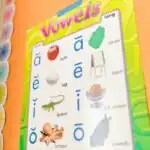
- Vowel sound charts
- Flash cards with words containing different vowel sounds
- Textbooks
- Notebooks
- Dummy sympathy letters or templates
- A descriptive passage on travelling by air, sea, and road.
Rationale for the Lesson
This lesson helps pupils to speak English more clearly by understanding vowel sounds, which is important for communication. It also teaches them how to use ‘if’ and ‘when’ correctly in sentences, improves their reading comprehension, and guides them in writing thoughtful sympathy letters, which are useful for expressing care to others.
Prerequisite/Previous Knowledge
Pupils are expected to have basic knowledge of letters of the alphabet, simple sentence structures, and general letter writing conventions.
Lesson Content/Board Summary
Developing English Language Skills: Vowel Sounds, Adverbial Clauses, Descriptive Reading, and Sympathy Letter Writing
Discriminating Vowel Sounds
Vowel sounds are speech sounds produced with an open vocal tract, meaning the air flows freely without obstruction from the tongue, teeth, or lips.
The following are examples of vowel sounds:
- Short vowels: /æ/ (as in ‘cat’), /ɛ/ (as in ‘bed’), /ɪ/ (as in ‘sit’), /ɒ/ (as in ‘hot’), /ʌ/ (as in ‘cup’), /ʊ/ (as in ‘book’)
- Long vowels: /iː/ (as in ‘sheep’), /uː/ (as in ‘moon’), /ɑː/ (as in ‘car’), /ɔː/ (as in ‘door’), /ɜː/ (as in ‘bird’)
Adverbial Clauses (using ‘if’ and ‘when’)
An adverbial clause is a group of words that functions as an adverb, modifying a verb, an adjective, or another adverb. It provides information about when, where, why, how, or under what condition an action occurs.
Adverbial Clauses of Condition (using ‘if’): These clauses state the condition that must be met for the action in the main clause to happen.
The following are examples:
- If it rains, we will stay indoors.
- You will pass your exams if you study hard.
Adverbial Clauses of Time (using ‘when’): These clauses tell us the time at which the action in the main clause occurs.
The following are examples:
- When I grow up, I want to be a doctor.
- We will play football when the sun sets.
Descriptive Passage on Travel
A descriptive passage uses vivid language and sensory details to create a clear picture of a person, place, thing, or event in the reader’s mind. It aims to make the reader visualize and experience what is being described.
The following are common elements of a descriptive passage:
- Sensory details (sight, sound, smell, taste, touch)
- Adjectives and adverbs
- Figurative language (e.g., similes and metaphors)
Writing Sympathy Letters
A sympathy letter is a letter written to express condolences, comfort, and support to someone who is experiencing grief, loss, or misfortune. Its purpose is to show care and acknowledge the other person’s feelings.
The following are key parts of a sympathy letter:
- Sender’s Address (optional for informal letters)
- Date
- Salutation (e.g., Dear [Name],)
- Body (express condolences, share a positive memory, offer support)
- Closing (e.g., Sincerely, With deepest sympathy,)
- Signature (Your name)
The tone of a sympathy letter should be sincere, respectful, comforting, and empathetic.
Teaching Methods/Instructional Techniques
Discussion, Lecture, Demonstration, Question and Answer, Visual Aids
Instructional Procedures
Step 1: Introduction
Time: 5 minutes
Teaching Skill: Set Induction
Teacher’s Activity: The teacher greets the pupils, checks their previous knowledge by asking questions related to basic sounds and simple sentences, and then introduces the topic for the day, explaining that they will learn about different aspects of English to improve their communication skills.
Pupils’ Activity: Pupils respond to greetings and questions and listen attentively to the introduction.
Learning Point: Pupils are prepared for the lesson and understand its relevance.
Step 2: Presentation of Vowel Sounds
Time: 10 minutes
Teaching Skill: Explanation/Demonstration
Teacher’s Activity: The teacher displays vowel sound charts and flash cards. The teacher models the pronunciation of various short and long vowel sounds with clear examples, such as /æ/ in ‘cat’ and /iː/ in ‘sheep’. The teacher asks pupils to repeat the sounds and provide their own examples.
Pupils’ Activity: Pupils observe the charts, listen to the teacher’s pronunciation, repeat the sounds, and give examples of words containing those sounds.
Learning Point: Pupils learn to identify and pronounce different vowel sounds correctly.
Step 3: Presentation of Adverbial Clauses
Time: 10 minutes
Teaching Skill: Explanation/Guided Practice
Teacher’s Activity: The teacher explains what adverbial clauses are and focuses on those using ‘if’ (condition) and ‘when’ (time). The teacher writes example sentences on the board and guides pupils in building their own sentences using ‘if’ and ‘when’.
Pupils’ Activity: Pupils listen to the explanation, identify adverbial clauses in example sentences, and form new sentences using ‘if’ and ‘when’.
Learning Point: Pupils understand and can construct sentences with adverbial clauses of condition and time.
Step 4: Reading Descriptive Passage
Time: 7 minutes
Teaching Skill: Reading/Questioning
Teacher’s Activity: The teacher distributes a descriptive passage on travelling by air, sea, and road. The teacher reads the passage aloud with expression, then asks individual pupils to read parts of it. After reading, the teacher asks comprehension questions about the passage.
Pupils’ Activity: Pupils read the passage silently and then orally, and answer comprehension questions based on the text.
Learning Point: Pupils improve their reading fluency and comprehension of descriptive texts.
Step 5: Discussion on Sympathy Letters
Time: 5 minutes
Teaching Skill: Discussion/Brainstorming
Teacher’s Activity: The teacher initiates a discussion about situations where people might need comfort and support. The teacher explains what a sympathy letter is, its purpose, and its key parts, displaying a dummy letter if available.
Pupils’ Activity: Pupils contribute to the discussion, share ideas, and learn about the structure and purpose of a sympathy letter.
Learning Point: Pupils understand the concept and structure of a sympathy letter.
Step 6: Guided Writing of Sympathy Letters
Time: 5 minutes
Teaching Skill: Guided Practice
Teacher’s Activity: The teacher guides pupils through writing a short sympathy letter, providing a simple scenario (e.g., a friend lost a pet). The teacher helps pupils draft appropriate sentences for each part of the letter, focusing on respectful and empathetic language.
Pupils’ Activity: Pupils participate in the guided writing process, drafting a short sympathy letter based on the given scenario.
Learning Point: Pupils practice writing a structured sympathy letter with appropriate content and tone.
Step 7: Evaluation/Review
Time: 5 minutes
Teaching Skill: Questioning/Assessment
Teacher’s Activity: The teacher evaluates the learning by asking the following questions:
- What is a vowel sound? Give two examples.
- Form one sentence using an adverbial clause of condition with ‘if’.
- Mention two elements commonly found in a descriptive passage.
- List three important parts of a sympathy letter.
Pupils’ Activity: Pupils answer orally and in writing.
Learning Point: Pupils demonstrate understanding of the lesson.
Step 8: Conclusion
Time: 3 minutes
Teaching Skill: Summarization/Consolidation
Teacher’s Activity: The teacher summarizes the key learning points of the lesson, emphasizing the importance of clear pronunciation, correct grammar, good reading skills, and thoughtful writing. The teacher assigns homework, asking pupils to write a short descriptive paragraph about their journey to school.
Pupils’ Activity: Pupils listen to the summary and copy down the homework assignment.
Learning Point: Pupils consolidate their understanding and are given an opportunity for further practice.
Home Task: Write four correct English sentences that demonstrate the main language skill in Developing English Language Skills: Vowel Sounds, Adverbial Clauses, Descriptive Reading, and….
Lesson Keywords
- Vowel – A speech sound made with an open mouth, without the tongue touching the roof of the mouth, teeth, or lips.
- Adverbial Clause – A group of words with a subject and a verb that functions like an adverb, telling when, where, why, or how.
- Descriptive – Using words to create a clear picture or image in the mind of the reader, often with sensory details.
- Sympathy – The feeling of understanding and caring for someone else’s suffering or misfortune.
- Pronunciation – The way in which a word or language is spoken.
- Condolences – An expression of sympathy and sorrow to someone who has experienced a loss.
Differentiation
For pupils who grasp concepts quickly, the teacher can challenge them to identify more complex adverbial clauses or write a longer descriptive passage. For pupils needing more support, the teacher can provide simpler examples of vowel sounds, sentence starters for adverbial clauses, or a template for the sympathy letter, offering one-on-one guidance.
Note for teachers using this lesson plan
Ensure that the descriptive passage selected for reading is appropriate for the Primary 4 reading level and contains vivid imagery. Encourage active participation from all pupils, especially during pronunciation practice and sentence building. Provide constructive feedback on writing activities.

Community Join the conversation Open discussion +