

Class: Junior Secondary School 3 (JSS3, JSS 3)
Term: 1st Term
Week: 10
Age: 14 years
Duration: 45 minutes
Subject: Pre-Vocational Studies
Curriculum Theme: Agricultural Science
Previous Lesson: Types and Resources of Forests
Topic: Forests and Forest Uses
Subject Matter: Uses of forest resources, Effect of forest on the environment, Human activities that affect the forest: Clearing/deforestation, Hunting, bush burning, farming/depletion of wildlife etc.
Specific Objectives
By the end of the lesson, pupils should be able to:
- Cognitive Domain:
(a) Identify and explain the uses of forest resources.
(b) Describe the effects of forests on the environment.
(c) Discuss the effects of human activities on forest resources. - Affective Domain:
(a) Develop concern and appreciation for forest conservation and sustainable use. - Psychomotor Domain:
(a) Demonstrate how to plant and care for trees in their school or community environment. - Social Domain:
(a) Work cooperatively in groups to discuss and suggest solutions to forest depletion problems.
Reference Materials
The following resources was used in planning this lesson:
- 9 Years Basic Education Curriculum
- Lagos State Unified Scheme of Work for Junior Secondary Schools
- FAO – “Forests and Forestry” (https://www.fao.org/forests/en/)
- National Geographic – “Deforestation Explained” (https://education.nationalgeographic.org/resource/deforestation/)
- Relevant Textbooks
Instructional Materials
The teacher will teach this lesson with the aid of:
- Charts showing types and uses of forest resources
- Map showing forest zones in Nigeria
- Pictures of forest activities (logging, bush burning, etc.)
- Video clips on deforestation and forest conservation
- Samples of forest products (wood, rubber, fruits, herbs)
Rationale for the Lesson
This lesson helps students understand the importance of forests, how they support human and environmental life, and the dangers of harmful human activities that lead to forest depletion.
Prerequisite/Previous Knowledge
Pupils have already learned about natural resources and the importance of plants and vegetation. They can identify different products obtained from trees and plants in their environment.
Lesson Content/Board Summary
Forests and Forest Uses
Uses of Forest Resources
Forest resources are all materials and benefits obtained from forests. They include timber, non-timber products, and environmental services.
The following are the uses of forest resources:
- Provision of wood and timber – for building houses, furniture, and tools.
- Source of food – such as fruits, nuts, and mushrooms.
- Source of medicine – herbs and roots used for traditional and modern medicines.
- Provision of raw materials – for industries like paper, rubber, and textile.
- Habitat for wildlife – forests provide shelter for animals and plants.
- Employment and income – forestry and logging create jobs and revenue.
- Cultural and recreational purposes – forests serve for tourism, relaxation, and traditional ceremonies.
Effects of Forest on the Environment
Forests play vital roles in maintaining environmental balance. They support the ecosystem and human survival.
The following are the effects of forests on the environment:
- They help in controlling soil erosion.
- They maintain the water cycle through rainfall formation.
- They reduce air pollution by absorbing carbon dioxide and releasing oxygen.
- They provide shade and lower environmental temperature.
- They serve as windbreaks to protect crops and buildings.
- They help in maintaining biodiversity by providing natural habitats.
- They prevent desertification and improve soil fertility.
Human Activities that Affect the Forest
Many human actions destroy or reduce forest resources and endanger wildlife.
The following are human activities that affect the forest:
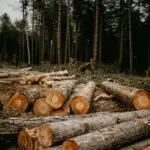
- Clearing and deforestation – cutting down trees for farming, housing, or construction without replacement.
- Bush burning – setting fire to bushes destroys trees, soil organisms, and wildlife.
- Hunting and poaching – excessive hunting reduces wildlife population.
- Farming and overgrazing – farming too close to forests leads to loss of vegetation cover.
- Logging and wood harvesting – uncontrolled cutting of trees causes forest depletion.
- Urbanization and road construction – converting forest areas into cities and roads reduces forest land.
Teaching Methods/Instructional Techniques:
Lecture, Discussion, Explanation, Demonstration, Question and Answer, Group Work, Field Observation, Use of Visual Aids
Instructional Procedures
To deliver this lesson, the teacher will adopt the following steps:
Step 1: Introduction
Time: 5 minutes
Teaching Skill: Set Induction
Teacher’s Activity: The teacher asks pupils to mention products they use that come from trees, then links responses to forest resources.
Pupils’ Activity: Pupils mention items like furniture, paper, or fruits.
Learning Point: Pupils become aware of the wide range of benefits from forests.
Step 2: Uses of Forest Resources
Time: 10 minutes
Teaching Skill: Explanation
Teacher’s Activity: The teacher displays pictures or samples of forest products and explains their uses.
Pupils’ Activity: Pupils observe materials and list their uses.
Learning Point: Pupils identify various uses of forest resources.
Step 3: Effects of Forest on the Environment
Time: 10 minutes
Teaching Skill: Discussion
Teacher’s Activity: The teacher explains how forests support the environment, using diagrams and examples.
Pupils’ Activity: Pupils discuss how forests affect air, soil, and animals.
Learning Point: Pupils understand how forests help maintain environmental balance.
Step 4: Human Activities that Affect the Forest
Time: 10 minutes
Teaching Skill: Demonstration and Questioning
Teacher’s Activity: The teacher shows images of bush burning, logging, and deforestation, and discusses their effects.
Pupils’ Activity: Pupils identify harmful activities and suggest ways to prevent forest destruction.
Learning Point: Pupils recognize human activities that harm forests and how to control them.
Step 5: Note-Taking
Time: 5 minutes
Teaching Skill: Explanation
Teacher’s Activity: The teacher writes the board summary and guides pupils to copy into their notes.
Pupils’ Activity: Pupils copy notes correctly.
Learning Point: Pupils record key points of the lesson.
Step 6: Evaluation/Review
Time: 3 minutes
Teaching Skill: Questioning
Teacher’s Activity: The teacher evaluates the learning by asking the following questions:
- List four uses of forest resources.
- Mention three effects of forests on the environment.
- Identify three human activities that affect forests negatively.
Pupils’ Activity: Pupils answer questions orally and in writing.
Learning Point: Pupils demonstrate understanding of the topic.
Step 7: Conclusion
Time: 2 minutes
Teaching Skill: Reinforcement
Teacher’s Activity: The teacher summarizes the lesson and emphasizes the need to protect forests for future generations.
Pupils’ Activity: Pupils listen and share their thoughts on conserving forests.
Learning Point: Pupils appreciate the importance of forests and how to use them responsibly.
Lesson Keywords
- Forest – a large area covered with trees and vegetation
- Deforestation – clearing or cutting down trees without replanting
- Biodiversity – variety of living organisms in an environment
- Erosion – wearing away of soil by water or wind
- Conservation – careful management and protection of natural resources
Differentiation
Slower learners are supported with visual aids and repetition, while advanced learners engage in discussions on modern forest conservation practices.
Note for teachers using this lesson plan
Ensure pupils participate actively by using relatable examples and real-life materials. Organize outdoor demonstrations where possible to make the lesson more practical and engaging.
Community Join the conversation Open discussion +