

Class: Pre-School Level 4
Term: First Term
Week: 7
Age: 5 years
Duration: 30 minutes
Subject: Numeracy
Curriculum Theme: Not separately stated in the scheme.
Previous Lesson: Identifying and comparing numbers up to 20.
Topic: TIME MEASUREMENT: TELLING TIME, DAYS, WEEKS AND MONTHS
Subject Matter: TIME MEASUREMENT – Telling Time – Days of the week – Months of the year.
Specific Objectives
By the end of the lesson, pupils should be able to:
Cognitive Domain
- Identify the hour hand, minute hand, and second hand on an analogue clock.
- Tell time in ‘o’clock’ (e.g., 8 o’clock, 2 o’clock).
- Tell time in ‘half past’ (e.g., half past 2, half past 6).
- Recite simple time conversions (e.g., 60 seconds in 1 minute, 7 days in 1 week).
- Name the days of the week in order.
- Name some months of the year.
Affective Domain
- Show interest in learning about time.
- Listen attentively to the teacher’s instructions and explanations.
- Appreciate the importance of knowing about time in daily life.
Psychomotor Domain
- Point to the different hands on a dummy clock.
- Move the hands of a dummy clock to show specific ‘o’clock’ and ‘half past’ times.
- Participate in singing songs about days and months.
Social Domain
- Take turns when using the dummy clock.
- Work cooperatively with peers during group activities.
Reference Materials
- NAPPS National Unified Teaching Scheme for Pre-School Level 4.
- Early Childhood Care and Education Numeracy textbooks.
- Relevant charts and flashcards on time, days, and months.
Instructional Materials
- Dummy analogue clock (with movable hands)
- Real wall clock
- Flashcards showing different times (o’clock and half past)
- Charts displaying days of the week
- Charts displaying months of the year
- Whiteboard and markers
- Pictures of daily activities at different times (e.g., eating breakfast at 7 o’clock)
Rationale for the Lesson
Learning about time measurement is crucial for Pre-School Level 4 pupils as it helps them understand and organise their daily routines and activities. This lesson introduces fundamental concepts of telling time, days, weeks, and months, building a foundation for future time-related skills and promoting a sense of order and punctuality.
Prerequisite/Previous Knowledge
Pupils can count numbers up to 20, recognise some numbers, and are familiar with basic daily routines like waking up, eating, and sleeping.
Lesson Content/Board Summary
TIME MEASUREMENT: Telling Time, Days, Weeks and Months
Time helps us know when to do things like eat, play, and sleep. We use a clock to tell time.
The Analogue Clock
- A clock has numbers from 1 to 12.
- It has hands that move around.
- Hour Hand: The short hand. It tells us the hour.
- Minute Hand: The long hand. It tells us the minutes.
- Second Hand: The very thin, fast-moving hand. It tells us the seconds.
Telling Time in O’clock
- When the long minute hand points to 12, and the short hour hand points to a number, we say “o’clock”.
- Examples:
- Short hand on 8, long hand on 12 = 8 o’clock
- Short hand on 2, long hand on 12 = 2 o’clock
- Short hand on 6, long hand on 12 = 6 o’clock
Telling Time in Half Past
- When the long minute hand points to 6, and the short hour hand is between two numbers, we say “half past”.
- Examples:
- Short hand between 2 and 3, long hand on 6 = Half past 2
- Short hand between 6 and 7, long hand on 6 = Half past 6
- Short hand between 8 and 9, long hand on 6 = Half past 8
Units of Time
- 60 seconds = 1 minute
- 60 minutes = 1 hour
- 24 hours = 1 day
- 7 days = 1 week
- 52 weeks = 1 year
- 12 months = 1 year
Days of the Week
There are 7 days in a week:
- Sunday
- Monday
- Tuesday
- Wednesday
- Thursday
- Friday
- Saturday
Months of the Year
There are 12 months in a year:
- January
- February
- March
- April
- May
- June
- July
- August
- September
- October
- November
- December
Key Words
- Clock – an instrument that tells us the time.
- Hour hand – the short hand on a clock, it tells the hour.
- Minute hand – the long hand on a clock, it tells the minutes.
- O’clock – when the minute hand is on 12.
- Half past – when the minute hand is on 6.
- Day – a period of 24 hours.
- Week – a period of 7 days.
- Month – one of the 12 parts of a year.
What the Teacher Should Show or Draw
- Display a large dummy analogue clock.
- Draw a simple clock face on the board, pointing out the numbers and hands.
- Show flashcards with different o’clock and half past times.
- Point to the days of the week and months of the year on charts.
Time Telling Song
Tune: “Twinkle, Twinkle Little Star”
Lyrics:
Tick-tock, tick-tock, goes the clock,
Short hand, long hand, what a shock!
Short hand tells us hour to know,
Long hand makes the minutes flow.
When long hand’s on twelve, it’s o’clock,
Tick-tock, tick-tock, goes the clock!
Actions: Pupils sway side to side like a pendulum for “tick-tock”. Point to their wrist/imaginary clock for “clock”. Use one hand to show “short hand” and the other for “long hand”. Point to 12 for “o’clock”.
How to use the rhyme: Sing this song after introducing the clock and before teaching o’clock times, to help pupils remember the clock parts and the meaning of “o’clock”.
Days of the Week Song
Tune: “Are You Sleeping, Brother John?”
Lyrics:
Sunday, Monday, Tuesday,
Wednesday, Thursday, Friday,
Saturday, Saturday,
Seven days in a week.
Seven days in a week.
Actions: Pupils clap once for each day as they sing it. Hold up seven fingers for “seven days in a week”.
How to use the rhyme: Sing this song after introducing the days of the week to help pupils memorise them in order.
Watch and Practise Telling Time
The teacher will show a short educational video to reinforce telling time to the hour and half hour.
Teaching Methods/Instructional Techniques
Play-based Learning, Demonstration, Guided Practice, Songs and Rhymes, Picture Talk, Question and Answer, Manipulation of Objects, Repetition, Practical Activity.
Instructional Procedures
Step 1: Introduction
Time: 3 minutes
Teaching Skill: Engagement/Recall
Teacher’s Activity: The teacher greets the pupils and asks them what they usually do in the morning, afternoon, and evening. The teacher then introduces the topic by asking, “How do we know what time it is?”
Pupils’ Activity: Pupils respond to questions and listen attentively.
Learning Point: Pupils are engaged and introduced to the concept of time in daily life.
Step 2: Introducing the Clock and its Parts
Time: 5 minutes
Teaching Skill: Demonstration/Identification
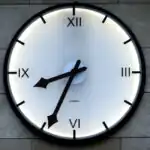
Teacher’s Activity: The teacher displays a dummy analogue clock and a real wall clock. The teacher guides pupils to identify the numbers, the hour hand (short), the minute hand (long), and the second hand (thin, fast). The teacher explains what each hand does. The teacher leads the “Time Telling Song.”
Pupils’ Activity: Pupils observe the clocks, point to the different hands, and sing along with the teacher.
Learning Point: Pupils identify the parts of an analogue clock and understand their basic functions.
Step 3: Telling Time in O’clock
Time: 5 minutes
Teaching Skill: Demonstration/Guided Practice
Teacher’s Activity: The teacher sets the dummy clock to various ‘o’clock’ times (e.g., 8 o’clock, 2 o’clock, 6 o’clock). For each time, the teacher explains that the long hand is on 12 and the short hand is on the hour. The teacher asks pupils to repeat the time. Then, the teacher asks individual pupils to set the clock to a given ‘o’clock’ time.
Pupils’ Activity: Pupils observe, repeat the times, and take turns setting the dummy clock to ‘o’clock’ times.
Learning Point: Pupils learn to tell and show time in ‘o’clock’.
Step 4: Telling Time in Half Past
Time: 5 minutes
Teaching Skill: Demonstration/Guided Practice
Teacher’s Activity: The teacher sets the dummy clock to various ‘half past’ times (e.g., half past 2, half past 6, half past 8). The teacher explains that the long hand is on 6 and the short hand is between two numbers. The teacher asks pupils to repeat the time. The teacher then shows the “Watch and Practise Telling Time” video and encourages pupils to participate.
Pupils’ Activity: Pupils observe, repeat the times, watch the video, and take turns setting the dummy clock to ‘half past’ times.
Learning Point: Pupils learn to tell and show time in ‘half past’.
Step 5: Introducing Units of Time and Days of the Week
Time: 5 minutes
Teaching Skill: Explanation/Recitation
Teacher’s Activity: The teacher introduces basic time conversions: “60 seconds make 1 minute,” “60 minutes make 1 hour,” “24 hours make 1 day,” “7 days make 1 week.” The teacher displays a chart of the days of the week and recites them. The teacher leads the “Days of the Week Song.”
Pupils’ Activity: Pupils listen, repeat the time conversions, recite the days of the week, and sing the song.
Learning Point: Pupils begin to understand basic units of time and can name the days of the week.
Step 6: Introducing Months of the Year and Reinforcement
Time: 3 minutes
Teaching Skill: Naming/Recitation
Teacher’s Activity: The teacher displays a chart of the months of the year and recites them, focusing on the idea that there are 12 months in a year. The teacher briefly reviews all the time units and days of the week, asking quick questions.
Pupils’ Activity: Pupils listen, repeat the months, and answer simple review questions.
Learning Point: Pupils are introduced to the months of the year and reinforce their understanding of time units and days.
Step 7: Evaluation/Review
Time: 4 minutes
Teaching Skill: Questioning/Assessment
Teacher’s Activity: The teacher checks pupils’ understanding through short questions and practical tasks.
- “Point to the hour hand on the dummy clock.”
- “Set the dummy clock to 3 o’clock.”
- “Set the dummy clock to half past 7.”
- “How many days are in one week?”
- “Name three days of the week.”
Pupils’ Activity: Pupils respond orally and demonstrate the required skill where appropriate.
Learning Point: Pupils demonstrate understanding of the lesson.
Step 8: Conclusion
Time: 1 minute
Teaching Skill: Summarisation
Teacher’s Activity: The teacher praises the pupils for their participation and reminds them that knowing time helps them plan their day. The teacher encourages them to look at clocks at home.
Pupils’ Activity: Pupils listen and tidy up their learning materials.
Learning Point: Pupils consolidate their learning and are encouraged to apply it outside the classroom.
Lesson Keywords
- Clock – an instrument used to tell time.
- Hour – a unit of time, 60 minutes long.
- Minute – a unit of time, 60 seconds long.
- Second – a very short unit of time.
- O’clock – a way to say the exact hour (e.g., 5 o’clock).
- Half past – 30 minutes after the hour (e.g., half past 5).
- Day – a period of 24 hours.
- Week – a period of 7 days.
- Month – one of the 12 parts of a year.
Differentiation
- Support: For pupils struggling to identify clock hands, use colour-coded hands on the dummy clock (e.g., red for hour, blue for minute). Provide more one-on-one guided practice for setting times. Focus primarily on ‘o’clock’ times and the first few days of the week.
- Extension: For pupils who quickly grasp the concepts, challenge them to show more complex ‘half past’ times or identify activities they do at specific o’clock or half past times. Ask them to name the day before or after a given day.
Note for teachers using this lesson plan
Prepare the dummy analogue clock and charts for days and months in advance. Ensure the dummy clock hands move easily. Start with very clear, slow demonstrations for telling time, using the “long hand on 12” rule for o’clock and “long hand on 6” for half past. Emphasise that the short hour hand moves slowly. Repetition of the songs and key phrases will be vital for memorisation, especially for the units of time and the sequence of days/months. Encourage all pupils to participate actively by pointing, moving hands, and singing. Observe pupils’ ability to physically set the clock hands as a key indicator of understanding. For the units of time, focus on rote recitation at this age rather than deep conceptual understanding of the numbers involved.
Community Join the conversation Open discussion +