

Class: Pre-School Level 4
Term: Third Term
Week: 8
Age: 5 years
Duration: 30 minutes
Subject: Numeracy
Curriculum Theme: Numeracy
Previous Lesson: Simple Addition with Numbers Not More Than 20
Topic: Simple Subtraction with Numbers Not More Than 20
Subject Matter: Simple Subtraction of Numbers Not More Than 20
Specific Objectives
By the end of the lesson, pupils should be able to:
Cognitive Domain
- Explain subtraction as “taking away” or “removing”.
- Identify the subtraction symbol (-).
- Solve simple subtraction problems with numbers not more than 20 using concrete objects.
Affective Domain
- Listen attentively to the teacher’s explanation.
- Show interest in learning how to subtract.
Psychomotor Domain
- Demonstrate subtraction using counting devices.
- Write simple subtraction number sentences (e.g., 10 – 3 = 7).
Social Domain
- Participate actively in classroom activities.
- Take turns when using counting devices or answering questions.
Reference Materials
- NAPPS National Unified Teaching Scheme for Pre-School Level 4.
- Relevant Early Childhood Care and Education resources.
- Suitable early-years numeracy workbook/textbook.
Instructional Materials
- MP4 Player (for video).
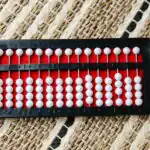
- Counting devices: beads, stones, bottle tops, sticks, pencils, blocks.
- Picture cards showing objects being taken away.
- Number cards (0-20).
- Whiteboard/Chalkboard and markers/chalk.
Rationale for the Lesson
This lesson introduces pupils to the fundamental concept of subtraction, which helps them understand how quantities change when items are removed. Learning subtraction with concrete objects at this age builds a strong foundation for future mathematical understanding and helps them solve simple real-life problems involving “taking away.”Prerequisite/Previous Knowledge
Pupils can count numbers up to 20, recognise number symbols, and have a basic understanding of simple addition.Lesson Content/Board Summary
Simple Subtraction with Numbers Not More Than 20
Subtraction means “taking away” or “removing” a certain number of items from a group.
The symbol for subtraction is – (minus).
When we subtract, the number of items becomes smaller.
Examples of Subtraction (using objects):
Example 1:
- You have 5 oranges.
- You eat 2 oranges.
- How many oranges are left?
- 5 – 2 = 3 oranges.
Example 2:
- There are 10 pencils in a box.
- You take out 3 pencils.
- How many pencils are left in the box?
- 10 – 3 = 7 pencils.
Example 3:
- You have 15 bottle tops.
- You give away 9 bottle tops.
- How many bottle tops do you have left?
- 15 – 9 = 6 bottle tops.
What the Teacher Should Show or Draw
- The subtraction symbol: –
- Draw groups of objects and cross out some to show “taking away”.
- Write simple subtraction number sentences clearly on the board.
Subtraction Song
Tune: “Twinkle, Twinkle Little Star”
Lyrics:
Take away, take away, let us see,
How many items are left for me.
Minus sign means some are gone,
Count what’s left, ’til the lesson’s done.
Take away, take away, it’s so fun,
Subtraction helps us count what’s left, everyone!
Actions: Pupils can use their fingers or counting objects to demonstrate taking away as they sing along.
How to use the rhyme: Sing the song together after the teacher’s initial explanation and demonstration to reinforce the concept of “taking away.”
Watch and Practise
The teacher will show a short video demonstrating simple subtraction using visual examples.
Key Words
- Subtraction – taking away or removing.
- Take away – to remove something from a group.
- Minus – the symbol (-) used for subtraction.
- Equals – the symbol (=) meaning “is the same as” or “is left with”.
Teaching Methods/Instructional Techniques
Play-based Learning, Demonstration, Guided Practice, Songs and Rhymes, Picture Talk, Question and Answer, Manipulation of Objects, Repetition, Practical Activity.Instructional Procedures
Step 1: Introduction
Time: 3 minutes
Teaching Skill: Engagement/Recall
Teacher’s Activity: The teacher greets the pupils warmly and asks them to recall what they learned about addition (putting together). The teacher then introduces today’s topic, “Subtraction,” as the opposite of addition, meaning “taking away.”
Pupils’ Activity: Pupils respond to greetings and recall previous lessons on addition. They listen attentively to the introduction of subtraction.
Learning Point: Pupils recall prior knowledge and are introduced to the new concept.
Step 2: Explanation of Subtraction
Time: 5 minutes
Teaching Skill: Explanation/Demonstration
Teacher’s Activity: The teacher explains the concept of subtraction as “taking away” or “removing.” Using real objects (e.g., 7 pencils), the teacher demonstrates taking some away (e.g., 2 pencils) and asks how many are left. The teacher introduces the subtraction symbol (-).
Pupils’ Activity: Pupils listen to the explanation and observe the teacher’s demonstration with the objects. They identify the subtraction symbol.
Learning Point: Pupils understand subtraction as taking away and recognise the minus sign.
Step 3: Demonstration with Objects (Numbers Not More Than 20)
Time: 6 minutes
Teaching Skill: Modelling/Practical Application
Teacher’s Activity: The teacher performs several subtraction examples using counting devices (e.g., beads, bottle tops) with numbers not more than 20. For example:
- “I have 12 beads. If I take away 5 beads, how many are left?” (Counts aloud)
- “We have 15 sticks. If we remove 7 sticks, how many remain?” (Counts aloud)
Pupils’ Activity: Pupils observe the teacher’s demonstrations, count along, and watch how the number sentences are written.
Learning Point: Pupils see concrete examples of subtraction and how to represent it with numbers.
Step 4: Guided Practice with Counting Devices
Time: 6 minutes
Teaching Skill: Guided Practice/Support
Teacher’s Activity: The teacher distributes counting devices to each pupil or group. The teacher gives simple subtraction problems (e.g., “Take 10 stones, now take away 3. How many are left?”) and guides pupils to use their devices to solve them. The teacher walks around, offering help and correction.
Pupils’ Activity: Pupils use their counting devices to actively solve the subtraction problems given by the teacher, demonstrating “taking away.”
Learning Point: Pupils apply the concept of subtraction practically with guidance.
Step 5: Rhyme and Video Reinforcement
Time: 4 minutes
Teaching Skill: Reinforcement/Engagement
Teacher’s Activity: The teacher leads the pupils in singing the “Subtraction Song” from the lesson content. Afterwards, the teacher shows the short educational video on simple subtraction to further reinforce the concept visually and audibly.
Pupils’ Activity: Pupils sing the song with actions and watch the video attentively, repeating key phrases or actions as prompted.
Learning Point: Pupils reinforce their understanding through song and visual media.
Step 6: Independent Practice
Time: 3 minutes
Teaching Skill: Application/Observation
Teacher’s Activity: The teacher gives a few more subtraction problems, encouraging pupils to solve them independently using their counting devices. For example, “If you have 18 bottle tops and give away 6, how many are left?” The teacher observes pupils’ understanding.
Pupils’ Activity: Pupils attempt to solve the subtraction problems on their own using their counting devices.
Learning Point: Pupils demonstrate their ability to perform simple subtraction independently.
Step 7: Evaluation/Review
Time: 4–5 minutes
Teaching Skill: Questioning/Assessment
Teacher’s Activity: The teacher checks pupils’ understanding through short questions and practical tasks.
- What does subtraction mean?
- Show me the symbol for subtraction.
- Using your counting devices, show me 15 take away 8. How many are left?
- If I have 10 pencils and remove 4, how many are left?
Pupils’ Activity: Pupils respond orally and demonstrate the required skill where appropriate.
Learning Point: Pupils demonstrate understanding of the lesson.
Step 8: Conclusion
Time: 1 minute
Teaching Skill: Summarization
Teacher’s Activity: The teacher summarises the lesson by reminding pupils that subtraction is about “taking away” and makes quantities smaller. The teacher commends pupils for their participation and assigns a simple activity from their workbook.
Pupils’ Activity: Pupils listen to the summary and prepare for their workbook activity.
Learning Point: Pupils consolidate their learning and know what to do next.
Lesson Keywords
- Subtraction – taking away.
- Minus – the symbol for subtraction (-).
- Take away – remove.
Differentiation
- Support: For pupils struggling, use smaller numbers (e.g., within 10) and larger, more easily manipulable objects. Provide hand-over-hand guidance for taking away. Repeat demonstrations slowly.
- Extension: For pupils who grasp the concept quickly, challenge them with slightly larger numbers (still within 20) or ask them to create their own “take away” stories using their counting devices. Encourage them to write the number sentences for their problems.
Community Join the conversation Open discussion +