

Class: Senior Secondary School 2 (SS2 / SSS2)
Term: Second Term
Week: 4
Age: 16 years
Duration: 45 minutes
Subject: Commerce
Curriculum Theme: Payments
Previous Lesson: Cheques: Forms, Crossing and Dishonoured Cheques.
Topic: PAYMENTS
Subject Matter: Automated teller machine card (ATM card), Western Union, MoneyGram, computer and the bank, e-banking
Specific Objectives
By the end of the lesson, pupils should be able to:
Cognitive Domain:
- Define an Automated Teller Machine (ATM) card.
- Explain the steps involved in using an ATM.
- Identify different money transfer services.
- List various examples of e-banking services.
Affective Domain:
- Appreciate the convenience and importance of electronic payment systems.
- Recognize the need for safety precautions when using ATMs and e-banking.
Psychomotor Domain:
- Demonstrate (verbally or through role-play) safe practices for ATM usage.
- State the procedures for making money transfers using specified services.
Social Domain:
- Discuss the impact of electronic payment systems on modern commerce.
Reference Materials
The following resources were used in planning this lesson:
- Senior Secondary Schools Education Curriculum
- State Unified Scheme of Work
- Egbe, A. C. (2018). Comprehensive Commerce for Senior Secondary Schools 2. University Press Plc.
Instructional Materials
The teacher will teach this lesson with the aid of:
- An ATM card (for demonstration)
- Pictures illustrating ATM operations and e-banking platforms
- Bank brochures on ATM services and money transfers
Rationale for the Lesson
This lesson helps pupils understand modern payment methods and the role of technology in banking. It enables them to use electronic payment systems safely and efficiently in their daily lives and future business transactions.
Prerequisite/Previous Knowledge
Pupils have prior knowledge of traditional banking services and the importance of money in transactions.
Lesson Content/Board Summary
PAYMENTS
Automated Teller Machine (ATM) Card
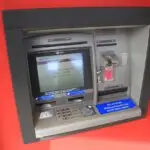
An Automated Teller Machine (ATM) card is a plastic card issued by banks to their customers. It allows customers to perform basic banking transactions electronically at an ATM machine without needing to visit a bank branch.
How an ATM Operates:
- Card Insertion: Insert the ATM card into the designated slot on the machine.
- PIN Entry: Enter your Personal Identification Number (PIN) carefully and secretly.
- Transaction Selection: Choose the desired transaction (e.g., withdrawal, balance inquiry, mini statement, transfer) from the menu.
- Amount/Details Entry: Enter the amount for withdrawals or transfer details.
- Confirmation: Confirm the transaction details.
- Cash/Receipt Dispensing: The machine dispenses cash (if withdrawal) and a transaction receipt.
- Card Retrieval: Remember to take your ATM card after the transaction.
Benefits of Using an ATM:
- 24/7 access to cash and banking services.
- Convenience for withdrawals and inquiries outside banking hours.
- Reduces the need to carry large amounts of physical cash.
- Provides a record of transactions through receipts.
- Allows for quick transfers between accounts.
Safety Tips for ATM Usage:
- Protect your PIN; do not share it with anyone.
- Be aware of your surroundings before and during a transaction.
- Cover the keypad when entering your PIN.
- Avoid using ATMs in poorly lit or isolated areas.
- Check for any suspicious devices attached to the ATM.
- Do not accept help from strangers at the ATM.
- Keep your transaction receipt for record-keeping.
Money Transfer Services
Money transfer services allow individuals to send and receive money across different locations, often internationally, without needing a bank account. They provide a fast and secure way to move funds.
The following are common money transfer services:
- Western Union: A global service for sending and receiving money, often used for international remittances. Senders pay at an agent location, and receivers can collect cash at another agent location using a tracking number.
- MoneyGram: Similar to Western Union, it is another widely used international money transfer service that allows fast and reliable sending and receiving of money worldwide through its agent network.
E-banking (Electronic Banking)
E-banking, also known as electronic banking or internet banking, refers to the use of electronic means and the internet to conduct banking transactions. It offers customers convenience and accessibility to various banking services from anywhere, anytime.
The following are examples of e-banking services:
- Online Banking: Performing banking transactions through a bank’s website using a computer or mobile device.
- Mobile Banking: Conducting banking activities via a mobile application provided by the bank.
- Point of Sale (POS) Terminal: A device used to process card payments at retail stores and businesses.
- USSD Banking: Using unstructured supplementary service data (USSD) codes on mobile phones to perform transactions without internet access.
- Automated Teller Machine (ATM): As discussed, ATMs are a form of e-banking.
- Electronic Funds Transfer (EFT): The electronic movement of money from one bank account to another.
Teaching Methods/Instructional Techniques
Discussion, Lecture, Demonstration, Question and Answer, Visual Aids
Instructional Procedures
Step 1: Introduction
Time: 5 minutes
Teaching Skill: Set Induction
Teacher’s Activity: The teacher greets the pupils, reviews the previous lesson on traditional payment methods, and introduces the topic of modern electronic payments, emphasizing their growing importance.
Pupils’ Activity: Pupils respond to greetings, briefly recall the previous lesson, and listen attentively to the introduction of the new topic.
Learning Point: Pupils are prepared for the new lesson and understand its relevance.
Step 2: Automated Teller Machine (ATM) Card
Time: 10 minutes
Teaching Skill: Explanation/Demonstration
Teacher’s Activity: The teacher explains what an ATM card is and uses a sample ATM card and pictures to demonstrate how an ATM machine operates, covering card insertion, PIN entry, withdrawal, balance inquiry, and the importance of safety measures.
Pupils’ Activity: Pupils observe the demonstration, ask questions, and listen to the explanation of ATM operations and safety.
Learning Point: Pupils understand the concept and basic operation of an ATM card and machine.
Step 3: Benefits of ATM Usage
Time: 5 minutes
Teaching Skill: Brainstorming/Discussion
Teacher’s Activity: The teacher guides pupils to identify and discuss the benefits of using an ATM, prompting them with questions like “Why do people use ATMs?”
Pupils’ Activity: Pupils actively participate by stating various benefits of ATM usage, such as convenience and accessibility.
Learning Point: Pupils can articulate the advantages of using ATM services.
Step 4: Safety Tips for ATM Usage
Time: 5 minutes
Teaching Skill: Guided Discussion
Teacher’s Activity: The teacher facilitates a discussion on important safety tips when using an ATM, drawing from the earlier explanation and pupils’ input.
Pupils’ Activity: Pupils describe steps to use an ATM safely, sharing their knowledge and experiences.
Learning Point: Pupils learn and internalize crucial safety measures for ATM transactions.
Step 5: Money Transfer Services
Time: 5 minutes
Teaching Skill: Explanation
Teacher’s Activity: The teacher explains the concept of money transfer services and describes Western Union and MoneyGram as key examples, highlighting their global reach and how they facilitate remittances.
Pupils’ Activity: Pupils listen and take notes on the different money transfer services and their functions.
Learning Point: Pupils identify and understand the purpose of major money transfer services.
Step 6: E-banking (Electronic Banking)
Time: 5 minutes
Teaching Skill: Explanation/Listing
Teacher’s Activity: The teacher defines e-banking and provides various examples of e-banking services such as online banking, mobile banking, POS terminals, and USSD banking.
Pupils’ Activity: Pupils listen, ask questions for clarification, and note down the definition and examples of e-banking.
Learning Point: Pupils understand the broad concept of e-banking and its diverse applications.
Step 7: Evaluation/Review
Time: 5 minutes
Teaching Skill: Questioning/Assessment
Teacher’s Activity: The teacher evaluates the learning by asking the following questions:
- Define an ATM card.
- List three benefits of using an ATM.
- State two important safety tips when using an ATM.
- Mention two examples of money transfer services.
- Identify three examples of e-banking services.
Pupils’ Activity: Pupils answer orally and in writing.
Learning Point: Pupils demonstrate understanding of the lesson.
Step 8: Conclusion
Time: 5 minutes
Teaching Skill: Summarization/Assignment
Teacher’s Activity: The teacher summarizes the key learning points of the lesson, emphasizing the importance of modern payment systems in daily life and commerce. The teacher then gives an assignment.
Pupils’ Activity: Pupils listen to the summary and copy the assignment.
Learning Point: Pupils consolidate their understanding and are given tasks to reinforce learning.
Lesson Keywords
- ATM Card – A plastic card allowing electronic banking transactions at an Automated Teller Machine.
- PIN – Personal Identification Number, a secret code used to authenticate transactions.
- Western Union – A global service for sending and receiving money, often internationally.
- MoneyGram – Another international money transfer service for sending and receiving money worldwide.
- E-banking – Electronic banking, using electronic means and the internet to conduct banking transactions.
- Online Banking – Banking services accessed via a bank’s website.
- Mobile Banking – Banking services accessed via a mobile application.
- POS Terminal – Point of Sale terminal, a device for processing card payments at businesses.
- USSD Banking – Banking services performed using USSD codes on mobile phones.
Differentiation
For pupils who grasp concepts quickly, the teacher can challenge them to research emerging payment technologies like cryptocurrency or mobile wallets. For those who require more support, the teacher can provide simplified handouts or pair them with peers for collaborative learning and discussion.
Note for teachers using this lesson plan
Teachers should ensure they have adequate visual aids, such as pictures of different ATM interfaces and e-banking platforms, to make the lesson engaging and practical. Emphasize the security aspects of electronic payments, as this is critical knowledge for pupils. Encourage pupils to share their experiences or questions regarding electronic payment systems to foster an interactive learning environment.
Community Join the conversation Open discussion +