

Class: Senior Secondary School 2 (SS2 / SSS2)
Term: Second Term
Week: 3
Age: 16 years
Duration: 45 minutes
Subject: Office Practice
Curriculum Theme: Financial Transactions and Services
Previous Lesson: Method of Payment: Postal and Money Orders, Transfers and Vouchers.
Topic: Method of Payment cont
Subject Matter: Meaning of e-banking (banking services done electronically), services under e-banking (ATM, credit card, debit card)
Specific Objectives
By the end of the lesson, pupils should be able to:
Cognitive Domain:
- Define e-banking.
- Identify various services offered under e-banking.
- Explain the uses of ATM, credit cards, and debit cards.
Affective Domain:
- Appreciate the convenience and speed of e-banking services.
- Recognize the importance of safety precautions when using e-banking.
Psychomotor Domain:
- Differentiate between a credit card and a debit card.
- Illustrate the basic steps of using an ATM.
Social Domain:
- Discuss the impact of e-banking on modern business transactions.
Reference Materials
The following resources were used in planning this lesson:
- Senior Secondary Schools Education Curriculum
- State Unified Scheme of Work
- Office Practice for Senior Secondary Schools Textbook
Instructional Materials
The teacher will teach this lesson with the aid of:
- Pictures of ATM
- Sample credit and debit cards
- Bank forms related to e-banking
- E-banking service chart
Rationale for the Lesson
This lesson helps pupils understand modern methods of payment, specifically e-banking. It enables them to recognize the convenience and speed of electronic transactions, which are important skills for personal finance and future business practices in a digital world.
Prerequisite/Previous Knowledge
Pupils have basic knowledge of traditional methods of payment and banking services.
Lesson Content/Board Summary
METHOD OF PAYMENT: E-BANKING
Meaning of E-banking
E-banking, also known as electronic banking or online banking, refers to any banking service that is conducted over the internet or through other electronic means. It allows customers to perform financial transactions remotely without visiting a bank branch, offering speed and convenience.
Services under E-banking
The following are common services offered under e-banking:
-
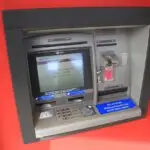
Automated Teller Machine (ATM) – An electronic telecommunications device that enables customers of financial institutions to perform financial transactions, such as cash withdrawals, deposits, fund transfers, or obtaining account information, at any time and without the need for direct interaction with bank staff.
- Usage: Insert card, enter PIN, select transaction.
- Safety: Keep PIN confidential, be aware of surroundings, avoid suspicious machines.
-
Credit Card – A payment card issued to users to enable the cardholder to pay a merchant for goods and services based on the cardholder’s promise to pay for them. The issuer creates a revolving account and grants a line of credit to the cardholder, from which the user can borrow money for payment to a merchant or as a cash advance.
- Usage: Swipe/insert/tap card, sign or enter PIN, pay back borrowed amount.
- Safety: Report lost/stolen cards immediately, check statements regularly.
-
Debit Card – A payment card that deducts money directly from a consumer’s checking account when used for a purchase. It is linked to the cardholder’s bank account, and funds are immediately transferred from the account to the merchant’s account.
- Usage: Swipe/insert/tap card, enter PIN, funds deducted from account.
- Safety: Keep PIN confidential, monitor account balance, avoid sharing card details.
- Internet Banking (Online Banking) – Allows customers to conduct financial transactions on a secure website operated by their bank.
- Mobile Banking – Services offered by a bank or other financial institution that allow its customers to conduct financial transactions remotely using a mobile device such as a smartphone or tablet.
- USSD Banking – Banking services provided through Unstructured Supplementary Service Data codes, allowing basic transactions on feature phones without internet access.
- Point of Sale (POS) Terminals – Devices used by merchants to process card payments for goods and services at their physical locations.
Teaching Methods/Instructional Techniques
Discussion, Lecture, Demonstration, Question and Answer, Visual Aids
Instructional Procedures
Step 1: Introduction
Time: 5 minutes
Teaching Skill: Set Induction
Teacher’s Activity: The teacher asks pupils to mention different ways they have seen people pay for goods and services, leading them to think about electronic payments.
Pupils’ Activity: Pupils mention various payment methods like cash, cheques, and some might mention ATM cards.
Learning Point: Pupils recall previous knowledge about payment methods and are introduced to the lesson topic.
Step 2: Meaning of E-banking
Time: 10 minutes
Teaching Skill: Explanation
Teacher’s Activity: The teacher explains the meaning of e-banking, emphasizing its convenience, speed, and remote access, and writes the definition on the board.
Pupils’ Activity: Pupils listen attentively, ask questions for clarification, and copy the definition into their notes.
Learning Point: Pupils understand what e-banking is and why it is used.
Step 3: Automated Teller Machine (ATM)
Time: 10 minutes
Teaching Skill: Demonstration/Explanation
Teacher’s Activity: The teacher explains what an ATM is, how it is used for withdrawals, deposits, and transfers, and highlights important safety tips. The teacher uses pictures of an ATM for visual aid.
Pupils’ Activity: Pupils observe the pictures, participate in discussions, and ask questions about ATM usage and safety.
Learning Point: Pupils learn about ATM services and how to use them safely.
Step 4: Credit Card
Time: 5 minutes
Teaching Skill: Explanation
Teacher’s Activity: The teacher explains what a credit card is, its function as a line of credit, and how it differs from cash. The teacher shows a sample credit card.
Pupils’ Activity: Pupils examine the sample card, listen to the explanation, and note the key features.
Learning Point: Pupils understand the concept and use of a credit card.
Step 5: Debit Card
Time: 5 minutes
Teaching Skill: Explanation
Teacher’s Activity: The teacher explains what a debit card is, its direct link to a bank account, and how it is used for direct deductions. The teacher shows a sample debit card.
Pupils’ Activity: Pupils observe the sample card, listen to the explanation, and ask questions to clarify differences from a credit card.
Learning Point: Pupils understand the concept and use of a debit card.
Step 6: Other E-banking Services
Time: 5 minutes
Teaching Skill: Listing/Briefing
Teacher’s Activity: The teacher briefly mentions other e-banking services like internet banking, mobile banking, USSD banking, and POS terminals, explaining their basic functions.
Pupils’ Activity: Pupils listen and note down the names of these additional services.
Learning Point: Pupils become aware of the broader scope of e-banking services.
Step 7: Evaluation/Review
Time: 5 minutes
Teaching Skill: Questioning/Assessment
Teacher’s Activity: The teacher evaluates the learning by asking the following questions:
- What is e-banking?
- Mention three services offered under e-banking.
- How does a debit card differ from a credit card?
- State two safety tips for using an ATM.
Pupils’ Activity: Pupils answer orally and in writing.
Learning Point: Pupils demonstrate understanding of the lesson.
Step 8: Conclusion
Time: 5 minutes
Teaching Skill: Summarization
Teacher’s Activity: The teacher summarizes the key points of the lesson, reiterating the importance of e-banking in modern transactions and assigns a take-home assignment.
Pupils’ Activity: Pupils listen to the summary and copy the assignment.
Learning Point: Pupils consolidate their understanding of e-banking and its services.
Lesson Keywords
- E-banking – Electronic banking services conducted remotely.
- ATM – Automated Teller Machine for cash transactions.
- Credit Card – Payment card for borrowing money up to a limit.
- Debit Card – Payment card linked directly to a bank account.
- Online Banking – Banking services via the internet.
- Mobile Banking – Banking services via mobile devices.
Differentiation
For pupils who grasp concepts quickly, the teacher can ask them to research and present on the security measures implemented by banks for e-banking. For those who need more support, the teacher will provide simplified explanations and visual aids, ensuring they understand the basic definitions and uses of ATM, credit, and debit cards.
Note for teachers using this lesson plan
Ensure to use real-life examples or scenarios to make the lesson relatable. Encourage pupils to share their experiences or observations about e-banking. Emphasize the security aspects of e-banking to promote responsible usage.

Community Join the conversation Open discussion +