

Class: Pre-School Level 4
Term: Third Term
Week: 2
Age: 5 years
Duration: 30 minutes
Subject: Social Habits
Curriculum Theme: Social Habits
Previous Lesson: Pupils learned about their family and community.
Topic: Nigeria, My Country and the Coat of Arms
Subject Matter: Nigeria, My Country – Identification of country. – Description of the Coat of Arms of Nigeria. Weekly focus: Nigeria, My Country and the Coat of Arms.
Specific Objectives
By the end of the lesson, pupils should be able to:
Cognitive Domain
- Identify Nigeria as their country.
- Recognise the Coat of Arms of Nigeria.
- Name some elements found on the Coat of Arms (e.g., eagle, horses, shield).
Affective Domain
- Show appreciation for Nigeria as their country.
- Express interest in national symbols.
Psychomotor Domain
- Point to the Coat of Arms when shown.
- Colour a picture of the Coat of Arms.
Social Domain
- Participate in discussions about national identity.
Reference Materials
- NAPPS National Unified Teaching Scheme for Pre-School Level 4
- Early Childhood Care and Education resources
- Relevant picture books on Nigerian symbols
Instructional Materials
- Charts showing the map of Nigeria
- Pictures of the Coat of Arms of Nigeria
- Coloured drawings or printouts of the Coat of Arms for colouring
- Crayons
- Drawing paper
- A globe or world map (optional, to show Nigeria’s location)
Rationale for the Lesson
This lesson helps 5-year-old pupils develop a sense of belonging and national identity by introducing them to Nigeria as their country and its important national symbol, the Coat of Arms. Understanding these symbols at an early age fosters patriotism and respect for their nation.Prerequisite/Previous Knowledge
Pupils can identify their home, family members, and their school. They also know their own names and perhaps the name of their town or city.Lesson Content/Board Summary
Nigeria, My Country and the Coat of Arms
Nigeria is our country. It is a beautiful country with many people and different cultures. We are all Nigerians!
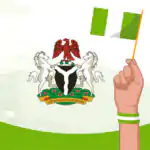
The Coat of Arms is a special symbol of Nigeria. It tells us important things about our country. It is found on many important government papers and buildings.
What is on the Coat of Arms?
- Black Shield: Represents the fertile soil of Nigeria.
- Two White Horses: Symbolise dignity and pride.
- Green and White Wavy Bands: Represent the two main rivers of Nigeria, River Niger and River Benue, and their meeting point.
- Red Eagle: Stands for strength.
- Green and White Flowers (Coctus Spectabilis): These are beautiful flowers found in Nigeria, representing the beauty of our land.
- Motto: “Unity and Faith, Peace and Progress.” This tells us what Nigerians should believe in and work towards.
What the Teacher Should Show or Draw
The teacher should display a large, clear picture or chart of the Nigerian Coat of Arms. Point to each part as you describe it.
- Point to the black shield.
- Point to the white horses.
- Point to the green and white wavy bands.
- Point to the red eagle at the top.
- Point to the green and white flowers at the base.
Our Country’s Symbol Rhyme
Tune: Twinkle, Twinkle Little Star
Lyrics:
Nigeria, our dear country,
Proud and strong for all to see.
Green and white, our flag so bright,
Coat of Arms, a lovely sight.
Eagle, horses, shield so grand,
Nigeria, our fatherland!
Actions:
- Nigeria, our dear country: Point to self, then sweep hands wide.
- Proud and strong for all to see: Stand tall, hands on hips.
- Green and white, our flag so bright: Point to imaginary flag colours or a flag if available.
- Coat of Arms, a lovely sight: Make a ‘shield’ shape with hands.
- Eagle, horses, shield so grand: Flap ‘eagle’ wings, gallop hands, make ‘shield’ shape again.
- Nigeria, our fatherland!: Place hands over heart.
How to use the rhyme: Sing the rhyme slowly and clearly, demonstrating the actions. Encourage pupils to join in the actions and repeat the words after you. Repeat several times to help them remember.
Watch and Learn About Our Coat of Arms
The teacher will play a short, child-friendly video explaining the Nigerian Coat of Arms.
Key Words
- Nigeria – Our country.
- Country – A land where people live together.
- Coat of Arms – A special picture that is a symbol of our country.
- Symbol – Something that stands for something else.
- Eagle – A strong bird.
- Horses – Animals that represent dignity.
Teaching Methods/Instructional Techniques
Play-based Learning, Demonstration, Guided Practice, Songs and Rhymes, Picture Talk, Question and Answer, Repetition, Practical Activity.Instructional Procedures
Step 1: Introduction
Time: 3 minutes
Teaching Skill: Engaging/Recalling
Teacher’s Activity: The teacher greets the pupils and asks them, “What is the name of our country?” The teacher then shows a map of Nigeria and says, “This is Nigeria, our country!”
Pupils’ Activity: Pupils respond to the question and look at the map of Nigeria.
Learning Point: Pupils recall and identify Nigeria as their country.
Step 2: Presentation of the Coat of Arms
Time: 5 minutes
Teaching Skill: Introducing/Explaining
Teacher’s Activity: The teacher introduces the Coat of Arms by showing a large picture. “Today, we will learn about a very special picture that represents our country, Nigeria. It is called the Coat of Arms.” The teacher points to the Coat of Arms and says its name clearly.
Pupils’ Activity: Pupils observe the picture of the Coat of Arms and listen to the teacher. They repeat “Coat of Arms” after the teacher.
Learning Point: Pupils are introduced to and recognise the Coat of Arms of Nigeria.
Step 3: Describing the Elements
Time: 7 minutes
Teaching Skill: Describing/Explaining
Teacher’s Activity: The teacher points to each element of the Coat of Arms (eagle, horses, shield, wavy bands, flowers) and gives a very simple explanation of what each represents, using the “Lesson Content/Board Summary” as a guide. “This is the eagle, it means strength. These are the horses, they mean pride.”
Pupils’ Activity: Pupils listen attentively, point to the elements as the teacher names them, and repeat the names of the elements after the teacher.
Learning Point: Pupils learn about the different parts of the Coat of Arms and their simple meanings.
Step 4: Rhyme Reinforcement
Time: 4 minutes
Teaching Skill: Reinforcing/Singing
Teacher’s Activity: The teacher leads the pupils in singing the “Our Country’s Symbol Rhyme” with actions. The teacher sings slowly and encourages all pupils to participate.
Pupils’ Activity: Pupils sing the rhyme along with the teacher and perform the actions.
Learning Point: Pupils reinforce their knowledge of Nigeria and its Coat of Arms through song and movement.
Step 5: Video Learning
Time: 3 minutes
Teaching Skill: Visual Learning/Engagement
Teacher’s Activity: The teacher plays the short educational video about the Nigerian Coat of Arms for the pupils. “Now let’s watch a video to see our Coat of Arms again and learn more.”
Pupils’ Activity: Pupils watch the video and listen to the explanations. They may point to parts of the Coat of Arms on the screen.
Learning Point: Pupils gain further visual and auditory reinforcement of the Coat of Arms and its symbols.
Step 6: Practical Application – Colouring
Time: 5 minutes
Teaching Skill: Guiding/Practising
Teacher’s Activity: The teacher distributes printed outlines of the Coat of Arms and crayons. “Now you will colour your own Coat of Arms! Try to remember the colours we saw.” The teacher guides pupils on how to colour the different parts, for example, “The shield is black, the eagle is red.”
Pupils’ Activity: Pupils colour their pictures of the Coat of Arms, trying to use appropriate colours where possible.
Learning Point: Pupils apply their knowledge by colouring the Coat of Arms, developing fine motor skills.
Step 7: Evaluation/Review
Time: 2 minutes
Teaching Skill: Questioning/Assessment
Teacher’s Activity: The teacher checks pupils’ understanding through short questions and practical tasks.
- “What is the name of our country?”
- “What is this special picture called?” (pointing to the Coat of Arms)
- “Can you point to the eagle on the Coat of Arms?”
- “Can you show me your beautifully coloured Coat of Arms?”
Pupils’ Activity: Pupils respond orally and demonstrate the required skill where appropriate.
Learning Point: Pupils demonstrate understanding of the lesson.
Step 8: Conclusion
Time: 1 minute
Teaching Skill: Summarising/Encouraging
Teacher’s Activity: The teacher praises the pupils for their participation and their colouring work. “Well done, children! We learned about Nigeria, our country, and our special Coat of Arms today. We are proud Nigerians!”
Pupils’ Activity: Pupils respond with “Thank you, teacher” and show their finished work.
Learning Point: Pupils feel a sense of accomplishment and pride in their country.
Lesson Keywords
- Nigeria – Our country.
- Country – A land where people live.
- Coat of Arms – A special picture that is a symbol of our country.
- Eagle – A strong bird on the Coat of Arms.
- Horses – Animals on the Coat of Arms.
Differentiation
- Support: For pupils who struggle to identify parts of the Coat of Arms, the teacher can use a simplified chart with fewer details or provide hand-over-hand guidance during colouring. Focus on identifying just one or two key elements (e.g., the eagle and the horses). Provide extra verbal repetition of “Nigeria” and “Coat of Arms.”
- Extension: For pupils who quickly grasp the concepts, the teacher can ask them to name more elements of the Coat of Arms or discuss what colours they remember seeing on the real Coat of Arms. They could also draw another simple Nigerian symbol like the flag.


Community Join the conversation Open discussion +