

Note for teachers using this lesson plan
Before the lesson, prepare clear pictures or flashcards of a nuclear family (father, mother, children) and some dolls or puppets representing family members. The central idea for pupils to grasp is that a family is made up of people who live together and love each other, specifically identifying the father, mother, and children as members of a nuclear family. Successful learning will be observed when pupils can point to and name these family members and participate in simple role-play activities.
Class: Pre-School Level 2
Term: First Term
Week: 6
Age: 3 years
Duration: 30 minutes
Subject: Social Habits
Curriculum Theme: Social Habits
Previous Lesson: Understanding people who live in our homes.
Topic: MY FAMILY: MEANING AND MEMBERS OF A NUCLEAR FAMILY
Subject Matter: My Family: Meaning and Members of a Nuclear Family.
Specific Objectives
By the end of the lesson, pupils should be able to:
Cognitive Domain
- State a simple meaning of “family.”
- Identify the members of a nuclear family (father, mother, children).
- Name the members of a nuclear family.
Affective Domain
- Show love and appreciation for their family members.
- Participate happily in discussions about family.
Psychomotor Domain
- Point to pictures of different nuclear family members.
- Demonstrate simple actions related to family roles during role-play.
Social Domain
- Share simple ideas about their own family members.
Reference Materials
- NAPPS National Unified Teaching Scheme for Pre-School Level 2
- Relevant Early Childhood Care and Education resources
Instructional Materials
- Charts showing a nuclear family
- Posters with pictures of fathers, mothers, and children
- Family picture cards
- Dolls or puppets representing family members
- Audio player for songs
Rationale for the Lesson
Understanding the concept of family is fundamental for young children as it forms the basis of their social world. At age three, learning about family helps pupils develop a sense of belonging, identity, and an awareness of the important people in their lives, fostering emotional security and early social skills.
Prerequisite/Previous Knowledge
Pupils are familiar with the people who live in their homes and can recognise some of their close relatives.
Lesson Content/Board Summary
MY FAMILY: MEANING AND MEMBERS OF A NUCLEAR FAMILY
A family is a group of people who live together and love each other.
A nuclear family is a small family that has a father, a mother, and their children.
Members of a Nuclear Family
- Father: He is the daddy. He takes care of the family.
- Mother: She is the mummy. She takes care of the family and the home.
- Children: These are the boys and girls in the family. They learn and play.
My Family Song
Tune: “Are You Sleeping, Brother John?”
Lyrics:
My family, my family,
Yes, we are!
Father, Mother, Children,
We all love each other,
Yes, we do!
Yes, we do!
Actions: Point to self, then make a circle with hands for “family.” Point to thumb for father, index for mother, other fingers for children. Hug self for “love.”
Watch and Learn About Family
Key Words
- Family – People who live together and love each other.
- Father – Daddy.
- Mother – Mummy.
- Children – Boys and girls in the family.
💡 Teacher Guide for Using This Board Summary
How to teach the content: Begin by asking pupils about the people they live with. Introduce the word “family” and explain its simple meaning using clear, child-friendly language. Then, introduce the concept of a “nuclear family” and explicitly name the father, mother, and children. Use the picture cards and charts to show examples of each family member as you name them.
What to show or demonstrate: Display charts and posters of nuclear families. Point to the father, mother, and children in the pictures. Use dolls or puppets to represent each family member and demonstrate simple roles (e.g., “Daddy goes to work,” “Mummy cooks,” “Children play”).
How to use the rhyme/song: Teach the “My Family Song” line by line, demonstrating the actions. Sing it together several times to help pupils memorise the lyrics and actions. Encourage enthusiastic participation.
How to use the video: Introduce the video as a fun way to see different families. Play the video “My Family Song | The Kids’ Picture Show” (URL: https://www.youtube.com/watch?v=D-w-l4lqT1Y). After watching, discuss what they saw, asking pupils to name the family members shown in the video. Encourage them to sing along if they remember parts of the song.
What to watch for: Observe if pupils can correctly identify and name the father, mother, and children in pictures. Watch for their engagement during the song and video, and their willingness to share about their own families.
Teaching Methods/Instructional Techniques
- Play-based Learning
- Demonstration
- Picture Talk
- Songs and Rhymes
- Question and Answer
- Role-play
- Repetition
Instructional Procedures
Step 1: Introduction
Time: 3 minutes
Teaching Skill: Engaging/Recalling
Teacher’s Activity: The teacher greets the pupils and asks them, “Who lives in your house with you?” The teacher listens to their responses and introduces the topic of “My Family.”
Pupils’ Activity: Pupils respond by mentioning people who live with them (e.g., Mummy, Daddy, brother, sister). They listen attentively to the teacher.
Learning Point: Pupils recall familiar people in their homes and are introduced to the lesson topic.
Step 2: Meaning of Family
Time: 4 minutes
Teaching Skill: Explaining/Defining
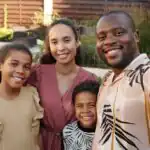
Teacher’s Activity: The teacher explains in simple terms, “A family is a group of people who live together and love each other.” The teacher shows a picture of a happy family.
Pupils’ Activity: Pupils listen to the explanation and look at the picture of the family. They repeat the phrase “Family loves each other.”
Learning Point: Pupils understand the basic meaning of “family.”
Step 3: Introducing Nuclear Family Members (Father)
Time: 4 minutes
Teaching Skill: Identifying/Naming
Teacher’s Activity: The teacher introduces the concept of a “nuclear family” as a small family with father, mother, and children. The teacher then points to the “Father” in a picture and says, “This is the Father. He is the daddy.” The teacher asks, “Who is this?”
Pupils’ Activity: Pupils look at the picture, listen to the teacher, and repeat “Father” or “Daddy.” They point to the father in the picture.
Learning Point: Pupils identify and name the father as a member of a nuclear family.
Step 4: Introducing Nuclear Family Members (Mother)
Time: 4 minutes
Teaching Skill: Identifying/Naming
Teacher’s Activity: The teacher points to the “Mother” in the family picture and says, “This is the Mother. She is the mummy.” The teacher asks, “Who is this?” and encourages pupils to say “Mother” or “Mummy.”
Pupils’ Activity: Pupils look at the picture, listen, and repeat “Mother” or “Mummy.” They point to the mother in the picture.
Learning Point: Pupils identify and name the mother as a member of a nuclear family.
Step 5: Introducing Nuclear Family Members (Children)
Time: 4 minutes
Teaching Skill: Identifying/Naming
Teacher’s Activity: The teacher points to the “Children” in the family picture and says, “These are the Children. They are the boys and girls in the family.” The teacher asks, “Who are these?”
Pupils’ Activity: Pupils look at the picture, listen, and repeat “Children.” They point to the children in the picture.
Learning Point: Pupils identify and name the children as members of a nuclear family.
Step 6: Reinforcement through Song and Role-play
Time: 5 minutes
Teaching Skill: Reinforcing/Practising
Teacher’s Activity: The teacher leads pupils in singing the “My Family Song” with actions. The teacher then uses dolls/puppets to briefly role-play a nuclear family, asking pupils to identify each member as they are presented.
Pupils’ Activity: Pupils sing the song with actions. They watch the role-play and name the family members (father, mother, children) as the teacher presents them.
Learning Point: Pupils reinforce their knowledge of nuclear family members through song and interactive play.
Step 7: Evaluation/Review
Time: 4 minutes
Teaching Skill: Questioning/Assessment
Teacher’s Activity: The teacher checks pupils’ understanding through short questions and practical tasks.
- “What is a family?” (Guide them to say “People who live together and love each other.”)
- “Name one person in a nuclear family.”
- “Point to the mother in this picture.” (Teacher shows a family picture).
Pupils’ Activity: Pupils respond orally and demonstrate the required skill where appropriate.
Learning Point: Pupils demonstrate understanding of the lesson.
Step 8: Conclusion
Time: 2 minutes
Teaching Skill: Summarising/Closing
Teacher’s Activity: The teacher praises the pupils for their participation and reminds them that their family loves them very much. The teacher leads a final round of the “My Family Song.”
Pupils’ Activity: Pupils respond to the teacher’s praise and sing the song one last time.
Learning Point: Pupils feel appreciated and consolidate the lesson’s main idea.
Lesson Keywords
- Family – People who live together and love each other.
- Father – Daddy.
- Mother – Mummy.
- Children – Boys and girls in the family.
Differentiation
- Support: For pupils who need extra help, use larger, clearer pictures and repeat the names of family members slowly. Provide hand-over-hand guidance to point to the correct family member in pictures.
- Extension: For pupils who grasp the concept quickly, ask them to identify who does certain tasks in a family (e.g., “Who goes to work?” “Who cooks for you?”) or to mention the names of their own father, mother, or siblings.

Community Join the conversation Open discussion +