

Note for teachers using this lesson plan
Before the lesson, gather real or clear picture examples of a Bible, a Cross, a Quran, a Rosary, and simple, child-safe items representing charms or amulets (e.g., a beaded necklace, a small carved wooden object). The central idea is for pupils to recognise these objects and understand that different people use different objects when they worship, fostering an attitude of respect. During the drama activity, ensure all pupils have a chance to participate in a role, promoting inclusivity and active learning.
Class: Pre-School Level 2
Term: Second Term
Week: 4
Age: 3 years
Duration: 30 minutes
Subject: Social Habits
Curriculum Theme: Social Habits
Previous Lesson: Understanding different family celebrations
Topic: Objects of Worship in Christianity, Islam and Traditional Religion
Subject Matter: Objects of Worship: 1. the Bible and the Cross 2. the Koran and the Rosary 3. Charms and Amulets. Weekly focus: Objects of Worship in Christianity, Islam and Traditional Religion.
Specific Objectives
By the end of the lesson, pupils should be able to:
Cognitive Domain
- Identify the Bible and the Cross as objects of worship for Christians.
- Identify the Quran and the Rosary as objects of worship for Muslims.
- Identify charms and amulets as objects of worship/protection in traditional religion.
- Name at least one object of worship for each religion discussed.
Affective Domain
- Show respect for different objects of worship.
- Listen attentively during discussions about different religions.
Psychomotor Domain
- Participate actively in the drama enacting roles of leaders and worshipers.
- Handle instructional materials (pictures/objects) carefully.
Social Domain
- Take turns and cooperate with peers during the role-play.
- Demonstrate an understanding of diversity in worship practices.
Reference Materials
- NAPPS National Unified Teaching Scheme for Pre-School Level 2
- Early Childhood Care and Education curriculum resources
Instructional Materials
- Charts and posters showing pictures of the Bible, Cross, Quran, Rosary, charms, and amulets.
- Real examples of a child-friendly Bible, a small cross, a child-friendly Quran, a rosary.
- Simple, child-safe objects to represent charms/amulets (e.g., a decorative necklace, a small carved wooden item).
- Simple costumes or props for role-play (e.g., a scarf for a head covering, a piece of cloth for a prayer mat, a small book).
Rationale for the Lesson
This lesson helps 3-year-olds begin to understand the diversity in their community and the world. By learning about different objects of worship, pupils develop an early appreciation for cultural and religious differences, fostering respect and tolerance from a young age. It connects to their daily experiences by helping them recognise symbols they might see around them.
Prerequisite/Previous Knowledge
Pupils can identify different people in their community and understand that people do different things. They have seen adults performing various actions and can participate in simple role-play.
Lesson Content/Board Summary
Objects of Worship in Christianity, Islam and Traditional Religion
People show love and respect to God or spirits in different ways. This is called worship. Sometimes they use special objects when they worship.
Christianity
- The Bible: This is a special book for Christians. They read stories and teachings from it.
- The Cross: This is a symbol of Jesus Christ. Christians wear it or see it in their churches.
Islam
- The Quran: This is a special book for Muslims. They read and learn from its teachings.
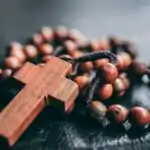
- The Rosary (Tasbih): Muslims use this string of beads to help them remember God and say prayers.
Traditional Religion
- Charms and Amulets: These are special objects that some people believe can protect them from harm or bring good luck. They can be made of beads, wood, or other materials.
It is important to respect how different people worship and the special objects they use.
Key Words
- Worship – Showing love and respect to God or spirits.
- Bible – A special book for Christians.
- Cross – A Christian symbol.
- Quran – A special book for Muslims.
- Rosary – Beads used for prayer, especially by Muslims (Tasbih) or Christians (Catholic Rosary).
- Charms – Objects believed to bring good luck or protection.
- Amulets – Objects believed to protect against evil or harm.
Respectful Worship Rhyme
Tune: “Twinkle, Twinkle Little Star”
Bible, Cross, and Quran too,
Rosary, charms, for me and you.
Different ways, people pray,
We respect them every day.
Love and kindness, we will show,
As we learn and as we grow.
Actions: Point to pictures of each object as it’s named. Cross arms over chest for “respect”. Make a heart shape with hands for “love and kindness”.
💡 Teacher Guide for Using This Board Summary
How to teach the content: Introduce the concept of worship simply. Use the real objects or clear pictures for each religion. Hold up the Bible and say, “This is a Bible, Christians use it.” Do the same for the Cross, Quran, Rosary, and examples of charms/amulets. Emphasise that these are special to different people. Keep explanations very short and concrete for 3-year-olds.
What to show or demonstrate: Display the charts/posters. Show the actual Bible, Cross, Quran, Rosary, and child-safe charm/amulet examples. Point to each object clearly and name it. Demonstrate how someone might hold a Bible or use a rosary (without making it a religious act, but showing the physical interaction). For traditional religion, show a simple necklace or carved item and explain it’s special to some people for protection.
How to use the rhyme/song: Sing the “Respectful Worship Rhyme” after introducing all the objects. Sing it slowly and clearly, performing the actions. Repeat the rhyme 2-3 times to help pupils remember the words and the message of respect.
What to watch for: Observe if pupils can correctly point to and name the objects when asked. Watch for their participation in the rhyme and their engagement during the role-play. Ensure they understand the basic idea that different people have different special objects for worship.
Teaching Methods/Instructional Techniques
- Play-based Learning
- Demonstration
- Guided Practice
- Picture Talk
- Question and Answer
- Role-play
- Songs and Rhymes
- Manipulation of Objects
Instructional Procedures
Step 1: Introduction
Time: 3 minutes
Teaching Skill: Motivation/Engagement
Teacher’s Activity: The teacher greets pupils and asks them what they do to show love to their parents or friends (e.g., give hugs, say nice words). Introduce the idea that people also show love and respect to God or spirits in different ways, which is called worship.
Pupils’ Activity: Pupils respond to questions about showing love and listen to the teacher.
Learning Point: Pupils understand the concept of showing love and respect.
Step 2: Presentation – Christianity
Time: 4 minutes
Teaching Skill: Demonstration/Identification
Teacher’s Activity: The teacher shows pupils a Bible and a Cross (real objects or clear pictures). “This is a Bible, Christians read from it. This is a Cross, it is special to Christians.” The teacher asks pupils to repeat the names.
Pupils’ Activity: Pupils look at the objects/pictures, listen, and repeat “Bible” and “Cross”.
Learning Point: Pupils identify and name the Bible and Cross as Christian objects of worship.
Step 3: Presentation – Islam
Time: 4 minutes
Teaching Skill: Demonstration/Identification
Teacher’s Activity: The teacher shows pupils a Quran and a Rosary (Tasbih) (real objects or clear pictures). “This is a Quran, Muslims read from it. This is a Rosary, Muslims use it for prayers.” The teacher asks pupils to repeat the names.
Pupils’ Activity: Pupils look at the objects/pictures, listen, and repeat “Quran” and “Rosary”.
Learning Point: Pupils identify and name the Quran and Rosary as Muslim objects of worship.
Step 4: Presentation – Traditional Religion
Time: 4 minutes
Teaching Skill: Demonstration/Identification
Teacher’s Activity: The teacher shows pupils simple, child-safe objects like a decorative necklace or a small carved item, explaining they are like ‘charms’ or ‘amulets’. “Some people believe these special objects can keep them safe or bring good luck.” The teacher asks pupils to repeat “charms” and “amulets”.
Pupils’ Activity: Pupils look at the objects/pictures, listen, and repeat “charms” and “amulets”.
Learning Point: Pupils identify and name charms/amulets as objects used in traditional religion.
Step 5: Rhyme and Discussion
Time: 4 minutes
Teaching Skill: Songs and Rhymes/Reinforcement
Teacher’s Activity: The teacher leads pupils in singing the “Respectful Worship Rhyme” with actions. The teacher reinforces the message of respecting all ways of worship. “See, different people have different special things. We must respect everyone.”
Pupils’ Activity: Pupils sing the rhyme with actions and listen to the teacher’s message of respect.
Learning Point: Pupils reinforce the names of objects and the importance of respect for diverse practices.
Step 6: Drama Activity
Time: 5 minutes
Teaching Skill: Role-play/Guided Practice
Teacher’s Activity: The teacher sets up a simple drama area with the objects and props. “Now, let’s pretend! Who wants to be a leader? Who wants to be a worshipper?” The teacher helps pupils dress up with simple props and guides them to enact simple roles, using the objects (e.g., holding a ‘Bible’, touching a ‘rosary’, showing a ‘charm’).
Pupils’ Activity: Pupils choose roles, dress up, and participate in the drama, pretending to be leaders and worshippers using the objects.
Learning Point: Pupils actively engage with the concept of worship and the use of objects through role-play.
Step 7: Evaluation/Review
Time: 4 minutes
Teaching Skill: Questioning/Assessment
Teacher’s Activity: The teacher checks pupils’ understanding through short questions and practical tasks.
- “Point to the Bible.”
- “What is this called?” (holding up a Cross).
- “Show me the Quran.”
- “What do some people use for protection or good luck?” (showing a charm).
- “Do all people worship in the same way?”
Pupils’ Activity: Pupils respond orally and demonstrate the required skill where appropriate (pointing, naming).
Learning Point: Pupils demonstrate understanding of the lesson by identifying objects and acknowledging diversity.
Step 8: Conclusion
Time: 2 minutes
Teaching Skill: Summarization
Teacher’s Activity: The teacher praises pupils for their participation and summarises that people worship in different ways using different special objects. Emphasises that we must always be kind and respectful to everyone, no matter how they worship. Ends with a familiar closing song.
Pupils’ Activity: Pupils listen to the summary and sing the closing song.
Learning Point: Pupils leave with a reinforced message of respect and diversity.
Lesson Keywords
- Worship – Showing love and respect to God or spirits.
- Bible – A special book for Christians.
- Cross – A Christian symbol.
- Quran – A special book for Muslims.
- Rosary – Beads used for prayer.
- Charms – Objects believed to bring good luck.
- Amulets – Objects believed to protect against harm.
Differentiation
- Support: For pupils who are struggling, use larger and fewer pictures/objects. Provide more one-on-one repetition of names and actions. The teacher can model the pointing and naming more frequently and guide their hands during the drama.
- Extension: For pupils who grasp the concepts quickly, ask them to identify the objects without prompting. Encourage them to describe one object in their own simple words (e.g., “The Bible is a book for Christians”).
Community Join the conversation Open discussion +