

Note for teachers using this lesson plan
This lesson plan focuses on introducing Primary 1 pupils to the concepts of community, mobilisation, and the importance of working together to achieve common goals. Prepare simple visual aids or scenario cards to illustrate community needs and contributions. Ensure the role-play activity is well-organised and encourages active participation from all pupils. By the end of the lesson, pupils should be able to explain these concepts and demonstrate cooperation in a group task.
Class: Primary 1
Term: First Term
Week: 5
Age: 6 years
Duration: 45 minutes
Subject: Social and Citizenship Studies
Curriculum Theme: Civic Responsibilities and Social Justice
Focal competence: Involving and contributing to group tasks in the classroom and school
Key competencies/values: ICT and Digital Competencies
Skills:
- Role-playing working together to achieve a goal
Previous Lesson: Leadership responsibilities at home
Topic: Community Mobilisation
Subject Matter: Meaning of community, mobilisation, working together to achieve a goal
Specific Objectives
By the end of the lesson, pupils should be able to:
Cognitive Domain
- Explain the meaning of a community.
- Explain mobilisation as working together for a purpose.
- Define community mobilisation.
Affective Domain
- Appreciate the value of working together.
- Participate willingly in group tasks.
Psychomotor Domain
- Demonstrate working together to achieve a simple goal.
Social Domain
- Cooperate with classmates during group activities.
Reference Materials
The following resources were used in planning this lesson:
- 2025 Revised 9 Years Basic Education Curriculum
- Relevant State Unified Scheme of Work
- A suitable Social and Citizenship Studies textbook for Primary 1
- The HeadTeacher Scheme of work
Instructional Materials
The teacher will teach this lesson with the aid of:
- Pictures showing people working together (e.g., cleaning a classroom, building something)
- Scenario cards depicting simple community problems (e.g., dirty playground, broken toy)
- Chart paper to write down ideas
- Real objects or models for role-play (e.g., small broom, dustpan, toy blocks)
Rationale for the Lesson
This lesson introduces young pupils to the fundamental idea that people live and work together. Understanding community mobilisation helps them recognise their role in solving common problems. It also fosters a sense of responsibility and cooperation, which are essential for harmonious living in school and beyond.
Prerequisite/Previous Knowledge
Pupils are familiar with their immediate environment like their home and school. They also have a basic understanding of working with others during play or simple classroom activities.
Lesson Content/Board Summary
Community Mobilisation
Meaning of Community
A community is a group of people who live together in the same area, like a village, town, or even a school. They share things and help each other.
Examples of community members include:
- Parents
- Teachers
- Neighbours
- Friends
Meaning of Mobilisation
Mobilisation means bringing people together to work for a special reason or to achieve a particular goal.
Meaning of Community Mobilisation
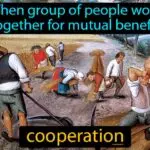
Community mobilisation means when people in a community come together to solve a problem or achieve a common goal that will benefit everyone. It is about working together as a team.
Community Problems that Bring People Together
Sometimes, there are problems in our community that need everyone’s help to fix. Examples include:
- A dirty classroom or school compound
- A broken school fence or gate
- A blocked drain in the school
- A damaged playground swing
Ways People Contribute to Community Work
When people work together, they can contribute in different ways:
- Time: Giving their time to help.
- Labour: Doing physical work.
- Ideas: Sharing good thoughts on how to solve the problem.
- Materials: Bringing things like brooms, paint, or tools.
- Money: Contributing money to buy needed items.
Benefits of Working Together
When a community works together, many good things happen:
- Problems are solved faster.
- The community becomes cleaner and safer.
- People learn to help each other.
- Everyone feels happy and proud of their community.
- It makes the community stronger.
Teaching Methods/Instructional Techniques
Discussion, Explanation, Question and Answer, Role-play, Group Work, Demonstration
Instructional Procedures
Step 1: Introduction
Time: 5 minutes
Teaching Skill: Storytelling/Questioning
Teacher’s Activity: The teacher greets the pupils and asks them about their families and neighbours. The teacher then tells a short, simple story about a family or group of friends who worked together to clean their compound or fix a broken toy. The teacher asks, “What happened when everyone helped?”
Pupils’ Activity: Pupils respond to greetings and answer questions about the story, sharing their ideas.
Learning Point: Importance of helping others
Step 2: Meaning of Community
Time: 7 minutes
Teaching Skill: Explanation/Illustration
Teacher’s Activity: The teacher explains the meaning of a community using simple language and examples like their school, street, or village. The teacher shows pictures of different communities and asks pupils to identify people in them.
Pupils’ Activity: Pupils listen, look at pictures, and name people they know in their community.
Learning Point: Definition of community
Step 3: Meaning of Mobilisation
Time: 7 minutes
Teaching Skill: Explanation/Analogy
Teacher’s Activity: The teacher explains mobilisation by relating it to a familiar group task, like getting ready for school assembly or packing up toys after play. “When we all get ready together for assembly, we are mobilising.” The teacher explains it means bringing people together for a purpose.
Pupils’ Activity: Pupils listen and give examples of when they get ready or work together in groups.
Learning Point: Meaning of mobilisation
Step 4: Meaning of Community Mobilisation
Time: 7 minutes
Teaching Skill: Connecting Concepts
Teacher’s Activity: The teacher combines the two concepts to explain “community mobilisation” as people in a community working together to achieve a goal. The teacher uses a simple example like cleaning the school compound.
Pupils’ Activity: Pupils repeat the meaning and give simple examples.
Learning Point: Understanding community mobilisation
Step 5: Ways People Contribute and Examples
Time: 7 minutes
Teaching Skill: Discussion/Scenario-based learning
Teacher’s Activity: The teacher presents a simple community problem (e.g., “Our classroom is very dirty”). The teacher asks pupils how they can help to solve it. The teacher guides them to mention contributing time, labour, ideas, or materials (e.g., using a broom, picking up litter). The teacher shows pictures of people contributing in different ways.
Pupils’ Activity: Pupils suggest ways to help and discuss different contributions.
Learning Point: Types of contributions
Step 6: Benefits of Working Together
Time: 3 minutes
Teaching Skill: Reinforcement
Teacher’s Activity: The teacher asks pupils what good things happen when people work together. The teacher summarises the benefits, such as problems being solved faster and the community becoming better.
Pupils’ Activity: Pupils share ideas on the good things that come from working together.
Learning Point: Advantages of cooperation
Step 7: Evaluation/Review
Time: 5 minutes
Teaching Skill: Questioning/Assessment
Teacher’s Activity: The teacher evaluates the learning by asking the following questions:
- What is a community?
- What does it mean to mobilise people?
- What is community mobilisation?
- Mention one way people can help in community work.
Pupils’ Activity: Pupils answer orally and in writing.
Learning Point: Assessment of understanding
Step 8: Note-Taking
Time: 4 minutes
Teaching Skill: Guided Writing
Teacher’s Activity: The teacher guides pupils to copy the essential Board Summary notes on the meaning of community, mobilisation, and community mobilisation into their notebooks.
Pupils’ Activity: Pupils copy the notes carefully into their notebooks.
Learning Point: Recording lesson information
Step 9: Conclusion
Time: 2 minutes
Teaching Skill: Consolidation
Teacher’s Activity: The teacher reminds pupils that working together makes tasks easier and helps everyone. The teacher encourages them to always cooperate with others in school and at home.
Pupils’ Activity: Pupils listen and acknowledge the importance of working together.
Learning Point: Reinforcing cooperation
Continuous Assessment/Further Study
Type: Homework/Practical Activity
Instruction: Ask your parents or guardians about a time when people in your street or village worked together to solve a problem. Draw a picture of people working together in your community.
- Ask an adult to tell you about a community problem that was solved by people working together.
- Draw a picture of people helping each other in your community.
- Write one sentence about why it is good to work together.
Lesson Keywords
- Community – A group of people living in the same place.
- Mobilisation – Bringing people together for a purpose.
- Working together – Cooperating to achieve a goal.
- Goal – Something you want to achieve.
- Contribute – To give something (time, effort, money) to help.
Differentiation
Support for weaker learners: Provide simpler definitions and more visual aids. Pair them with faster learners during group activities. Allow them to express ideas through drawing or pointing rather than only speaking.
Extension for faster learners: Encourage them to give more examples of community problems and how they can be solved. Ask them to think of different ways people can contribute beyond what was discussed.
Suggested Lesson Videos
For further visual understanding, search on YouTube for: Primary 1 meaning of community mobilisation Nigeria
Teacher Guide for Using This Lesson Plan
Before the lesson, gather relevant pictures or create simple scenario cards depicting community tasks or problems. Ensure the classroom is set up for easy group work or role-play. Begin by engaging pupils with a familiar story to introduce the idea of collective effort. Clearly explain the meaning of community, mobilisation, and community mobilisation using age-appropriate language and examples. Guide pupils through the role-play activity, ensuring every child has a chance to participate and demonstrate working together. During the note-taking step (Step 8), supervise pupils as they copy the Board Summary to ensure accuracy. Constantly check for understanding by asking questions and encouraging pupils to share their thoughts. Support weaker learners with direct assistance and visual cues, while challenging faster learners with more complex questions or additional examples. Emphasise the practical benefits of cooperation in their daily lives.


Community Join the conversation Open discussion +