

Note for teachers using this lesson plan
Before the lesson, gather real cleaning materials like a small broom, dustpan, and a clean rag or sponge. The central idea for pupils is to identify these tools by sight and name, and to understand their simple use in keeping our environment clean. Ensure all materials are child-safe. Successful learning will be observed when pupils can point to and name at least two cleaning items and imitate a simple cleaning action like sweeping.
Class: Pre-School Level 1
Term: Second Term
Week: 9
Age: 2 years
Duration: 30 minutes
Subject: Health Habits
Curriculum Theme: Health Habits
Previous Lesson: Pupils have learned about some things in their environment.
Topic: Clean Environment
Subject Matter: Materials for Keeping the Environment Clean
Specific Objectives
By the end of the lesson, pupils should be able to:
Cognitive Domain
- Identify common materials used for cleaning the environment when shown.
- Name at least two materials used for keeping the environment clean.
Affective Domain
- Show interest in keeping their environment clean.
- Participate in simple cleaning activities with guidance.
Psychomotor Domain
- Point to cleaning materials when asked.
- Demonstrate simple actions like sweeping with a broom (imitation).
Social Domain
- Work together with the teacher during guided cleaning activities.
Reference Materials
- NAPPS National Unified Teaching Scheme for Pre-School Level 1
- Early Childhood Care and Education resources
- Relevant early-years workbooks/textbooks
Instructional Materials
- Charts showing pictures of cleaning materials (broom, dustpan, sponge, waste bin)
- Real small broom and dustpan
- Small bucket or bowl
- Clean rag or sponge
- Small waste bin
- Video clip on cleaning for children
Rationale for the Lesson
This lesson is important for 2-year-olds as it introduces them to basic hygiene practices and the tools used to maintain a clean environment. Learning about cleaning materials helps children understand the importance of cleanliness for their health and safety, fostering early habits of responsibility and care for their surroundings.
Prerequisite/Previous Knowledge
Pupils are familiar with identifying common objects in their classroom and home environment.
Lesson Content/Board Summary
Materials for Keeping the Environment Clean
A clean environment is a place with no dirt or rubbish. It helps us stay healthy and happy.
We use special things to make our environment clean.
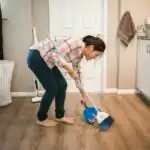
- Broom: We use the broom to sweep dirt and dust from the floor. (Show a broom)
- Dustpan: We use the dustpan to collect the dirt that the broom sweeps. (Show a dustpan)
- Rag/Sponge: We use a rag or sponge with water to wipe surfaces and make them clean. (Show a rag/sponge)
- Waste Bin: We put all the rubbish and dirt inside the waste bin. (Show a waste bin)
Key Words
- Broom – used for sweeping.
- Dustpan – used for collecting dirt.
- Clean – no dirt, tidy.
- Dirt – unwanted dust or rubbish.
Clean-Up Song
Tune: Twinkle, Twinkle Little Star
Sweep, sweep, sweep the floor,
Make it clean, don’t want dirt anymore.
Pick up rubbish, put it in the bin,
A clean place makes us grin!
Sweep, sweep, sweep the floor,
Clean our classroom, yes, we adore!
Actions: Mimic sweeping with a broom, bending to pick up, putting hands together like placing in a bin, smiling.
Watch and Practise
💡 Teacher Guide for Using This Board Summary
How to teach the content: Introduce the concept of a “clean environment” using simple words and pointing to parts of the classroom that are clean. Show each cleaning material one by one, clearly naming it and demonstrating its primary function. Use repetition for the names of the materials.
What to show or demonstrate: Hold up a real broom and dustpan, show how to sweep a small amount of pretend dirt into the dustpan. Show a rag/sponge and pretend to wipe a surface. Point to the waste bin and demonstrate putting pretend rubbish inside. Use the charts to reinforce the images.
How to use the rhyme/song: Sing the “Clean-Up Song” slowly and clearly, demonstrating the actions. Encourage pupils to join in with the actions and repeat the simple words. Sing it multiple times throughout the lesson to reinforce the message.
How to use the video: Introduce the video as a fun way to see how we clean up. Play the video, encouraging pupils to watch the actions and sing along to the “Clean Up Song.” After watching, ask pupils to mimic some of the cleaning actions they saw in the video.
What to watch for: Observe if pupils can point to the correct cleaning material when named, and if they attempt to imitate the cleaning actions. Correct pronunciation of the material names should be gently encouraged through repetition.
Teaching Methods/Instructional Techniques
Demonstration, Guided Practice, Songs and Rhymes, Picture Talk, Manipulation of Objects, Repetition, Question and Answer.
Instructional Procedures
Step 1: Introduction
Time: 3 minutes
Teaching Skill: Engagement/Greeting
Teacher’s Activity: The teacher greets the pupils warmly and leads a short “Good Morning” song. The teacher asks, “Look around our classroom, is it clean?” and points to clean areas.
Pupils’ Activity: Pupils respond to greetings, sing along, and look around the classroom, nodding or pointing.
Learning Point: Pupils are settled and introduced to the idea of a clean environment.
Step 2: Presentation (What is a clean environment?)
Time: 4 minutes
Teaching Skill: Explaining/Visual Aids
Teacher’s Activity: The teacher shows pictures of a clean environment and a dirty environment. The teacher explains simply, “A clean place has no dirt or rubbish. It keeps us healthy.”
Pupils’ Activity: Pupils look at the pictures and listen to the teacher’s explanation. They may point to the clean picture.
Learning Point: Pupils understand the simple concept of a clean environment.
Step 3: Presentation (Introducing Materials)
Time: 5 minutes
Teaching Skill: Naming/Showing
Teacher’s Activity: The teacher brings out the real cleaning materials one by one (broom, dustpan, rag, waste bin). For each item, the teacher holds it up, names it clearly, and says its simple use (e.g., “This is a broom. We use it to sweep.”).
Pupils’ Activity: Pupils look at the materials, listen to their names, and repeat the names after the teacher (e.g., “Broom!”).
Learning Point: Pupils begin to identify and name common cleaning materials.
Step 4: Demonstration
Time: 4 minutes
Teaching Skill: Modelling/Action
Teacher’s Activity: The teacher demonstrates how to use each cleaning material with simple, exaggerated actions (e.g., sweeping with the broom, scooping with the dustpan, wiping with the rag, putting pretend rubbish in the bin). The teacher encourages pupils to watch closely.
Pupils’ Activity: Pupils watch the teacher’s demonstrations and may try to imitate the actions with their hands.
Learning Point: Pupils observe the correct way to use cleaning materials.
Step 5: Guided Practice and Rhyme
Time: 5 minutes
Teaching Skill: Guided Imitation/Singing
Teacher’s Activity: The teacher gives pupils toy cleaning tools (if available) or encourages them to mimic actions. The teacher leads the “Clean-Up Song” again, guiding pupils to perform the actions while singing.
Pupils’ Activity: Pupils imitate cleaning actions with or without tools and sing along with the teacher, performing the song actions.
Learning Point: Pupils practise using cleaning materials and reinforce learning through song and movement.
Step 6: Reinforcement (Video)
Time: 3 minutes
Teaching Skill: Visual Reinforcement
Teacher’s Activity: The teacher introduces the video, “Let’s watch a fun song about cleaning!” and plays the verified YouTube video. The teacher encourages pupils to watch and sing along.
Pupils’ Activity: Pupils watch the video, sing along, and move their bodies to the rhythm, imitating cleaning actions.
Learning Point: Pupils reinforce their understanding of cleaning actions through an engaging video.
Step 7: Evaluation/Review
Time: 4 minutes
Teaching Skill: Questioning/Assessment
Teacher’s Activity: The teacher checks pupils’ understanding through short questions and practical tasks.
- “Point to the broom!” (Teacher holds up broom and dustpan).
- “What is this called?” (Teacher holds up the dustpan).
- “Show me how we sweep the floor.”
- “Where do we put the rubbish?” (Teacher points to the bin).
Pupils’ Activity: Pupils respond orally (pointing, naming) and demonstrate the required skill where appropriate (mimicking sweeping).
Learning Point: Pupils demonstrate understanding of the lesson.
Step 8: Conclusion
Time: 2 minutes
Teaching Skill: Recap/Encouragement
Teacher’s Activity: The teacher praises the pupils for their participation and reminds them that keeping their environment clean helps everyone stay healthy. The teacher leads a final “Clean-Up Song” or a farewell song.
Pupils’ Activity: Pupils listen, sing along, and wave goodbye.
Learning Point: Pupils are encouraged to value cleanliness and feel good about their learning.
Lesson Keywords
- Broom – a tool with a long handle and bristles used for sweeping.
- Dustpan – a flat scoop used to collect dust and dirt.
- Clean – free from dirt or marks.
- Dirt – a substance that makes things unclean.
Differentiation
- Support: For pupils who need extra support, the teacher will use larger pictures of cleaning materials, provide hand-over-hand guidance for actions, and repeat names and actions more frequently.
- Extension: For pupils who grasp the concept quickly, the teacher can ask them to name one more item they use for cleaning at home or help the teacher put away the cleaning tools correctly.
Community Join the conversation Open discussion +