

Class: Senior Secondary School 1 (SS1 / SSS 1)
Term: 1st Term
Week: 9
Age: 15 years
Duration: 45 minutes
Subject: Furniture Making
Curriculum Theme: Trade
Previous Lesson: Workshop Bench And Appliances: Workbench Uses And Appliances.
Topic: Work Bench Appliances
Subject Matter: Bench hook, G clamp, Vice, Uses of bench appliances
Specific Objectives
By the end of the lesson, pupils should be able to:
Cognitive Domain:
- Define a bench hook, G-clamp, and vice.
- Identify different types of work bench appliances.
- State the uses of various work bench appliances.
Affective Domain:
- Appreciate the importance of using appropriate bench appliances for safety and accuracy.
- Show interest in learning about different workshop tools.
Psychomotor Domain:
- Sketch the bench hook, G-clamp, and vice.
- Demonstrate the correct handling of bench appliances.
Social Domain:
- Collaborate with peers to discuss the functions of different bench appliances.
Reference Materials
The following resources were used in planning this lesson:
- 9 Years Basic Education Curriculum for Technology.
- State Unified Scheme of Work for Furniture Making (SSS 1).
- Akinwumi, A. (2018). Practical Furniture Making for Senior Secondary Schools. Ibadan: Evans Brothers Nigeria Publishers Ltd.
Instructional Materials
The teacher will teach this lesson with the aid of:
- Actual bench hook, G-clamp, and vice.
- Charts showing diagrams of various work bench appliances.
Rationale for the Lesson
This lesson helps pupils understand the essential tools used to hold workpieces securely during furniture making. Knowing how to use these appliances properly ensures safety and accuracy in practical workshop activities, which is important for producing quality work.
Prerequisite/Previous Knowledge
Pupils have basic knowledge of hand tools used in the workshop and the importance of safety measures.
Lesson Content/Board Summary
Work Bench Appliances
1. Bench Hook
A bench hook is a simple, L-shaped woodworking jig used on a workbench to hold a workpiece while it is being sawn or planed. It provides a stop against which the wood is pushed, preventing it from slipping.
2. G-Clamp
A G-clamp, also known as a C-clamp, is a type of clamp commonly used in woodworking and welding. It is used to hold a workpiece firmly in place, often against a workbench or another piece of wood, using a screw mechanism.
3. Vice
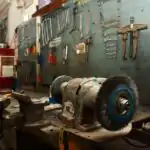
A vice is a mechanical apparatus used to secure an object to allow work to be performed on it. It typically consists of two parallel jaws, one fixed and the other movable, threaded in and out by a screw and lever. Bench vices are commonly attached to a workbench.
Uses of Bench Appliances
The following are the uses of common bench appliances:
- Bench Hook: Used for holding small workpieces securely while cross-cutting with a handsaw or planing edges. It prevents the wood from moving during cutting operations.
- G-Clamp: Used for clamping two or more pieces of wood together, holding workpieces to a workbench, or securing joints while glue dries.
- Vice: Used for firmly holding larger workpieces for operations such as sawing, filing, drilling, and chiseling. It provides strong and stable support.
Teaching Methods/Instructional Techniques
Discussion, Lecture, Demonstration, Question and Answer, Visual Aids
Instructional Procedures
Step 1: Introduction
Time: 5 minutes
Teaching Skill: Set Induction
Teacher’s Activity: The teacher greets the pupils and reviews the previous lesson briefly. The teacher then asks pupils about tools they know that are used to hold wood firmly in place while working. The teacher introduces the topic “Work Bench Appliances” and states the lesson objectives.
Pupils’ Activity: Pupils respond to questions and listen attentively to the teacher.
Learning Point: Pupils are prepared for the new lesson and understand its relevance.
Step 2: Bench Hook
Time: 7 minutes
Teaching Skill: Explanation/Demonstration
Teacher’s Activity: The teacher displays a bench hook (or its diagram) and explains its definition, parts, and how it is used to hold workpieces for sawing or planing. The teacher demonstrates its application.
Pupils’ Activity: Pupils observe the bench hook, listen to the explanation, and ask questions.
Learning Point: Pupils understand what a bench hook is and its primary function.
Step 3: G-Clamp
Time: 7 minutes
Teaching Skill: Explanation/Demonstration
Teacher’s Activity: The teacher presents a G-clamp (or its diagram) and explains its structure, how it works, and its common applications in furniture making, such as holding glued joints. The teacher demonstrates tightening and loosening.
Pupils’ Activity: Pupils pay attention to the teacher’s explanation and demonstration.
Learning Point: Pupils learn about the G-clamp and its use in clamping.
Step 4: Vice
Time: 7 minutes
Teaching Skill: Explanation/Demonstration
Teacher’s Activity: The teacher shows a vice (or its diagram) and explains its components, how it is mounted on a workbench, and its role in securing larger workpieces for various operations. The teacher demonstrates its operation.
Pupils’ Activity: Pupils observe the vice and listen to the explanation of its function.
Learning Point: Pupils understand the purpose and operation of a workshop vice.
Step 5: Uses of Bench Appliances
Time: 5 minutes
Teaching Skill: Discussion/Elaboration
Teacher’s Activity: The teacher leads a discussion on the specific uses of each bench appliance, emphasizing when and why each tool is preferred. The teacher writes key uses on the board.
Pupils’ Activity: Pupils contribute to the discussion and copy the uses from the board.
Learning Point: Pupils can articulate the specific applications of each bench appliance.
Step 6: Class Activity
Time: 5 minutes
Teaching Skill: Practical Application
Teacher’s Activity: The teacher instructs pupils to sketch the bench hook, G-clamp, and vice in their notebooks and list at least one use for each.
Pupils’ Activity: Pupils sketch the appliances and write down their uses.
Learning Point: Pupils practice identifying and recalling the functions of the appliances.
Step 7: Evaluation/Review
Time: 5 minutes
Teaching Skill: Questioning/Assessment
Teacher’s Activity: The teacher evaluates the learning by asking the following questions:
- Define a bench hook.
- Mention two common uses of a G-clamp.
- Describe the main function of a vice in a workshop.
- State one difference between a bench hook and a vice.
Pupils’ Activity: Pupils answer orally and in writing.
Learning Point: Pupils demonstrate understanding of the lesson.
Step 8: Conclusion
Time: 4 minutes
Teaching Skill: Summarization
Teacher’s Activity: The teacher summarizes the lesson by reiterating the importance of work bench appliances for safety and precision. The teacher gives homework: “Draw and label a G-clamp and a vice, and write two safety precautions for using each.”
Pupils’ Activity: Pupils listen to the summary and copy the homework assignment.
Learning Point: Pupils consolidate their learning and receive further practice.
Lesson Keywords
- Bench Hook – A woodworking jig used to hold small workpieces for sawing or planing.
- G-Clamp – A tool used to hold objects firmly together or to a surface using a screw mechanism.
- Vice – A mechanical device with two jaws for holding a workpiece firmly while work is being done on it.
- Workpiece – An object being worked on or operated upon, typically in a workshop.
Differentiation
For pupils who grasp concepts quickly, the teacher can ask them to explain how different bench appliances are chosen for specific tasks. For pupils who need more support, the teacher can provide labeled diagrams and offer more direct guidance during the sketching activity.
Note for teachers using this lesson plan
Teachers should ensure that actual bench appliances are available for demonstration. Emphasize safety precautions while handling and using these tools. Encourage pupils to practice using the tools under supervision to build practical skills and confidence.



Community Join the conversation Open discussion +