

Class: Senior Secondary School 1 (SS1 / SSS 1)
Term: 1st Term
Week: 12
Age: 15 years
Duration: 45 minutes
Subject: Upholstery
Curriculum Theme: Trade
Previous Lesson: Upholstery Power Tools: Safety Precautions and Correct Safe Use.
Topic: UPHOLSTERY MACHINES
Subject Matter: Definition of upholstery machines, Types of upholstery machines, Common examples of upholstery machines, Identification of upholstery machines.
Specific Objectives
By the end of the lesson, pupils should be able to:
Cognitive Domain:
- Define upholstery machines.
- List at least three types of upholstery machines.
- State simple uses for various upholstery machines.
Affective Domain:
- Appreciate the importance of different machines in upholstery work.
- Develop an interest in learning more about upholstery equipment.
Psychomotor Domain:
- Identify common upholstery machines when presented with examples or pictures.
- Demonstrate basic handling of a simple upholstery machine (e.g., sewing machine).
Social Domain:
- Participate actively in discussions about upholstery machines.
- Collaborate with peers during identification activities.
Reference Materials
The following resources were used in planning this lesson:
- 9 Years Basic Education Curriculum for Basic Technology (Junior Secondary School).
- Lagos State Unified Scheme of Work for Senior Secondary Schools.
- Upholstery Craft Practice for Senior Secondary Schools by A.B. Adebayo.
Instructional Materials
The teacher will teach this lesson with the aid of:
- A sewing machine.
- An ironing machine.
- A foam cutting machine.
- A chart showing different upholstery machine parts.
- Pictures or videos of various upholstery machines.
Rationale for the Lesson
This lesson helps pupils understand the tools and equipment used in upholstery. Knowing about these machines enables pupils to appreciate how upholstery products are made and prepares them for practical work in the trade.
Prerequisite/Previous Knowledge
Pupils may have basic knowledge of simple tools and equipment used in other craft subjects or general workshop practices.
Lesson Content/Board Summary
UPHOLSTERY MACHINES
Definition of Upholstery Machines
Upholstery machines are specialised tools and equipment used in the process of making, repairing, or restoring upholstered furniture. They help to cut, sew, shape, and finish materials like fabric, foam, and wood frames.
Types of Upholstery Machines
Upholstery machines can be broadly classified based on their primary function:
- Cutting Machines: Used for cutting fabrics, foam, and other materials to size.
- Sewing Machines: Used for stitching fabrics together, creating seams, and attaching covers.
- Shaping/Forming Machines: Used for shaping foam or other padding materials.
- Finishing Machines: Used for tasks like ironing, steaming, or attaching fasteners.
Common Examples of Upholstery Machines and Their Uses
The following are common examples of upholstery machines and their uses:
- Industrial Sewing Machine: Used for heavy-duty stitching of thick fabrics and multiple layers.
- Foam Cutting Machine: Used to cut foam into specific shapes and sizes for cushions and padding.
- Fabric Spreading Machine: Used to lay out multiple layers of fabric evenly before cutting.
- Ironing Machine/Steamer: Used to remove wrinkles from fabric and give a smooth finish to upholstered pieces.
- Staple Gun (Pneumatic or Electric): Used to attach fabric to furniture frames with staples quickly and securely.
- Webbing Stretcher: Used to stretch webbing tightly across furniture frames to create a strong base for springs and padding.
- Button Machine: Used to cover buttons with fabric and attach them to furniture.
Identification of Upholstery Machines
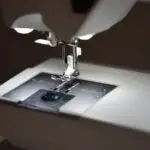
Identifying upholstery machines involves recognising their specific features, components, and understanding their functions. For instance, a sewing machine is identified by its needle, presser foot, and bobbin area, while a foam cutting machine has a blade designed for cutting foam materials.
Teaching Methods/Instructional Techniques
Discussion, Lecture, Demonstration, Question and Answer, Visual Aids
Instructional Procedures
Step 1: Introduction
Time: 5 minutes
Teaching Skill: Set Induction
Teacher’s Activity: The teacher greets the pupils, reviews the previous lesson briefly, and then introduces the new topic by asking pupils about tools they know that are used to make furniture.
Pupils’ Activity: Pupils respond to questions and listen attentively.
Learning Point: Pupils are prepared for the new lesson.
Step 2: Definition of Upholstery Machines
Time: 7 minutes
Teaching Skill: Explanation/Definition
Teacher’s Activity: The teacher explains what upholstery machines are, giving simple examples to aid understanding. The teacher writes the definition on the board.
Pupils’ Activity: Pupils listen, take notes, and ask questions for clarification.
Learning Point: Pupils understand the definition of upholstery machines.
Step 3: Types of Upholstery Machines
Time: 8 minutes
Teaching Skill: Listing/Classification
Teacher’s Activity: The teacher lists and briefly explains the different types of upholstery machines based on their functions (e.g., cutting, sewing, shaping, finishing). The teacher uses a chart or pictures.
Pupils’ Activity: Pupils observe the charts/pictures, listen, and note down the types.
Learning Point: Pupils can identify and classify upholstery machines by type.
Step 4: Common Examples of Upholstery Machines and Their Uses
Time: 10 minutes
Teaching Skill: Demonstration/Illustration
Teacher’s Activity: The teacher presents actual examples (e.g., sewing machine, foam cutter if available) or pictures/videos of various upholstery machines, explaining their specific uses.
Pupils’ Activity: Pupils observe, ask questions, and discuss the functions of each machine.
Learning Point: Pupils learn about specific upholstery machines and their practical applications.
Step 5: Identification of Upholstery Machines
Time: 5 minutes
Teaching Skill: Identification/Practical Application
Teacher’s Activity: The teacher guides pupils to identify specific machines from the instructional materials, asking them to point out features or state their names.
Pupils’ Activity: Pupils actively participate in identifying the machines and discussing their features.
Learning Point: Pupils can visually identify common upholstery machines.
Step 6: Class Discussion/Activity
Time: 5 minutes
Teaching Skill: Collaborative Learning
Teacher’s Activity: The teacher facilitates a short discussion, asking pupils to recall machines and their uses, or to suggest situations where certain machines would be needed.
Pupils’ Activity: Pupils contribute to the discussion, reinforcing their understanding.
Learning Point: Pupils deepen their understanding through active recall and application.
Step 7: Evaluation/Review
Time: 5 minutes
Teaching Skill: Questioning/Assessment
Teacher’s Activity: The teacher evaluates the learning by asking the following questions:
- Define upholstery machines.
- List three types of upholstery machines based on their function.
- Mention two common examples of upholstery machines.
- State one use for a foam cutting machine.
Pupils’ Activity: Pupils answer orally and in writing.
Learning Point: Pupils demonstrate understanding of the lesson.
Step 8: Conclusion
Time: 5 minutes
Teaching Skill: Summarisation
Teacher’s Activity: The teacher summarises the key points of the lesson, emphasises the importance of upholstery machines, and assigns relevant homework, such as drawing and labelling two upholstery machines.
Pupils’ Activity: Pupils listen, ask final questions, and copy the homework.
Learning Point: Pupils consolidate their learning and prepare for further study.
Lesson Keywords
- Upholstery – The craft of providing furniture, especially seats, with padding, springs, webbing, and fabric or leather covers.
- Machine – An apparatus using mechanical power and having several parts, each with a definite function and together performing a particular task.
- Sewing Machine – A machine used for stitching material together with thread.
- Foam Cutter – A machine or tool designed to cut foam materials into specific shapes.
- Staple Gun – A hand-held machine used to drive heavy metal staples into wood or other materials.
Differentiation
For visual learners, extensive use of charts, pictures, and videos of machines will be employed. Kinesthetic learners will benefit from hands-on identification of available machines. Group activities will allow pupils to learn from each other, with advanced pupils assisting those who may need more support.
Note for teachers using this lesson plan
Ensure to bring actual examples of smaller upholstery tools or good quality pictures to make the identification process more concrete for pupils. Emphasise safety precautions when discussing or demonstrating any machine.


Community Join the conversation Open discussion +