

Class: Senior Secondary School 1 (SS1 / SSS 1)
Term: Second Term
Week: 1
Age: 15 years
Duration: 45 minutes
Subject: Upholstery
Curriculum Theme: Trade
Previous Lesson: .
Topic: UPHOLSTERY MACHINES
Subject Matter: Description of upholstery machines, Sewing machine, Ironing machine, Foam cutting machine, Functions of upholstery machines, Maintenance of upholstery machines, Corrective maintenance, Predictive maintenance, Preventive maintenance
Specific Objectives
By the end of the lesson, pupils should be able to:
Cognitive Domain:
- Identify and describe different upholstery machines.
- State the functions of various upholstery machines.
- Explain the different types of upholstery machine maintenance.
Affective Domain:
- Appreciate the importance of proper machine usage and regular maintenance.
- Value safety practices when operating upholstery machines.
Psychomotor Domain:
- Correctly identify actual upholstery machines or their parts when presented.
- Demonstrate basic steps for machine care and minor maintenance.
Social Domain:
- Collaborate with peers in identifying and discussing the uses of different machines.
Reference Materials
The following resources were used in planning this lesson:
- 9 Years Basic Education Curriculum for Senior Secondary (Technology Education)
- State Unified Scheme of Work for Upholstery SSS 1
- Basic Technology for Senior Secondary Schools 1 by F.N. Ejike
Instructional Materials
The teacher will teach this lesson with the aid of:
- Samples of sewing machine parts
- A foam cutter blade
- An oil can
- A maintenance checklist chart
- Pictures or diagrams of various upholstery machines (e.g., sewing machine, ironing machine, foam cutting machine)
Rationale for the Lesson
This lesson helps pupils to understand the machines used in upholstery work. Knowing about these machines and how to maintain them properly is important for safety, efficiency, and the longevity of equipment in the workshop and potentially in future careers.
Prerequisite/Previous Knowledge
Pupils should have basic knowledge of simple tools used in trade and the general concept of craftsmanship.
Lesson Content/Board Summary
UPHOLSTERY MACHINES
Description of Upholstery Machines
Upholstery machines are specialised equipment used to perform various tasks involved in creating or repairing upholstered furniture. These machines help to cut materials, sew fabric, shape foam, and finish products efficiently.
Types of Upholstery Machines and their Functions
The following are common types of upholstery machines and their functions:
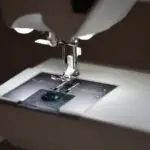
- Sewing Machine: This machine is used for stitching fabrics together to form covers for furniture. It creates strong seams and decorative finishes.
- Ironing Machine: Used to press fabrics, remove wrinkles, and flatten seams before or after sewing. This ensures a neat and professional finish for upholstery covers.
- Foam Cutting Machine: This machine is used to cut foam into specific shapes and sizes required for cushioning in upholstered furniture. It provides precise and clean cuts for various foam densities.
Maintenance of Upholstery Machines
Machine maintenance refers to the actions taken to keep machinery in good working condition, prevent breakdowns, and extend its lifespan.
The following are types of machine maintenance:
- Corrective Maintenance: This is carried out after a fault or breakdown has occurred. Its purpose is to restore the machine to its operational state. Examples include repairing a broken needle or replacing a worn-out belt.
- Predictive Maintenance: This involves monitoring the condition of the machine to predict when a fault might occur. It uses techniques like vibration analysis or oil analysis to anticipate problems and schedule maintenance before a breakdown happens.
- Preventive Maintenance: This is regularly scheduled maintenance performed to prevent breakdowns and extend the life of the machine. Examples include routine cleaning, lubrication, tightening loose parts, and inspecting for wear.
The following are reasons why machine maintenance is important:
- It ensures the safety of the operator.
- It prolongs the lifespan of the machines.
- It improves efficiency and quality of work.
- It reduces repair costs in the long run.
- It prevents unexpected breakdowns during work.
Teaching Methods/Instructional Techniques
Discussion, Lecture, Demonstration, Question and Answer, Visual Aids
Instructional Procedures
Step 1: Introduction
Time: 5 minutes
Teaching Skill: Set Induction
Teacher’s Activity: The teacher greets the pupils and introduces the topic by asking them about machines they know that are used for making clothes or furniture. The teacher then writes the topic, “UPHOLSTERY MACHINES,” on the board.
Pupils’ Activity: Pupils respond to the teacher’s questions by mentioning various machines. They listen attentively and copy the topic.
Learning Point: Pupils are introduced to the topic and activate prior knowledge.
Step 2: Description of Upholstery Machines
Time: 10 minutes
Teaching Skill: Explanation/Demonstration
Teacher’s Activity: The teacher describes what upholstery machines are and presents pictures or actual samples of various machines like sewing machines, ironing machines, and foam cutters. The teacher encourages pupils to observe and identify them.
Pupils’ Activity: Pupils listen to the description, observe the instructional materials, and attempt to identify the machines.
Learning Point: Pupils understand the general concept of upholstery machines and begin to identify common types.
Step 3: Functions of Upholstery Machines
Time: 10 minutes
Teaching Skill: Discussion/Explanation
Teacher’s Activity: The teacher leads a discussion on the specific functions of each identified machine (sewing, ironing, foam cutting machine), relating them to their use in upholstery. The teacher writes key functions on the board.
Pupils’ Activity: Pupils participate in the discussion, ask questions, and note down the functions of each machine.
Learning Point: Pupils learn the specific roles of different machines in upholstery work.
Step 4: Introduction to Machine Maintenance
Time: 5 minutes
Teaching Skill: Explanation
Teacher’s Activity: The teacher defines machine maintenance and explains its general importance. The teacher asks pupils if they know why machines need to be cared for.
Pupils’ Activity: Pupils listen to the definition and contribute ideas on why maintenance is necessary.
Learning Point: Pupils understand what maintenance is and why it is important.
Step 5: Types of Machine Maintenance
Time: 5 minutes
Teaching Skill: Elucidation
Teacher’s Activity: The teacher explains the three main types of machine maintenance: corrective, predictive, and preventive maintenance, providing clear examples for each.
Pupils’ Activity: Pupils listen carefully, ask for clarification, and take notes on the different types of maintenance.
Learning Point: Pupils learn to differentiate between corrective, predictive, and preventive maintenance.
Step 6: Practical Aspects of Maintenance
Time: 4 minutes
Teaching Skill: Demonstration/Practical Application
Teacher’s Activity: The teacher uses the oil can and maintenance checklist to demonstrate simple preventive maintenance steps like oiling parts of a sewing machine or checking for wear. The teacher also highlights the importance of safety during maintenance.
Pupils’ Activity: Pupils observe the demonstration and ask questions about practical maintenance steps and safety.
Learning Point: Pupils gain practical insight into basic machine maintenance and safety.
Step 7: Evaluation/Review
Time: 5 minutes
Teaching Skill: Questioning/Assessment
Teacher’s Activity: The teacher evaluates the learning by asking the following questions:
- What are upholstery machines?
- Mention three types of upholstery machines.
- State one function of a sewing machine in upholstery.
- Explain any two types of machine maintenance.
Pupils’ Activity: Pupils answer orally and in writing.
Learning Point: Pupils demonstrate understanding of the lesson.
Step 8: Conclusion
Time: 1 minute
Teaching Skill: Summarization
Teacher’s Activity: The teacher summarises the key points of the lesson, reiterating the importance of knowing and maintaining upholstery machines. The teacher then gives an assignment.
Pupils’ Activity: Pupils listen to the summary and copy the assignment.
Learning Point: Pupils consolidate their learning and prepare for further study.
Lesson Keywords
- Upholstery – The art or process of covering furniture with fabric, padding, and springs.
- Sewing machine – A machine with a needle for stitching materials, especially fabric.
- Ironing machine – A machine used for pressing fabrics to remove wrinkles and smooth them.
- Foam cutting machine – A machine designed to cut foam into specific shapes and sizes.
- Maintenance – Actions taken to keep equipment in good working condition.
- Corrective maintenance – Maintenance performed after a fault has occurred to restore the machine to working order.
- Predictive maintenance – Maintenance based on monitoring the condition of equipment to predict when maintenance is needed.
- Preventive maintenance – Regularly scheduled maintenance to prevent breakdowns and extend equipment life.
Differentiation
For pupils who grasp concepts quickly, the teacher can ask them to research other types of upholstery machines or more advanced maintenance techniques. For pupils who require more support, the teacher will provide additional visual aids, simplified explanations, and one-on-one guidance during practical identification of machines.
Note for teachers using this lesson plan
Ensure that actual machines or clear, large pictures are available for pupils to see and identify. Emphasise safety precautions when discussing machine operation and maintenance. Encourage pupils to share any personal experiences with machine repair or care from home.


Community Join the conversation Open discussion +