

Class: Senior Secondary School 1 (SS1 / SSS1)
Term: 1st Term
Week: 11
Age: 15 years
Duration: 45 minutes
Subject: Refrigeration And Air Conditioning
Curriculum Theme: Trade
Previous Lesson: Temperature And Its Measurement: Concept of Temperature.
Topic: Temperature and its Measurement
Subject Matter: Types of thermometer, temperature units, applications of thermometers
Specific Objectives
By the end of the lesson, pupils should be able to:
Cognitive Domain:
- Define temperature.
- List different types of thermometers.
- State the common units of temperature measurement.
Affective Domain:
- Appreciate the importance of accurate temperature measurement in daily life and trade.
- Recognise the need for different types of thermometers for various applications.
Psychomotor Domain:
- Identify practical examples of different thermometers.
- Differentiate between the various units of temperature.
Social Domain:
- Discuss the role of temperature measurement in different industries.
Reference Materials
The following resources were used in planning this lesson:
- 9 Years Basic Education Curriculum for Senior Secondary Schools.
- State Unified Scheme of Work for Senior Secondary Schools.
- Refrigeration and Air Conditioning Technology Textbook for SS1.
- https://www.engineeringtoolbox.com/temperature-units-d_196.html
- https://www.fluke.com/en-us/learn/blog/calibration/types-of-thermometers
Instructional Materials
The teacher will teach this lesson with the aid of:
- Mercury-in-glass thermometer
- Digital thermometer
- Thermocouple
- Resistance thermometer (RTD)
- Charts showing different thermometer types and temperature scales.
Rationale for the Lesson
This lesson helps pupils understand temperature as a fundamental concept in refrigeration and air conditioning. It enables them to identify and use various tools for measuring temperature, which is important for practical applications in their chosen trade and everyday observations.
Prerequisite/Previous Knowledge
Pupils have a basic understanding of heat, cold, and simple measurement concepts from their Junior Secondary School science classes.
Lesson Content/Board Summary
Temperature and its Measurement
1. Definition of Temperature
Temperature is a measure of the degree of hotness or coldness of a body or environment. It indicates the average kinetic energy of the particles within a substance.
2. Units of Temperature
The following are common units used to measure temperature:
- Celsius (°C): Also known as centigrade, it is widely used globally. Water freezes at 0°C and boils at 100°C.
- Fahrenheit (°F): Primarily used in the United States. Water freezes at 32°F and boils at 212°F.
- Kelvin (K): The absolute temperature scale used in scientific research. 0 Kelvin (absolute zero) is the lowest possible temperature.
3. Types of Thermometers
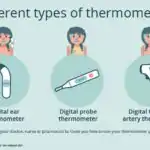
Thermometers are devices used to measure temperature. Different types are designed for specific applications:
- Mercury-in-glass thermometer: A traditional thermometer that uses the expansion and contraction of mercury in a sealed glass tube to indicate temperature.
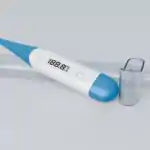
- Digital thermometer: Uses electronic sensors (thermistors, resistance temperature detectors (RTDs), or thermocouples) to measure temperature and display it digitally.
- Thermocouple: A sensor that measures temperature by detecting voltage changes caused by the junction of two different metals. Suitable for high temperatures.
- Resistance Temperature Detector (RTD): Measures temperature by correlating the resistance of an RTD element with temperature. Offers high accuracy and stability.
4. Applications of Thermometers
Thermometers are used in various fields for different purposes:
- Domestic use: Measuring body temperature, oven temperature, refrigerator temperature.
- Industrial use: Monitoring process temperatures in manufacturing, chemical plants, food processing.
- Medical use: Clinical thermometers for diagnosing fevers, monitoring patient body temperature.
- Meteorology: Measuring ambient air temperature for weather forecasting.
- Refrigeration and Air Conditioning: Monitoring refrigerant temperatures, room temperatures, and system performance.
Teaching Methods/Instructional Techniques
Discussion, Lecture, Demonstration, Question and Answer, Visual Aids
Instructional Procedures
Step 1: Introduction
Time: 5 minutes
Teaching Skill: Set Induction
Teacher’s Activity: The teacher greets the pupils and asks them what they understand by ‘hot’ and ‘cold’ and how they know something is hot or cold. The teacher then introduces the topic: Temperature and its Measurement.
Pupils’ Activity: Pupils respond to the questions and listen to the introduction.
Learning Point: Pupils are introduced to the concept of temperature.
Step 2: Definition of Temperature
Time: 5 minutes
Teaching Skill: Explanation/Definition
Teacher’s Activity: The teacher explains the definition of temperature as the degree of hotness or coldness of a body, and also explains that it is a measure of the average kinetic energy of particles.
Pupils’ Activity: Pupils listen, take notes, and ask questions for clarification.
Learning Point: Pupils understand the definition of temperature.
Step 3: Units of Temperature
Time: 5 minutes
Teaching Skill: Listing/Explanation
Teacher’s Activity: The teacher lists and explains the common units of temperature (Celsius, Fahrenheit, Kelvin) and their reference points (e.g., freezing/boiling points of water).
Pupils’ Activity: Pupils write down the units and their explanations.
Learning Point: Pupils learn about the different units for measuring temperature.
Step 4: Types of Thermometers
Time: 10 minutes
Teaching Skill: Demonstration/Classification
Teacher’s Activity: The teacher displays various types of thermometers (mercury-in-glass, digital, thermocouple, RTD) and explains their working principles and suitable applications. The teacher may demonstrate how to read a simple thermometer.
Pupils’ Activity: Pupils observe the thermometers, listen to explanations, and ask questions.
Learning Point: Pupils identify and understand the working of different types of thermometers.
Step 5: Applications of Thermometers
Time: 8 minutes
Teaching Skill: Discussion/Application
Teacher’s Activity: The teacher discusses various applications of thermometers in daily life, industries, medicine, and specifically in refrigeration and air conditioning.
Pupils’ Activity: Pupils contribute by mentioning where they have seen thermometers being used.
Learning Point: Pupils understand the practical uses of thermometers in different fields.
Step 6: Class Activity/Discussion
Time: 5 minutes
Teaching Skill: Engagement/Collaboration
Teacher’s Activity: The teacher asks pupils to discuss in pairs which type of thermometer would be best for measuring the temperature inside a refrigerator and why.
Pupils’ Activity: Pupils discuss and share their conclusions with the class.
Learning Point: Pupils apply their knowledge to a practical scenario.
Step 7: Evaluation/Review
Time: 5 minutes
Teaching Skill: Questioning/Assessment
Teacher’s Activity: The teacher evaluates the learning by asking the following questions:
- Define temperature in your own words.
- List three common units used to measure temperature.
- Mention two types of thermometers discussed today.
- State two applications of thermometers in daily life.
Pupils’ Activity: Pupils answer orally and in writing.
Learning Point: Pupils demonstrate understanding of the lesson.
Step 8: Conclusion
Time: 2 minutes
Teaching Skill: Summarisation
Teacher’s Activity: The teacher briefly summarises the main points of the lesson, reiterating the importance of temperature measurement in refrigeration and air conditioning.
Pupils’ Activity: Pupils listen and prepare for the next lesson.
Learning Point: Pupils recall the key concepts of the lesson.
Lesson Keywords
- Temperature – A measure of the degree of hotness or coldness of a body.
- Thermometer – An instrument used to measure temperature.
- Celsius – A temperature scale where water freezes at 0°C and boils at 100°C.
- Fahrenheit – A temperature scale where water freezes at 32°F and boils at 212°F.
- Kelvin – The absolute temperature scale, where 0 K is absolute zero.
- Thermocouple – A temperature sensor made from two different metals joined at one end.
- RTD – Resistance Temperature Detector, a sensor whose resistance changes with temperature.
Differentiation
The teacher will provide additional explanations and visual aids for pupils who may find the concepts challenging. Advanced pupils will be encouraged to research specific applications of different thermometers in the refrigeration industry.
Note for teachers using this lesson plan
Teachers should ensure that actual thermometers are available for demonstration. Encourage pupils to relate the concepts to their everyday experiences with temperature measurement. Emphasise safety when handling certain types of thermometers, if applicable.


Community Join the conversation Open discussion +