

Class: Senior Secondary School 1 (SS1 / SSS 1)
Term: 1st Term
Week: 10
Age: 15 years
Duration: 45 minutes
Subject: Refrigeration And Air Conditioning
Curriculum Theme: Trade
Previous Lesson: Nature Of Matter: Change of State of Matter.
Topic: Temperature and its measurement Concept of temperature
Subject Matter: Concept of temperature, heat comparison, thermal sensation
Specific Objectives
By the end of the lesson, pupils should be able to:
Cognitive Domain:
- Define temperature.
- Differentiate between hotness and coldness.
- State the purpose of a thermometer.
Affective Domain:
- Appreciate the importance of accurate temperature measurement in daily life and trade.
- Show willingness to learn about different temperature scales.
Psychomotor Domain:
- Correctly handle a thermometer.
- Demonstrate how to measure the temperature of water using a thermometer.
Social Domain:
- Discuss with peers the concept of thermal sensation.
- Collaborate in observing temperature changes.
Reference Materials
The following resources were used in planning this lesson:
- 9 Years Basic Education Curriculum for Senior Secondary Schools.
- State Unified Scheme of Work for Refrigeration And Air Conditioning SSS 1.
- Introductory Technology for Senior Secondary Schools, Book 1.
Instructional Materials
The teacher will teach this lesson with the aid of:
- A thermometer
- Hot water
- Cold water
- Beakers
- Chart showing different temperature scales.
Rationale for the Lesson
Understanding temperature is fundamental to the study of refrigeration and air conditioning, as these systems rely on controlling heat. This lesson helps pupils grasp the basic concept of temperature and how it is measured, which is essential for understanding more complex topics in the trade.
Prerequisite/Previous Knowledge
Pupils have a basic understanding of hot and cold from their daily experiences and can differentiate between objects that feel warm and those that feel cool.
Lesson Content/Board Summary
Temperature and its Measurement
Concept of Temperature
Temperature is the degree of hotness or coldness of a body or an environment. It is a measure of the average kinetic energy of the particles within a substance. A higher temperature indicates more kinetic energy and a greater degree of hotness.
Heat Comparison
Heat comparison refers to the process of determining which of two or more objects is hotter or colder. Our sense of touch can provide a qualitative comparison, but it is often unreliable and cannot give an accurate numerical value.
The following are ways we commonly compare heat:
- Thermal Sensation: Using our sense of touch to feel if something is hot or cold.
- Observation: Noticing physical changes like steam from hot water or ice formation in cold water.
- Measurement with Instruments: Using a thermometer for an accurate and quantitative comparison.
Thermal Sensation
Thermal sensation is the subjective feeling of hotness or coldness that a person experiences when in contact with an object or environment. It is influenced by factors such as the actual temperature, the material of the object, and the duration of contact. Thermal sensation is not always an accurate indicator of actual temperature.
Teaching Methods/Instructional Techniques
Discussion, Lecture, Demonstration, Question and Answer, Visual Aids
Instructional Procedures
Step 1: Introduction
Time: 5 minutes
Teaching Skill: Set Induction
Teacher’s Activity: The teacher greets the pupils and asks them to recall situations where they have experienced hotness or coldness (e.g., touching a hot pot, drinking cold water). The teacher then asks how they determine if something is hot or cold.
Pupils’ Activity: Pupils respond by sharing their experiences and ideas, mentioning their sense of touch.
Learning Point: Pupils are engaged and relate to the topic through personal experiences.
Step 2: Presentation of Topic
Time: 2 minutes
Teaching Skill: Clarity/Focus
Teacher’s Activity: The teacher introduces the topic, “Temperature and its Measurement,” writing it on the board.
Pupils’ Activity: Pupils listen attentively and write the topic in their notebooks.
Learning Point: Pupils know the specific focus of the day’s lesson.
Step 3: Concept of Temperature
Time: 10 minutes
Teaching Skill: Explanation/Definition
Teacher’s Activity: The teacher explains the concept of temperature, defining it as the degree of hotness or coldness of a body. The teacher clarifies that temperature is a measure of average kinetic energy. The teacher also introduces the thermometer as the instrument used to measure temperature.
Pupils’ Activity: Pupils listen, take notes, and define temperature in their own words when asked.
Learning Point: Pupils understand the definition of temperature and its basic nature.
Step 4: Heat Comparison
Time: 8 minutes
Teaching Skill: Elaboration/Illustration
Teacher’s Activity: The teacher explains how heat is compared. The teacher discusses the unreliability of using only the sense of touch for accurate comparison and introduces the need for instruments like thermometers. The teacher places one hand in hot water and the other in cold water, then both into lukewarm water to demonstrate the unreliability of thermal sensation.
Pupils’ Activity: Pupils observe the demonstration, discuss their observations, and note the methods of heat comparison.
Learning Point: Pupils understand the limitations of subjective heat comparison and the need for objective measurement.
Step 5: Thermal Sensation
Time: 5 minutes
Teaching Skill: Explanation
Teacher’s Activity: The teacher further explains thermal sensation as the subjective feeling of hotness or coldness, emphasizing that it can be misleading compared to actual temperature measurements.
Pupils’ Activity: Pupils listen and understand the difference between thermal sensation and actual temperature.
Learning Point: Pupils grasp the concept of thermal sensation and its subjective nature.
Step 6: Demonstration of Thermometer Use
Time: 10 minutes
Teaching Skill: Demonstration/Practical
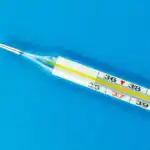
Teacher’s Activity: The teacher demonstrates how to correctly handle a thermometer and measure the temperature of the hot and cold water samples using the available materials (thermometer, beakers, hot/cold water). The teacher shows how to read the temperature scale.
Pupils’ Activity: Pupils observe the demonstration carefully and, if possible, practice handling the thermometer under supervision.
Learning Point: Pupils develop practical skills in using a thermometer for temperature measurement.
Step 7: Evaluation/Review
Time: 5 minutes
Teaching Skill: Questioning/Assessment
Teacher’s Activity: The teacher evaluates the learning by asking the following questions:
- Define temperature.
- How do we perceive hotness and coldness?
- Mention one instrument used to measure temperature.
- Why is thermal sensation not always reliable for measuring temperature?
Pupils’ Activity: Pupils answer orally and in writing.
Learning Point: Pupils demonstrate understanding of the lesson.
Step 8: Conclusion
Time: 2 minutes
Teaching Skill: Summarization
Teacher’s Activity: The teacher summarizes the key points of the lesson, reiterating the definition of temperature, the difference between thermal sensation and actual measurement, and the importance of using a thermometer. The teacher then gives homework: List three areas where temperature measurement is important in everyday life.
Pupils’ Activity: Pupils listen to the summary and copy the homework.
Learning Point: Pupils consolidate their learning and prepare for further study.
Lesson Keywords
- Temperature – The degree of hotness or coldness of a body or environment.
- Heat – A form of energy that flows from a hotter body to a colder body.
- Thermal sensation – The subjective feeling of hotness or coldness perceived by the body.
- Thermometer – An instrument used for measuring temperature.
- Hot – Having a high temperature.
- Cold – Having a low temperature.
Differentiation
For pupils who grasp concepts quickly, the teacher can challenge them to research different temperature scales (Celsius, Fahrenheit, Kelvin) and their uses. For pupils who need more support, the teacher can provide simplified definitions and more hands-on practice with the thermometer, ensuring individual attention during the practical demonstration.
Note for teachers using this lesson plan
Ensure that the hot water is not excessively hot to prevent any accidents during the demonstration. Emphasize safety when handling materials. Encourage pupils to relate the concepts to real-world applications in refrigeration and air conditioning, even at this foundational stage, to build relevance for their trade subject.



Community Join the conversation Open discussion +