

Class: Senior Secondary School 1 (SS1 / SSS 1)
Term: 1st Term
Week: 7
Age: 15 years
Duration: 45 minutes
Subject: Painting And Decoration
Curriculum Theme: Trade
Previous Lesson: Techniques Of Building Painting: Decorative And Spray Methods.
Topic: STILL LIFE/NATURE PAINTING
Subject Matter: Still life composition, nature composition, light and shade, object sketching, painting techniques
Specific Objectives
By the end of the lesson, pupils should be able to:
Cognitive Domain:
- Define still life painting.
- Explain the concept of nature painting.
- Identify the elements of composition in painting.
- Describe the role of light and shade in creating depth.
Affective Domain:
- Appreciate the beauty and importance of still life and nature painting.
- Show interest in observing objects and natural scenes for artistic representation.
- Develop patience and attention to detail during sketching and painting.
Psychomotor Domain:
- Sketch still life objects accurately.
- Apply principles of light and shade to create three-dimensional effects.
- Utilise basic painting techniques to render a still life or nature composition.
Social Domain:
- Share instructional materials responsibly with peers.
- Participate actively in group discussions and activities related to painting.
Reference Materials
The following resources were used in planning this lesson:
- 9 Years Basic Education Curriculum (Senior Secondary School)
- State Unified Scheme of Work for Senior Secondary Schools
- Cultural and Creative Arts for Senior Secondary Schools, Book 1
- https://www.youtube.com/watch?example-still-life-composition
- https://www.artinstructionblog.com/understanding-light-and-shade
Instructional Materials
The teacher will teach this lesson with the aid of:
- Pencils (HB, 2B, 4B)
- Cardboard or drawing paper
- A set of colours (e.g., poster colours, acrylics)
- Still life objects (e.g., fruits, vases, bottles, draped cloths)
- Natural elements (e.g., leaves, flowers, stones)
- Painting brushes of various sizes
- Water container
- Easels (if available)
Rationale for the Lesson
This lesson helps pupils develop their observational skills and artistic expression by focusing on common subjects like still life and nature. Understanding these topics enables pupils to create meaningful artworks and appreciate the art around them, which is important for those interested in careers in art, design, or related fields.
Prerequisite/Previous Knowledge
Pupils have basic drawing skills and are familiar with different types of lines and shapes.
Lesson Content/Board Summary
STILL LIFE/NATURE PAINTING
Definition of Still Life Painting
Still life painting is a genre of art that depicts inanimate objects, typically common household items, natural objects (like food, flowers, dead animals), or man-made objects. These objects are arranged by the artist into a composition.
Definition of Nature Painting
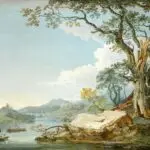
Nature painting, also known as landscape painting, focuses on depicting natural scenery such as mountains, valleys, trees, rivers, and forests. It can also include elements like weather conditions and light.
Composition in Still Life and Nature Painting
Composition refers to the arrangement of elements within a work of art. A good composition guides the viewer’s eye and creates balance and harmony.
The following are key elements of composition:
- Balance: Distributing visual weight evenly.
- Emphasis: Creating a focal point to attract attention.
- Rhythm: Repetition of elements to create movement.
- Unity: How all elements work together to form a cohesive whole.
- Variety: Using different elements to add interest.
Elements of Light and Shade
Light and shade are essential for creating the illusion of three-dimensionality and depth in a painting. They help to define the form and texture of objects.
The following are the main elements of light and shade:
- Highlight: The brightest spot where light hits the object directly.
- Mid-tone: The general tone of the object, not directly hit by light or in deep shadow.
- Core Shadow: The darkest part of the object, where light cannot reach.
- Reflected Light: Light bouncing off surrounding surfaces onto the shadowed side of an object.
- Cast Shadow: The shadow an object casts onto a surface.
Object Sketching
Object sketching is the initial drawing phase where the artist outlines the forms and positions of the objects. It involves using lines and basic shapes to capture the proportions and perspective of the subject before adding details or colour.
Painting Techniques
Painting techniques are the methods artists use to apply paint to a surface. These techniques influence the texture, appearance, and overall effect of the artwork.
The following are common painting techniques:
- Washing: Applying thin, transparent layers of paint.
- Layering: Building up paint in multiple layers to create depth and subtle colour changes.
- Blending: Smoothly transitioning between colours or tones.
- Dry Brush: Using a brush with very little paint to create a textured, broken effect.
- Impasto: Applying thick layers of paint, often with a palette knife, to create texture.
Teaching Methods/Instructional Techniques
Discussion, Lecture, Demonstration, Question and Answer, Visual Aids
Instructional Procedures
Step 1: Introduction
Time: 5 minutes
Teaching Skill: Set Induction
Teacher’s Activity: The teacher greets the pupils, checks their previous knowledge about drawing simple objects, and introduces the topic by asking them to name common objects they see around them or landscapes they have admired.
Pupils’ Activity: Pupils respond to the greetings and questions, mentioning various objects and natural scenes.
Learning Point: Pupils are engaged and recall prior knowledge relevant to the lesson.
Step 2: Defining Still Life and Nature Painting
Time: 8 minutes
Teaching Skill: Explanation/Definition
Teacher’s Activity: The teacher defines still life painting, giving examples of common still life objects. The teacher then defines nature painting, providing examples of natural sceneries. The teacher shows pictures of both types of paintings.
Pupils’ Activity: Pupils listen attentively, observe the pictures, and ask questions for clarification.
Learning Point: Pupils understand the definitions of still life and nature painting.
Step 3: Understanding Composition
Time: 8 minutes
Teaching Skill: Elucidation/Demonstration
Teacher’s Activity: The teacher explains what composition means in art, using visual examples to demonstrate how objects are arranged to create balance and a focal point. The teacher highlights the elements of good composition.
Pupils’ Activity: Pupils listen, observe the examples, and discuss how different arrangements affect the visual appeal of a painting.
Learning Point: Pupils grasp the importance and elements of composition.
Step 4: Exploring Light and Shade
Time: 8 minutes
Teaching Skill: Demonstration/Explanation
Teacher’s Activity: The teacher demonstrates the effect of light on a simple object (e.g., an apple) using a torch. The teacher explains and points out the highlight, mid-tone, core shadow, reflected light, and cast shadow on the object.
Pupils’ Activity: Pupils observe the demonstration and identify the different areas of light and shade as explained by the teacher.
Learning Point: Pupils understand how light and shade create depth and form.
Step 5: Object Sketching and Painting Techniques Demonstration
Time: 8 minutes
Teaching Skill: Demonstration/Guided Practice
Teacher’s Activity: The teacher arranges a simple still life composition (e.g., a fruit and a bottle). The teacher demonstrates how to sketch the objects using basic shapes, paying attention to proportion and perspective. The teacher briefly demonstrates one or two painting techniques like washing and blending.
Pupils’ Activity: Pupils observe the sketching process and the painting techniques. They may begin to make light sketches of the arranged objects.
Learning Point: Pupils learn the initial steps of object sketching and observe painting techniques.
Step 6: Evaluation/Review
Time: 5 minutes
Teaching Skill: Questioning/Assessment
Teacher’s Activity: The teacher evaluates the learning by asking the following questions:
- Define still life painting.
- Mention two examples of natural elements suitable for nature painting.
- List three key elements of composition in painting.
- Identify the five main elements of light and shade on an object.
Pupils’ Activity: Pupils answer orally and in writing.
Learning Point: Pupils demonstrate understanding of the lesson.
Step 7: Conclusion
Time: 3 minutes
Teaching Skill: Summarisation/Assignment
Teacher’s Activity: The teacher summarises the key points of the lesson, reinforcing the definitions of still life and nature painting, and the importance of composition, light, and shade. The teacher assigns homework for pupils to sketch a simple still life composition at home.
Pupils’ Activity: Pupils listen to the summary and copy down the homework assignment.
Learning Point: Pupils consolidate their learning and prepare for further practice.
Lesson Keywords
- Still life – A work of art depicting inanimate objects arranged in a composition.
- Nature painting – A genre of art depicting natural scenery like landscapes.
- Composition – The arrangement of elements within an artwork to create a unified whole.
- Light and shade – The use of varying tones to create the illusion of depth and form.
- Highlight – The brightest area on an illuminated object.
- Core shadow – The darkest part of an object not directly hit by light.
- Cast shadow – The shadow an object projects onto another surface.
- Sketching – The process of making a quick, preliminary drawing.
- Painting techniques – Methods used to apply paint, such as washing, layering, or blending.
Differentiation
For pupils who grasp concepts quickly, the teacher can encourage them to experiment with more complex compositions or different painting techniques. For pupils who need more support, the teacher can provide simpler objects for sketching, offer more one-on-one guidance, and provide pre-drawn outlines to work with for painting.
Note for teachers using this lesson plan
Ensure that a variety of still life objects are available for the demonstration and for pupils to use. Encourage observation and free expression. Emphasize that initial sketches do not need to be perfect but should capture the basic forms and proportions. Practical demonstration is key for teaching light, shade, and painting techniques.


Community Join the conversation Open discussion +