

Class: Primary Three
Term: Second Term
Subject: National Values Education
Curriculum Theme: Social Studies
Previous Lesson: Definition, Importance, Ancient and Modern Transportation
Topic: Communication
Content/learning Area: What is Communication?, importance Of Communication, Ancient Means Of Communication, Modern Means Of Communication
Time Allocation: 40 minutes
Performance Objectives
By the end of the lesson, pupils should be able to:
- Cognitive Domain:
1. Define communication.
2. List five importance of communication.
3. Recognize the meaning of effective communication in daily life.
4. Identify ancient and modern means of communication.
- Affective Domain:
1. Appreciate the importance of effective communication.
- Psychomotor Domain:
1. Demonstrate understanding of ancient and modern means of communication through participation in class activities.
2. Engage in group discussions on the importance of communication.
- Social Domain:
1. Cooperate with peers during group discussions.
Reference Materials
- 9 – Years Basic Education Curriculum
- Abuja Educational Resource center Scheme of work
- NAPPS National Unified Scheme of Work
- Relevant Textbooks
Instructional Materials
To deliver this lesson, the teacher will use the following materials:
- Whiteboard or chart paper
- Markers
- Pictures depicting ancient and modern communication methods
Rationale for the Lesson
Understanding communication is crucial for building relationships, solving problems, and sharing details effectively. This lesson lays the foundation for future lessons on interpersonal skills and effective communication strategies.
Prerequisite/Previous Knowledge
The teacher will start by asking pupils to share how they communicated with their friends or family earlier that day.This will lead into a discussion about different ways people communicate, setting the stage for the lesson on communication.
Lesson Content
What is Communication?
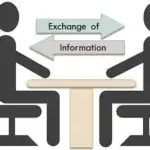
Communication is the process of sharing information, thoughts, or feelings between people. It involves sending and receiving messages using words, gestures, or even looks.It can be verbal,nonverbal,or written.
Importance Of Communication
Communication is vital for several reasons:
The following are some of the reasons communication is important:
- Sharing information and knowledge.
- Building and maintaining relationships.
- Solving problems collaboratively.
- Expressing feelings and emotions.
- Learning from others’ experiences.
- Promoting understanding and empathy.
- Facilitating cooperation and teamwork.
Ancient Means Of Communication
Ancient communication methods were used before the advent of modern technology to convey messages over distances.
These include:
- Smoke signals: Different smoke patterns conveyed messages.
- Carrier pigeons: Trained pigeons carried messages.
- Drum beats: Rhythms communicated messages.
- Flags: Different flags and positions represented messages.
- Messengers: Individuals who carried messages on foot or horseback.
- Town criers: People who made public announcements in towns.
- Bonfires: Used to signal critically important events or warnings.
Modern Means of Communication
Modern communication methods utilize technology to facilitate faster and more efficient information exchange.
Modern communication methods include:
- Telephone: Enables real-time conversations.
- Internet: provides a vast network for communication (emails, video chats, information sharing).
- Television: Broadcasts news, entertainment, and information.
- Radio: Broadcasts news, music, and programs.
- Mobile phones: allow for portable and instant communication.
- Social media: Platforms for sharing information and connecting with others.
- satellite communication: Enables global communication through satellites.
teaching Methods
To deliver this lesson, the teacher will adopt the following methods: Discussion, Group work, question and answer, Visual aids
Instructional Procedures
To deliver this lesson, the teacher will adopt the following steps:
Step 1: Introduction
Time: 5 minutes
Teaching Skill: Set induction
Teacher’s Activity: Asks pupils how they communicated with friends and family earlier that day.
Pupils’ Activity: Share their experiences.
Step 2: Description of Key Concepts
Time: 10 minutes
Teaching Skill: Description
Teacher’s Activity: Defines communication and explains its importance.
Pupils’ Activity: Listen attentively and ask clarifying questions.
Step 3: Presentation/Guided Practice
Time: 10 minutes
Teaching Skill: Exhibition
Teacher’s activity: Shows pictures of ancient and modern communication methods and explains how they work.
Pupils’ Activity: Observe and participate in discussions.
Step 4: Self-Reliant Practice
Time: 5 minutes
Teaching Skill: Guided Practice
Teacher’s Activity: Divides pupils into groups for a short activity related to communication.
Pupils’ Activity: Work in groups to complete the activity.
Step 5: Note-Taking
Time: 5 minutes
teaching Skill: Note-Taking
Teacher’s Activity: Guides pupils in taking notes on key concepts.
Pupils’ Activity: Write down crucial points.
Step 6: Evaluation/Review
Time: 5 minutes
Teaching Skill: Questioning
teacher’s Activity: Asks review questions to assess understanding.
Pupils’ Activity: Answer questions.
Objective-aligned checks:
- Define communication.
- List five importance of communication.
- Identify ancient and modern means of communication.
Step 7: Conclusion
Time: 5 minutes
Teaching Skill: Summarizing
Teacher’s Activity: Summarizes the key points about communication and its importance.
Pupils’ Activity: Listen attentively and ask questions for clarification.
Lesson keywords
- Communication – The process of sharing information, thoughts, or feelings.
- Ancient Communication – Methods of communication used before modern technology.
- Modern Communication – Methods of communication that utilize technology.
- effective Communication – Clear and understandable exchange of information.
- Non-Verbal Communication – Communication using gestures, expressions, and body language.
Lesson Evaluation
To evaluate the learning, the teacher asks pupils to:
- Why is communication critically important?
- Give an example of ancient communication.
- How do modern and ancient communication differ?
- How can you communicate effectively with family and friends?
- Describe a time when communication helped solve a problem.
Assignment/Homework
- List five importance of communication in our daily lives.
- Mention three examples of ancient means of communication.
- Mention three examples of modern means of communication.
Differentiation
- For slower learners: Provide one-on-one assistance and simplified explanations.
- For advanced learners: Encourage them to research additional communication methods and present their findings to the class.
- For visual/auditory/kinesthetic learners: Use visual aids, discussions, and hands-on activities to cater to different learning styles.
Note for teachers
Ensure to use real-life examples and visual aids to make the lesson engaging and relatable for the pupils. Encourage active participation and group discussions to enhance understanding and retention.



Community Join the conversation Open discussion +