

Class: Primary Three
Term: Second Term
Subject: National Values Education
Curriculum Theme: Social Studies
Previous Lesson: Definition, Importance, Ancient And Modern Means Of Communication
Topic: Saving
Content/Learning Area: What is Saving?, Reasons for Saving, Methods of Saving
Time Allocation: 40 minutes
Performance Objectives
By the end of the lesson, pupils should be able to:
- Cognitive Domain:
- Define saving.
- List reasons for saving.
- List methods of saving.
- Recognize the importance of saving for future goals.
- Psychomotor Domain:
- Demonstrate the ability to use a piggy bank or jar to save money.
- Show the ability to create a simple savings plan.
- Affective Domain:
- Appreciate the value of saving money.
- Develop a positive attitude towards saving.
- Social Domain:
- discuss the importance of saving with peers.
Reference Materials
- 9 – Years Basic education Curriculum
- Abuja Educational Resource Center Scheme of Work
- NAPPS National Unified Scheme of Work
- online Details
- Relevant Textbooks
Instructional Materials
To deliver this lesson, the teacher will use the following materials:
- Whiteboard or chart paper
- Markers or pens
- Pictures or illustrations related to saving
- A piggy bank or jar (optional)
Rationale for the Lesson
This lesson teaches the importance of saving money, a crucial life skill.Understanding saving helps children make responsible financial decisions now and in the future.
Prerequisite/Previous knowledge
Pupils have a basic understanding of money and spending.
Lesson Content
What is Saving?
Saving is putting aside some of yoru money for later use rather of spending it all at once. It’s like storing money for something special you want in the future.
Reasons for Saving
Saving helps us prepare for the future and achieve our goals.The following are some reasons for saving:
- Emergency Fund: Saving for unexpected events like a broken toy or a sudden need for medical attention.
- Future Education: Saving for school fees or other educational expenses.
- Big Purchases: Saving for larger items like a bicycle or a new game.
- Travel and Leisure: Saving for fun activities like a trip to the park or a special outing. This helps avoid financial stress when enjoying these activities.
- Retirement: Saving for when you are older and no longer working.
- Starting a Business: Saving to gather capital for a small business venture.
- Healthcare: Saving for medical expenses and health-related needs.
Methods of Saving
There are several ways to save money, each with its own advantages. These include:
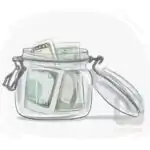
- Piggy Bank or Jar: A simple way to save small amounts of money regularly.
- Bank Savings Account: A bank account where you can save money and earn interest.
- Automatic Transfers: Setting up a system to automatically move money from your main account to your savings account.
- Budgeting: Planning how you spend your money so you can save a portion of it.
- Cooperative Societies (Esusu): Saving with a group where members contribute regularly and receive lump sums in turn.
- Fixed Deposit Accounts: Saving money in a bank account for a fixed period with a higher interest rate.
teaching Methods
To deliver this lesson, the teacher will adopt the following methods: Discussion, Clarification, Question and Answer, and Presentation.
Instructional Procedures
To deliver this lesson, the teacher will adopt the following steps:
Step 1: Introduction
Time: 5 minutes
Teaching Skill: Set Induction
Teacher’s Activity: Asks pupils what they know about saving.
Pupils’ Activity: Share their ideas and understanding of saving.
Step 2: Clarification of Key Concepts
time: 10 minutes
Teaching Skill: explanation
Teacher’s Activity: Explains the meaning of saving and its importance.
Pupils’ Activity: Listen attentively and ask clarifying questions.
Step 3: Presentation/Guided Practice
Time: 10 minutes
Teaching Skill: Demonstration
Teacher’s Activity: Demonstrates different methods of saving using a piggy bank or examples.
Pupils’ Activity: Observe the demonstration and participate in a brief discussion.
Step 4: Autonomous Practice
Time: 5 minutes
Teaching Skill: Guided practice
Teacher’s Activity: Guides pupils in brainstorming reasons and methods for saving.
pupils’ Activity: Participate in brainstorming and share their ideas.
Step 5: note-Taking
Time: 5 minutes
Teaching Skill: Note-Taking
Teacher’s Activity: Guides pupils in taking notes on key concepts.
Pupils’ Activity: Take notes on the main points of the lesson.
Step 6: Evaluation/Review
Time: 5 minutes
Teaching Skill: Questioning
Teacher’s activity: Asks evaluation questions to assess understanding.
Pupils’ Activity: Answer the evaluation questions.
Objective-aligned checks:
- List reasons for saving.
- List methods of saving.
- Demonstrate the ability to use a piggy bank or jar to save money.
Step 7: Conclusion
Time: 2 minutes
Teaching Skill: summarizing
Teacher’s Activity: Summarizes the key points about saving and encourages pupils to start saving.
Pupils’ Activity: Listen to the summary and commit to saving.
Lesson Keywords
- Saving – Putting aside money for future use.
- Emergency Fund – Money saved for unexpected events.
- Budgeting – Planning how to spend money.
- Bank Account – A place to store money in a bank.
- Piggy Bank – A container for saving small amounts of money.
Lesson Evaluation
To evaluate the learning, the teacher asks pupils to:
- What does saving mean?
- Why is it critically importent to save money? Give two reasons.
- Name two ways you can save money.
- Can you think of something you would like to save for?
Assignment/Homework
- Start a small savings jar at home.
- List three things you would like to save money for.
- Ask your parents how they save money and share with the class next time.
Differentiation
- For slower learners: Provide one-on-one assistance and use simpler language.
- For advanced learners: Encourage them to explore more complex saving strategies and create detailed savings plans.
- For visual/auditory/kinesthetic learners: Use visual aids, discussions, and hands-on activities like using a piggy bank.
Note for Teachers
Encourage pupils to share their personal experiences with saving. Emphasize that even small amounts of saving can make a big difference over time. Consider inviting a guest speaker from a local bank to talk about saving.

Community Join the conversation Open discussion +