

Class: Primary Three
Term: Second Term
Subject: National Values Education
Curriculum Theme: Social Studies
Previous Lesson: Road Accident, Concept, Causes And Effects Of Road Accident
Topic: Road Accident Prevention
Content/Learning Area: What is road Safety?, Importance of Road Safety, Two Ways of Prevention, Role-playing, Class Discussion, Note Taking
Time Allocation: 40 minutes
Performance Objectives
By the end of the lesson, pupils should be able to:
- Cognitive Domain:
1. Identify two ways of preventing road accidents.
2. Explain the importance of road safety in personal and community well-being.
- Affective Domain:
1. show concern for road safety.
- Psychomotor Domain:
1. Demonstrate basic road safety rules through role-playing.
- Social Domain:
1. Collaborate with classmates to discuss and share ideas on preventing road accidents.
Reference materials
- 9 – Years Basic education curriculum
- Abuja Educational Resource Center Scheme of Work
- NAPPS National Unified Scheme of Work
- Relevant Textbooks
Instructional Materials
To deliver this lesson, the teacher will use the following materials:
- Whiteboard or chart paper
- Markers or crayons
- pictures related to road safety
Rationale for the Lesson
Understanding road safety is crucial for pupils’ well-being and the safety of thier community. This lesson provides foundational knowledge and skills to prevent accidents and promote safe road practices.
Prerequisite/Previous Knowledge
The teacher will start by asking pupils if they have ever witnessed a road accident or seen road safety signs.A brief discussion will follow, leading into the lesson’s topic.
Lesson Content
What is Road Safety?
Road safety means staying safe near roads. We must follow rules and watch carefully to avoid accidents.
Importance of Road Safety
Road accidents can cause injuries, damage, and even death.Road safety is vital to protect ourselves and others.
Two Ways of Prevention
Preventing road accidents involves adopting safe practices and being vigilant. The following are examples:
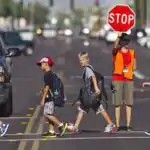
- Using pedestrian crossings: Always use designated pedestrian crossings to cross the road safely. Look both ways before crossing.
- Obeying traffic signals and road signs: Pay close attention to traffic lights and road signs,and follow them carefully.
- Avoiding distractions: Do not use mobile phones or engage in activities that divert attention while walking or crossing the road.
- Wearing bright clothing: Wear bright or reflective clothing to be more visible to drivers, especially at night or in low-light conditions.
Role-Playing
We can learn about road safety by acting out different road scenarios and practicing safe behaviors.
Class Discussion
After role-playing, we can discuss what we learned and share ideas on preventing road accidents.
Note Taking
Key points: Use pedestrian crossings, obey traffic signals, and be aware of surroundings near roads.
Teaching Methods
To deliver this lesson, the teacher will adopt the following methods: Discussion,role-playing,Question and answer
Instructional Procedures
To deliver this lesson,the teacher will adopt the following steps:
Step 1: Introduction
Time: 5 minutes
Teaching Skill: Questioning
Teacher’s Activity: Asks pupils about their experiences with roads and road safety.
Pupils’ Activity: Share their experiences and answer questions.
Step 2: Description of Key Concepts
Time: 10 minutes
Teaching Skill: Explaining
Teacher’s Activity: Explains the meaning of road safety and its importance.
Pupils’ Activity: Listen attentively and ask clarifying questions.
Step 3: Exhibition/Guided practice
Time: 10 minutes
Teaching Skill: Demonstrating
Teacher’s Activity: Guides pupils through role-playing scenarios demonstrating safe road practices.
Pupils’ Activity: Participate actively in role-playing.
Step 4: Autonomous Practice
Time: 5 minutes
Teaching Skill: Monitoring
Teacher’s Activity: Supervises pupils as they discuss road safety in small groups.
Pupils’ Activity: Discuss and share ideas on preventing road accidents.
Step 5: Note-Taking
Time: 5 minutes
Teaching Skill: Summarizing
Teacher’s Activity: Summarizes key points on the board.
Pupils’ Activity: take notes in their notebooks.
Step 6: Evaluation/Review
Time: 5 minutes
Teaching Skill: Questioning
Teacher’s Activity: Asks evaluation questions.
pupils’ Activity: Answer the evaluation questions.
Objective-aligned checks:
- Identify two ways of preventing road accidents.
- Explain the importance of road safety in personal and community well-being.
- show concern for road safety.
Step 7: Conclusion
Time: 5 minutes
Teaching Skill: Summarizing
Teacher’s Activity: Reviews the key points of road safety and encourages pupils to practice these rules in their daily lives.
Pupils’ activity: Listen and commit to practicing road safety rules.
Lesson keywords
- Road Safety – Staying safe near roads by following rules and being careful.
- Pedestrian Crossing – Designated areas for people to cross roads safely.
- Traffic Signals – Lights and signs that control the flow of traffic.
- Role-Playing – Acting out scenarios to learn and practice safe behaviors.
- Accident Prevention – Taking measures to avoid road accidents.
Lesson Evaluation
To evaluate the learning, the teacher asks pupils to:
- Name two ways to prevent road accidents.
- Why is it important to follow road safety rules?
- Give examples of road safety rules.
- How can we help others stay safe on the road?
- How can we make our community safer?
Assignment/Homework
- Draw and label three common road signs and explain what each means.
- Write a short paragraph about why road safety is important to you and your family.
- Observe and list three unsafe road behaviors you see in your community.
Differentiation
- For slower learners: Provide one-on-one assistance and simplified explanations.
- For advanced learners: Research additional road safety tips and create a presentation to share with the class.
- For visual/auditory/kinesthetic learners: Use visual aids,auditory instructions,and hands-on activities like role-playing to cater to different learning styles.
Note for Teachers
Ensure to use real-life examples and relatable scenarios to make the lesson engaging and relevant for the pupils. Emphasize the importance of personal obligation in maintaining road safety.



Community Join the conversation Open discussion +