

Class: Junior Secondary School 2 (JSS2, JSS 2)
Term: 2nd Term
Week: 4
Age: 13 years
Duration: 45 minutes
Subject: Pre-Vocational Studies
Curriculum Theme: Home Economics
Previous Lesson: Meals and Snacks
Topic: Preparation Of Meals And Snacks
Subject Matter: Guidelines for washing up after meals, Practical work on snacks e.g. chin-chin, buns etc.
Specific Objectives
By the end of the lesson, pupils should be able to:
- Cognitive Domain:
(a) Define the proper steps for washing up after meals.
(b) Identify the ingredients and equipment needed for preparing snacks like chin-chin and buns. - Affective Domain:
(a) Show interest in maintaining hygiene while preparing and serving snacks.
(b) Appreciate the importance of cleanliness after meal preparation. - Psychomotor Domain:
(a) Demonstrate proper washing up techniques for utensils and kitchen surfaces.
(b) Prepare simple snacks such as chin-chin and buns following correct procedures. - Social Domain:
(a) Collaborate effectively in groups to prepare snacks.
(b) Share responsibility in cleaning up after meal preparation.
Reference Materials
The following resources were used in planning this lesson:
- 9 Years Basic Education Curriculum
- Lagos State Unified Scheme of Work for Junior Secondary Schools
- Adasrecipes – Snacks Recipes
- Practical Home Economics Textbook for JSS 2
Instructional Materials
The teacher will teach this lesson with the aid of:
- Cooking utensils (bowls, spoons, frying pan, baking tray)
- Ingredients for chin-chin and buns (flour, sugar, eggs, milk, oil)
- Clean water and dishwashing materials
- Chalkboard and markers
- Chart showing steps of washing up after meals
Rationale for the Lesson
This lesson enables pupils to acquire practical skills in preparing snacks and maintaining hygiene, promoting healthy eating habits.
Prerequisite/Previous Knowledge
Pupils are expected to have basic knowledge of common kitchen utensils and simple cooking skills learned in earlier lessons.
Lesson Content/Board Summary
Preparation Of Meals And Snacks
Guidelines for Washing Up After Meals
Washing up after meals involves cleaning all utensils, plates, cooking equipment, and work surfaces used during food preparation. This ensures hygiene and prevents contamination.
The following are key steps in washing up:
- Remove leftover food from plates and cooking utensils.
- Rinse utensils with clean water.
- Apply detergent or soap and scrub utensils properly.
- Rinse thoroughly to remove soap residues.
- Dry utensils using a clean towel or air-dry them.
- Wipe and clean kitchen surfaces to remove any spills or crumbs.
Practical Work on Snacks
The following are steps in preparing chin-chin and buns:
- Gather all ingredients and utensils needed for the snack.
- Mix dry ingredients (flour, sugar, salt) in a bowl.
- Add wet ingredients (milk, eggs, oil) gradually and knead to form dough.
- Shape the dough into desired forms (cut into small pieces for chin-chin; shape into balls for buns).
- Heat oil in a frying pan (for chin-chin) or preheat oven (for buns).
- Cook the snacks until golden brown and fully done.
- Remove and allow to cool before serving.
Importance of Hygiene During Snack Preparation
Maintaining hygiene prevents foodborne illnesses and ensures the snacks are safe to eat.
These include:
- Washing hands before and during food preparation.
- Using clean utensils and equipment.
- Keeping work surfaces free from dirt and bacteria.
- Storing prepared snacks properly if not served immediately.
Teaching Methods/Instructional Techniques
Discussion, Lecture, Demonstration, Visual Aids, Practical Group Work, Question and Answer
Instructional Procedures
To deliver this lesson, the teacher will adopt the following steps:
Step 1: Introduction
Time: 5 minutes
Teaching Skill: Set Induction
Teacher’s Activity: The teacher begins by asking pupils about their favorite snacks and how they usually clean up after eating. A brief storytelling about food hygiene is used.
Pupils’ Activity: Listen attentively and answer questions.
Learning Point: Pupils understand the importance of hygiene and preparing snacks.
Step 2: Guidelines for Washing Up
Time: 10 minutes
Teaching Skill: Explanation and Demonstration
Teacher’s Activity: The teacher explains and demonstrates proper washing up steps using real utensils.
Pupils’ Activity: Observe and take notes.
Learning Point: Pupils learn the correct washing up techniques.
Step 3: Snack Preparation Demonstration
Time: 15 minutes
Teaching Skill: Demonstration
Teacher’s Activity: Demonstrates step-by-step how to prepare chin-chin and buns.
Pupils’ Activity: Observe closely and ask questions for clarification.
Learning Point: Pupils understand the process of snack preparation.
Step 4: Practical Activity
Time: 10 minutes
Teaching Skill: Guided Practice
Teacher’s Activity: Supervises pupils as they prepare snacks in groups, providing guidance where necessary.
Pupils’ Activity: Participate actively in preparing the snacks.
Learning Point: Pupils apply skills learned during the demonstration.
Step 5: Note-Taking
Time: 3 minutes
Teaching Skill: Consolidation
Teacher’s Activity: Highlights key steps and guidelines on the board for pupils to copy.
Pupils’ Activity: Copy notes from the board.
Learning Point: Pupils consolidate knowledge in written form.
Step 6: Evaluation/Review
Time: 5 minutes
Teaching Skill: Questioning and Assessment
Teacher’s Activity: The teacher evaluates the learning by asking the following questions:
- List the steps for washing up after meals.
- Mention the ingredients needed to prepare chin-chin.
- Explain why hygiene is important during snack preparation.
Pupils’ Activity: Respond to questions orally or in writing.
Learning Point: Assessment of pupils’ understanding of hygiene and snack preparation.
Step 7: Conclusion
Time: 2 minutes
Teaching Skill: Summarization
Teacher’s Activity: Summarizes key points of washing up and snack preparation, reinforcing the importance of hygiene.
Pupils’ Activity: Listen and ask clarifying questions if necessary.
Learning Point: Pupils understand the importance of the lesson in practical daily life.
Lesson Keywords
- Hygiene – cleanliness to prevent illness
- Utensils – tools used in cooking
- Snack – small portion of food between meals
- Dough – mixture of flour and liquid used to prepare snacks
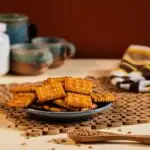
- Chin-chin – fried snack made from dough
- Buns – baked snack made from dough
Differentiation
Teachers will provide extra guidance and simplified steps for slower learners while challenging advanced learners with creative snack shaping techniques.
Note for teachers using this lesson plan
Ensure all practical activities are conducted safely, monitor hygiene strictly, and allow pupils to work in small groups for better engagement.
Community Join the conversation Open discussion +