

Class: Senior Secondary School 2 (SS2 / SSS2)
Term: Second Term
Week: 10
Age: 16 years
Duration: 45 minutes
Subject: Government
Curriculum Theme: Political Development in Nigeria
Previous Lesson: Colonial Policies Comparison: British and French Impacts in West Africa.
Topic: NATIONALISM
Subject Matter: Meaning of nationalism (love for one’s nation and struggle for self-rule), definition of nationalism, factors that led to the rise and growth of nationalism in Nigeria, effects of nationalism in Nigeria, activities of Nigerian nationalists (Dr. Nnamdi Azikiwe, Chief Obafemi Awolowo, Sir Abubakar Tafawa Balewa, Sir Ahmadu Bello, Ernest Ikoli, and more).
Specific Objectives
By the end of the lesson, pupils should be able to:
Cognitive Domain:
- Define nationalism.
- Identify the key factors that led to the rise and growth of nationalism in Nigeria.
- List the effects of nationalism in Nigeria.
- Identify prominent Nigerian nationalists and their contributions.
Affective Domain:
- Appreciate the sacrifices and efforts of Nigerian nationalists.
- Value the importance of national unity and self-determination.
- Show interest in learning more about Nigeria’s political history.
Psychomotor Domain:
- Participate actively in discussions about nationalist struggles.
- Present findings on the contributions of specific nationalists.
- Watch and analyze documentary video clips on nationalist activities.
Social Domain:
- Collaborate with peers to discuss the impact of nationalism.
- Respect diverse viewpoints on historical events and figures.
- Engage in role-play or drama depicting aspects of the nationalist struggle.
Reference Materials
The following resources were used in planning this lesson:
- Senior Secondary Schools Education Curriculum
- State Unified Scheme of Work
- Essential Government for Senior Secondary Schools by D.C. Nwaubani
- https://www.nigeriancurriculum.gov.ng
- https://www.education.gov.ng
Instructional Materials
The teacher will teach this lesson with the aid of:
- Government textbooks
- Charts displaying pictures of Nigerian nationalists
- Documentary video clips on nationalist activities in Nigeria
- Resource person notes
Rationale for the Lesson
Understanding nationalism helps pupils to grasp how Nigeria gained independence and the struggles involved. It enables pupils to appreciate the efforts of past leaders in shaping the nation. This knowledge also encourages patriotism and a sense of national identity.
Prerequisite/Previous Knowledge
Pupils should have a basic understanding of Nigeria’s colonial history and the concept of self-governance.
Lesson Content/Board Summary
NATIONALISM
Meaning of Nationalism
Nationalism is a strong feeling of love and loyalty to one’s own country. It is a political ideology that emphasizes the importance of a nation, usually defined by a shared culture, language, or history, and often involves the desire for self-determination or political independence.
Factors that Led to the Rise and Growth of Nationalism in Nigeria
The following are factors that contributed to the rise and growth of nationalism in Nigeria:
- Economic Exploitation: British colonial policies were designed to benefit Britain, leading to the exploitation of Nigeria’s resources and labour. This created resentment among Nigerians.
- Social Discrimination: Nigerians faced discrimination in their own land, being denied access to certain facilities and holding subordinate positions in the civil service.
- Spread of Education: Western education exposed Nigerians to ideas of liberty, equality, and self-determination, inspiring them to challenge colonial rule.
- Influence of Mass Media: Nationalist newspapers and journals (e.g., West African Pilot) were used to disseminate nationalist ideas, criticize colonial policies, and mobilize public support.
- External Influences: Events like World War II, the Atlantic Charter, and the independence of India and Ghana inspired Nigerian nationalists.
- Role of Traditional Rulers: Some traditional rulers resisted colonial imposition, which fueled anti-colonial sentiments.
Effects of Nationalism in Nigeria
The following are the effects of nationalism in Nigeria:
- Attainment of Independence: Nationalism led to the struggle for and eventual attainment of political independence for Nigeria on October 1, 1960.
- Political Awareness and Mobilization: It led to increased political consciousness among Nigerians and the formation of political parties.
- Constitutional Developments: Nationalist pressures resulted in a series of constitutional reforms (e.g., Clifford, Richards, Macpherson, Lyttleton Constitutions) that granted more self-rule to Nigerians.
- Promotion of National Unity: Despite regional differences, nationalism provided a common goal of ending colonial rule, fostering a sense of shared identity.
- Economic Development Drive: After independence, nationalists initiated policies aimed at developing the Nigerian economy and improving the welfare of its citizens.
Activities of Nigerian Nationalists
Nigerian nationalists were prominent leaders who championed the cause of self-rule and independence. Their activities included:
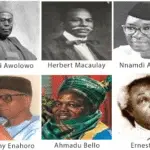
- Dr. Nnamdi Azikiwe: A leading figure in the anti-colonial movement, he used his newspaper, the West African Pilot, to promote nationalist ideas. He founded the National Council of Nigeria and the Cameroons (NCNC) and became Nigeria’s first President.
- Chief Obafemi Awolowo: A key nationalist leader from the Western Region, he founded the Action Group (AG) and advocated for federalism and free education. He was the first Premier of the Western Region.
- Sir Abubakar Tafawa Balewa: A prominent leader from the Northern Region, he was a key figure in the Northern People’s Congress (NPC) and became Nigeria’s first Prime Minister.
- Sir Ahmadu Bello: The Sardauna of Sokoto and leader of the Northern People’s Congress (NPC), he played a significant role in advocating for Northern interests within the Nigerian federation. He was the first Premier of the Northern Region.
- Ernest Ikoli: A pioneer journalist and nationalist, he was a co-founder of the Nigerian Youth Movement (NYM), one of Nigeria’s earliest nationalist organizations.
- Herbert Macaulay: Often regarded as the “Father of Nigerian Nationalism,” he founded Nigeria’s first political party, the Nigerian National Democratic Party (NNDP), in 1923.
Teaching Methods/Instructional Techniques
Discussion, Lecture, Demonstration, Question and Answer, Visual Aids
Instructional Procedures
Step 1: Introduction
Time: 5 minutes
Teaching Skill: Set Induction
Teacher’s Activity: The teacher greets the pupils and asks them what it means to love their country and what they know about Nigeria’s independence.
Pupils’ Activity: Pupils respond by sharing their thoughts on patriotism and how Nigeria gained independence.
Learning Point: Pupils are introduced to the concept of national loyalty and self-rule.
Step 2: Explanation of Nationalism
Time: 7 minutes
Teaching Skill: Explanation/Definition
Teacher’s Activity: The teacher explains the meaning of nationalism, emphasizing love for one’s nation and the struggle for self-rule, and writes the definition on the board.
Pupils’ Activity: Pupils listen attentively, ask questions for clarification, and copy the definition into their notebooks.
Learning Point: Pupils understand the core concept of nationalism.
Step 3: Factors for the Rise and Growth of Nationalism
Time: 7 minutes
Teaching Skill: Elucidation/Listing
Teacher’s Activity: The teacher discusses and lists the key factors that led to the rise and growth of nationalism in Nigeria, such as economic exploitation and the spread of education.
Pupils’ Activity: Pupils identify and note down these factors, contributing to the discussion with examples where possible.
Learning Point: Pupils identify the historical reasons behind the nationalist movement.
Step 4: Effects of Nationalism
Time: 7 minutes
Teaching Skill: Explanation/Analysis
Teacher’s Activity: The teacher explains the major effects of nationalism in Nigeria, including the attainment of independence and constitutional developments.
Pupils’ Activity: Pupils listen, ask questions, and list the effects, understanding their significance.
Learning Point: Pupils understand the outcomes and impact of nationalism on Nigeria.
Step 5: Activities of Nigerian Nationalists
Time: 10 minutes
Teaching Skill: Illustration/Discussion
Teacher’s Activity: The teacher introduces prominent Nigerian nationalists like Dr. Nnamdi Azikiwe, Chief Obafemi Awolowo, Sir Abubakar Tafawa Balewa, Sir Ahmadu Bello, and Ernest Ikoli. The teacher uses charts or shows video clips documenting their activities and contributions, then facilitates a brief discussion or a short drama depicting a nationalist event.
Pupils’ Activity: Pupils observe the visuals, participate in the discussion, identify the nationalists, and note their contributions. Some pupils may participate in the drama.
Learning Point: Pupils recognize key figures and their roles in Nigeria’s struggle for independence.
Step 6: Evaluation/Review
Time: 5 minutes
Teaching Skill: Questioning/Assessment
Teacher’s Activity: The teacher evaluates the learning by asking the following questions:
- Define nationalism in your own words.
- Mention three factors that led to the rise of nationalism in Nigeria.
- State two effects of nationalism in Nigeria.
- Identify two prominent Nigerian nationalists and one contribution of each.
Pupils’ Activity: Pupils answer orally and in writing.
Learning Point: Pupils demonstrate understanding of the lesson.
Step 7: Conclusion
Time: 4 minutes
Teaching Skill: Summarization
Teacher’s Activity: The teacher summarizes the key points of the lesson, reiterating the importance of nationalism in Nigeria’s history and encourages pupils to be patriotic citizens.
Pupils’ Activity: Pupils listen to the summary and ask any remaining questions.
Learning Point: Pupils consolidate their understanding of nationalism and its relevance.
Lesson Keywords
- Nationalism – A strong feeling of love and loyalty to one’s own country, often involving a desire for political independence.
- Self-rule – The government of a country by its own people, especially after having been a colony.
- Patriotism – Love for one’s country.
- Decolonization – The process of a colony gaining independence from its colonizing power.
- Nationalist – A person who strongly identifies with their own nation and supports its interests, especially to the exclusion or detriment of the interests of other nations.
Differentiation
For pupils who grasp concepts quickly, the teacher can assign additional research on lesser-known Nigerian nationalists or the impact of specific colonial policies. For pupils needing more support, the teacher will provide simplified notes, use more visual aids, and pair them with stronger pupils for group activities.
Note for teachers using this lesson plan
Teachers should encourage active participation and critical thinking. They should also draw parallels between historical nationalist struggles and contemporary issues of national identity and unity. Ensure the video clips or drama are age-appropriate and directly relevant to the topic.


Community Join the conversation Open discussion +