

Note for teachers using this lesson plan
This lesson introduces JSS 1 students to the sewing machine, focusing on its meaning and various types. Ensure you have charts, pictures, and, if possible, actual sewing machines (hand, treadle, electric, industrial) available for demonstration and student identification. By the end of the lesson, students should be able to clearly define a sewing machine and explain its different types.
Class: JSS 1
Term: First Term
Week: 3
Age: 12 years
Duration: 45 minutes
Subject: Fashion Design and Garment Making
Curriculum Theme: Sewing tools and equipment
Key competencies/values: Collaboration
Skills:
- Explain the sewing machine and types
Previous Lesson: Tools used in garment making
Topic: Sewing Machine
Subject Matter: Meaning of sewing machine, Sewing machine
Specific Objectives
By the end of the lesson, pupils/students should be able to:
Cognitive Domain
- define sewing machine;
- explain the sewing machine and types.
Reference Materials
The following resources were used in planning this lesson:
- 2025 Revised 9 Years Basic Education Curriculum
- Relevant State Unified Scheme of Work
- Fashion Design and Garment Making for Junior Secondary Schools, Book 1
- The HeadTeacher Scheme of work
Instructional Materials
The teacher will teach this lesson with the aid of:
- Charts
- Pictures of sewing machines
- Real sewing machines (hand, treadle, electric and industrial, etc.)
- Online tutorials (for visual aids)
- Whiteboard/Blackboard
- Markers/Chalk
Rationale for the Lesson
Understanding the sewing machine and its types is fundamental for anyone studying fashion design and garment making. This lesson provides foundational knowledge, enabling students to appreciate the tool’s importance and recognize the different machines used for various sewing tasks, thus preparing them for practical work.
Prerequisite/Previous Knowledge
Students should have basic knowledge of simple sewing tools and materials used in garment making.
Lesson Content/Board Summary
Sewing Machine
Meaning of Sewing Machine
A sewing machine is a machine used to stitch fabric and other materials together with thread. It was invented during the first Industrial Revolution to reduce the amount of manual sewing work performed in clothing companies. Sewing machines are used in homes, tailoring shops, and factories to create various garments and textile products.
Types of Sewing Machines
Sewing machines are generally classified based on their operation and intended use. The main types include:
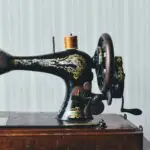
- Hand Sewing Machine: This is a small, portable machine operated manually by turning a handle. It is simple to use and suitable for basic sewing tasks, often used in homes where electricity might be unreliable or for light, quick repairs.
- Treadle Sewing Machine: This machine is operated by foot power using a treadle mechanism. The user presses a foot pedal back and forth, which turns a large wheel connected to the machine’s mechanism. It does not require electricity and is durable, making it popular in many homes and small businesses.
- Electric Sewing Machine: This is the most common type of sewing machine found in modern homes and small workshops. It is powered by an electric motor and controlled by a foot pedal, allowing for faster and more consistent stitching. Electric machines come with various features like different stitch patterns and automatic needle threading.
- Industrial Sewing Machine: These machines are designed for heavy-duty, continuous use in factories and large-scale production. They are built for speed, durability, and specialized tasks, often performing only one type of stitch very efficiently. Examples include machines for straight stitching, overlocking, or buttonholing.
Teaching Methods/Instructional Techniques
Discussion, Demonstration, Guided Practice, Question and Answer, Explanation, Observation, Group Work, Practical Activity.
Instructional Procedures
Step 1: Introduction
Time: 5 minutes
Teaching Skill: Activating prior knowledge
Teacher’s Activity: The teacher greets the students and asks them if they have ever seen a sewing machine or know anyone who uses one. The teacher then introduces the topic: “Sewing Machine: Meaning and Types.”
Pupils’ Activity: Students respond to the questions and listen attentively.
Learning Point: Introduction to sewing machines
Step 2: Meaning of Sewing Machine
Time: 8 minutes
Teaching Skill: Explanation/Definition
Teacher’s Activity: The teacher explains what a sewing machine is, its primary function, and its historical significance. The teacher uses simple language and relates it to everyday examples of stitched items.
Pupils’ Activity: Students listen and ask questions for clarification.
Learning Point: Definition of sewing machine
Step 3: Introduction to Types of Sewing Machines
Time: 7 minutes
Teaching Skill: Visual demonstration
Teacher’s Activity: The teacher displays charts and pictures of different types of sewing machines (hand, treadle, electric, industrial). The teacher briefly mentions that these machines vary in how they are operated.
Pupils’ Activity: Students observe the pictures and charts, identifying familiar machines.
Learning Point: Overview of machine types
Step 4: Detailed Explanation of Hand and Treadle Machines
Time: 7 minutes
Teaching Skill: Description/Comparison
Teacher’s Activity: The teacher explains the characteristics and operation of hand and treadle sewing machines, highlighting their advantages and disadvantages. If available, the teacher demonstrates a real hand or treadle machine.
Pupils’ Activity: Students pay attention, compare the machines, and ask questions.
Learning Point: Hand and treadle machines
Step 5: Detailed Explanation of Electric and Industrial Machines
Time: 7 minutes
Teaching Skill: Description/Demonstration
Teacher’s Activity: The teacher explains electric and industrial sewing machines, focusing on their power source, features, and typical uses. The teacher may show online video tutorials of these machines in operation.
Pupils’ Activity: Students observe the demonstrations and listen to explanations.
Learning Point: Electric and industrial machines
Step 6: Group Identification Activity
Time: 7 minutes
Teaching Skill: Group work/Identification
Teacher’s Activity: The teacher divides students into groups and provides each group with pictures or small models of different sewing machines. The teacher instructs them to identify and name each type and discuss their features.
Pupils’ Activity: Students work in groups to identify and discuss the types of sewing machines.
Learning Point: Identification of machine types
Step 7: Evaluation/Review
Time: 5 minutes
Teaching Skill: Questioning/Assessment
Teacher’s Activity: The teacher evaluates the learning by asking the following questions:
- What is a sewing machine?
- Mention two types of sewing machines.
- How is a hand sewing machine operated?
- Give one difference between an electric and a treadle sewing machine.
Pupils’ Activity: Pupils answer orally and in writing.
Learning Point: Understanding of sewing machines
Step 8: Note-Taking
Time: 4 minutes
Teaching Skill: Guided Writing
Teacher’s Activity: The teacher guides pupils/students to copy the essential Board Summary notes on the meaning and types of sewing machines into their notebooks.
Pupils’ Activity: Pupils/students copy the notes carefully into their notebooks.
Learning Point: Recording lesson content
Step 9: Conclusion
Time: 2 minutes
Teaching Skill: Reinforcement
Teacher’s Activity: The teacher briefly recaps the main points of the lesson, emphasizing the importance of knowing different sewing machine types for future practical work.
Pupils’ Activity: Students listen and prepare for the next lesson.
Learning Point: Lesson summary
Continuous Assessment/Further Study
Type: Homework
Instruction: Answer the following questions in your notebook.
- Draw and label any two types of sewing machines you learned about today.
- Research and write down one safety precaution to observe when using an electric sewing machine.
Lesson Keywords
- Sewing Machine – A machine used to stitch fabric and other materials together with thread.
- Hand Sewing Machine – A portable machine operated manually by turning a handle.
- Treadle Sewing Machine – A machine operated by foot power using a treadle mechanism.
- Electric Sewing Machine – A machine powered by an electric motor, controlled by a foot pedal.
- Industrial Sewing Machine – A heavy-duty machine designed for continuous use in factories.
Differentiation
For students who may struggle, provide simplified diagrams of each machine type and pair them with stronger students for the identification activity. For advanced learners, challenge them to research and present on a specific part of an electric sewing machine or a more specialized industrial machine not covered in detail.
Suggested Lesson Videos
Search YouTube for: types of sewing machines jss1
Teacher Guide for Using This Lesson Plan
Before the lesson, gather all necessary instructional materials, especially charts, pictures, and, if possible, actual sewing machines. Arrange the classroom to facilitate group work and visual demonstrations. Start by engaging students with questions about their prior experiences with sewing machines to build interest. Clearly define what a sewing machine is before proceeding to its types. When explaining the types, use the visual aids extensively and encourage students to identify features. During the group activity, circulate to provide support and ensure all students are participating. Students should copy the Board Summary notes after the evaluation to consolidate their learning. Emphasize the collaborative aspect during group activities and ensure a safe environment if real machines are brought into the classroom.


Community Join the conversation Open discussion +