

Class: Senior Secondary School 1 (SS1, SS 1, SSS1, SSS 1)
Term: First Term
Week: 8
Age: 15 years
Duration: 45 minutes
Subject: Music
Curriculum Theme: Music
Previous Lesson: Musical Instruments: Western Families and Playing Skills.
Topic: Ensemble playing (African dance style).
Subject Matter: combining African musical instruments in an ensemble, use of pot drum wooden maracas flute and drums, accompaniment practice to a given time, African dance style practice
Specific Objectives
By the end of the lesson, pupils should be able to:
Cognitive Domain:
- Define ensemble playing in the context of African music.
- Identify common African musical instruments suitable for ensemble playing.
Affective Domain:
- Appreciate the cultural significance and beauty of African ensemble music.
- Develop a sense of teamwork and cooperation when playing in a group.
Psychomotor Domain:
- Combine different African instruments to form a simple ensemble.
- Keep accurate time while playing an instrument as part of an ensemble.
- Perform basic African dance steps to ensemble music.
Social Domain:
- Collaborate effectively with peers to achieve a harmonious musical performance.
Reference Materials
The following resources were used in planning this lesson:
- 9 Years Basic Education Curriculum for Music.
- State Unified Scheme of Work for Music, SSS 1.
- Effective Music for Senior Secondary Schools Book 1.
Instructional Materials
The teacher will teach this lesson with the aid of:
- Pot drum
- Wooden maracas
- Flute
- Various drums (e.g., talking drum, djembe)
- Rhythm charts
- Timing clappers
Rationale for the Lesson
This lesson helps pupils understand how different musical instruments work together to create a unified sound. It enables them to develop practical skills in playing African instruments, keeping time, and appreciating African dance, which are important for cultural understanding and musical performance.
Prerequisite/Previous Knowledge
Pupils are expected to have basic knowledge of some African musical instruments and simple rhythmic patterns.
Lesson Content/Board Summary
Ensemble Playing (African Dance Style)
What is Ensemble Playing?
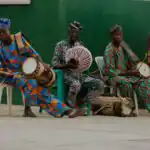
Ensemble playing refers to the act of several musicians performing together as a group, with each member contributing to the overall musical sound. In African music, ensembles often combine various percussive, wind, and string instruments.
African Musical Instruments for Ensemble Playing
The following are common African instruments used in ensembles:
- Pot Drum: A percussion instrument made from a clay pot, played by striking with hands or a stick.
- Wooden Maracas (Shakers): Rattle instruments made from gourds or wood, containing seeds or beads, shaken to produce rhythmic sounds.
- Flute: A wind instrument, often made from bamboo or wood, producing melodic sounds.
- Drums: Various types such drums like djembe, talking drum, and bata drums are used to provide the rhythmic foundation.
Elements of African Ensemble Playing
Successful African ensemble playing involves:
- Combining Instruments: Carefully selecting and arranging different instruments to create a balanced texture.
- Keeping Time: Maintaining a steady beat and tempo throughout the performance.
- Accompaniment Practice: Playing a supporting role to a main melody or dance, providing rhythmic and harmonic backing.
African Dance Style Practice
African dance styles are often highly rhythmic and expressive, closely linked to the music. Practicing African dance involves:
- Listening attentively to the ensemble’s rhythm and tempo.
- Performing movements that interpret the music’s patterns and cultural context.
- Coordinating body movements with the musical pulse.
Teaching Methods/Instructional Techniques
Discussion, Lecture, Demonstration, Question and Answer, Visual Aids
Instructional Procedures
Step 1: Introduction
Time: 5 minutes
Teaching Skill: Set Induction/Recalling Prior Knowledge
Teacher’s Activity: The teacher greets the pupils and asks them to name some musical instruments they know. The teacher then guides them to identify which of these are African instruments and asks if they have seen groups of people playing music together.
Pupils’ Activity: Pupils respond to questions, naming instruments and sharing their experiences with group music.
Learning Point: Pupils recall prior knowledge of musical instruments and are introduced to the concept of group playing.
Step 2: Explanation of Ensemble Playing
Time: 8 minutes
Teaching Skill: Explanation/Definition
Teacher’s Activity: The teacher explains what ensemble playing means, particularly in the context of African music. The teacher uses the board summary to define the term and highlights its importance in African culture.
Pupils’ Activity: Pupils listen attentively, ask questions for clarity, and take notes from the board.
Learning Point: Pupils understand the definition and significance of ensemble playing.
Step 3: Identification of African Instruments for Ensemble
Time: 7 minutes
Teaching Skill: Demonstration/Identification
Teacher’s Activity: The teacher displays the available African musical instruments (pot drum, maracas, flute, drums) and identifies each one. The teacher explains the unique role of each instrument in an ensemble.
Pupils’ Activity: Pupils observe the instruments, identify them, and listen to the teacher’s explanations.
Learning Point: Pupils identify and understand the functions of various African instruments in an ensemble.
Step 4: Demonstration of Ensemble Combination and Time Keeping
Time: 8 minutes
Teaching Skill: Demonstration/Modelling
Teacher’s Activity: The teacher demonstrates how to combine two or three instruments to create a simple rhythmic pattern, emphasizing the importance of keeping steady time using a timing clapper. The teacher may invite a few pupils to join in the demonstration.
Pupils’ Activity: Pupils observe the demonstration, listen to the rhythms, and some may participate in the initial practice.
Learning Point: Pupils observe and understand the practical aspects of combining instruments and maintaining time.
Step 5: Practical Session – Ensemble Practice
Time: 7 minutes
Teaching Skill: Guided Practice/Supervision
Teacher’s Activity: The teacher divides pupils into small groups, providing each group with different instruments. The teacher guides them to practice combining instruments, keeping time, and creating an accompaniment to a given simple rhythm chart. The teacher moves around to provide individual assistance.
Pupils’ Activity: Pupils work in groups, practicing ensemble playing, focusing on time keeping and accompaniment.
Learning Point: Pupils develop practical skills in ensemble playing and rhythmic coordination.
Step 6: African Dance Style Practice
Time: 5 minutes
Teaching Skill: Demonstration/Guided Practice
Teacher’s Activity: The teacher briefly demonstrates a few basic African dance steps that can accompany the ensemble music. The teacher guides pupils to practice these steps while listening to the rhythms produced by the groups.
Pupils’ Activity: Pupils observe the dance steps and try to perform them in time with the ensemble music.
Learning Point: Pupils connect the ensemble music with appropriate African dance movements.
Step 7: Evaluation/Review
Time: 5 minutes
Teaching Skill: Questioning/Assessment
Teacher’s Activity: The teacher evaluates the learning by asking the following questions:
- Define ensemble playing.
- Mention three African musical instruments that can be used in an ensemble.
- Why is keeping time important in ensemble playing?
- State one benefit of practicing African dance style with ensemble music.
Pupils’ Activity: Pupils answer orally and in writing.
Learning Point: Pupils demonstrate understanding of the lesson.
Step 8: Conclusion
Time: 3 minutes
Teaching Skill: Summarization/Consolidation
Teacher’s Activity: The teacher summarizes the key learning points of the lesson, reiterating the importance of teamwork and rhythm in African ensemble playing and dance. The teacher assigns homework: research other African instruments suitable for ensembles.
Pupils’ Activity: Pupils listen to the summary and copy down the homework.
Learning Point: Pupils consolidate their learning and are given tasks for further exploration.
Lesson Keywords
- Ensemble – A group of musicians, singers, or dancers who perform together.
- Pot Drum – A percussion instrument made from a clay pot, common in African music.
- Maracas – Rattle instruments shaken to produce rhythmic sounds.
- Flute – A wind instrument, often made of wood or bamboo, used for melodies.
- Rhythm – A strong, regular, repeated pattern of movement or sound.
- Accompaniment – Musical support for a main part, such as a melody or dance.
Differentiation
For pupils who grasp concepts quickly, the teacher can encourage them to lead their groups during practice or create more complex rhythmic patterns. For those who need more support, the teacher can provide simpler rhythmic charts, offer more direct guidance, or pair them with faster learners for peer support during practical sessions.
Note for teachers using this lesson plan
Ensure all instructional materials, especially the musical instruments, are available and in good working condition before the lesson. Encourage active participation from all pupils during the practical sessions. Safety in handling instruments should also be emphasized.


Community Join the conversation Open discussion +