

Class: Senior Secondary School 1 (SS1, SS 1, SSS1, SSS 1)
Term: 1st Term
Week: 11
Age: 15 years
Duration: 45 minutes
Subject: Wood Work
Curriculum Theme: Vocational Studies
Previous Lesson: Properties of Timber and Chemical Composition.
Topic: DEFECTS IN TIMBER AND CLASSIFICATION
Subject Matter: timber defects, natural defects, artificial defects, classification of defects
Specific Objectives
By the end of the lesson, pupils should be able to:
Cognitive Domain:
- Define timber defects.
- Classify timber defects into natural and artificial categories.
- List at least three examples of natural defects in timber.
- Mention at least three examples of artificial defects in timber.
Affective Domain:
- Appreciate the importance of identifying defects in timber.
- Show interest in selecting good quality timber for projects.
Psychomotor Domain:
- Identify common timber defects from samples or posters.
- Sketch simple illustrations of various timber defects.
Social Domain:
- Discuss with peers the impact of defects on timber quality.
Reference Materials
The following resources were used in planning this lesson:
- 9 Years Basic Education Curriculum for Wood Work (Senior Secondary).
- State Unified Scheme of Work for Senior Secondary Wood Work.
- Olaitan, S.O. (2010). Wood Work for Senior Secondary Schools. Evans Brothers (Nigeria Publishers) Limited.
Instructional Materials
The teacher will teach this lesson with the aid of:
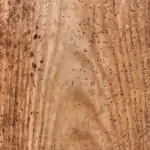
- Real samples of timber showing various defects.
- Posters or charts illustrating different timber defects.
- Whiteboard/blackboard and markers/chalk.
Rationale for the Lesson
Understanding timber defects helps pupils to identify poor quality wood, which is important for selecting suitable materials for construction and woodworking projects. This knowledge enables them to make informed decisions, ensuring the durability and safety of their work while minimizing waste.
Prerequisite/Previous Knowledge
Pupils should have a basic understanding of timber as a material, its sources, and general uses in construction and carpentry.
Lesson Content/Board Summary
DEFECTS IN TIMBER AND CLASSIFICATION
Definition of Timber Defects
Timber defects are imperfections or flaws present in wood that reduce its strength, durability, appearance, or workability, making it less suitable for certain applications.
Classification of Timber Defects
Timber defects can be broadly classified into two main categories:
- Natural Defects
- Artificial (Seasoning and Conversion) Defects
Natural Defects
Natural defects are imperfections that occur in timber due to the natural growth of the tree or environmental factors while the tree is still standing. These defects are inherent in the wood.
The following are examples of natural defects:
- Knots: Portions of branches that become embedded in the wood of the tree trunk.
- Shakes: Separations of wood fibres along the growth rings (e.g., heart shake, ring shake).
- Rind galls: Patches of bark embedded in the wood, often caused by injury to the tree.
- Upsets or ruptures: Fibres of wood being crushed or broken due to excessive compression or bending.
- Burs or excrescences: Irregular swellings on the tree trunk, caused by injury or insect attack, resulting in distorted grain.
- Twisted fibres: Fibres running spirally instead of parallel to the log axis, making the timber weak.
- Deadwood: Timber from dead or diseased trees, often discoloured and less durable.
Artificial Defects (Seasoning and Conversion Defects)
Artificial defects are imperfections that develop in timber during the seasoning (drying) process or during conversion (sawing) of the log into lumber.
The following are examples of artificial defects:
- Checks: Small cracks that develop across the growth rings, usually at the ends of the timber, caused by rapid drying.
- Splits: Larger and deeper cracks extending from one end of the timber to the other, caused by uneven drying.
- Cupping: Distortion of the timber board across its width, forming a concave or convex shape, due to uneven moisture loss.
- Bowing: Distortion along the length of the timber, making it curve like a bow.
- Twisting: Distortion where the timber warps along its length, resulting in a spiralled shape.
- Warping: General term for various forms of distortion in timber caused by uneven drying.
- Case hardening: A condition where the outer layers of the timber dry faster and become rigid, while the inner core remains wet, leading to internal stresses.
- Machining defects: Imperfections caused by improper sawing or planing, such as torn grain, skips, or miscuts.
Teaching Methods/Instructional Techniques
Discussion, Lecture, Demonstration, Question and Answer, Visual Aids
Instructional Procedures
Step 1: Introduction
Time: 5 minutes
Teaching Skill: Set Induction
Teacher’s Activity: The teacher greets the pupils and asks them to observe various pieces of timber, some of which have visible imperfections. The teacher then asks pupils what they notice about the timber samples and if all timber looks the same.
Pupils’ Activity: Pupils respond by pointing out differences and visible imperfections in the timber samples.
Learning Point: Pupils are introduced to the concept that timber can have flaws, setting the stage for the lesson on defects.
Step 2: Definition of Timber Defects
Time: 8 minutes
Teaching Skill: Explanation/Definition
Teacher’s Activity: The teacher explains what timber defects are, emphasizing how they affect the quality and usability of wood. The teacher writes the definition on the board.
Pupils’ Activity: Pupils listen attentively, take notes, and ask questions for clarification.
Learning Point: Pupils understand the meaning of timber defects.
Step 3: Classification of Timber Defects
Time: 7 minutes
Teaching Skill: Classification/Categorization
Teacher’s Activity: The teacher introduces the two main classifications of timber defects: natural defects and artificial (seasoning and conversion) defects. The teacher explains the general difference between these categories.
Pupils’ Activity: Pupils listen and note the two main classifications.
Learning Point: Pupils learn the broad categories into which timber defects are grouped.
Step 4: Natural Defects
Time: 8 minutes
Teaching Skill: Demonstration/Explanation
Teacher’s Activity: The teacher explains natural defects, providing examples such as knots, shakes, rind galls, and twisted fibres. The teacher uses real timber samples and posters to illustrate each defect clearly.
Pupils’ Activity: Pupils observe the samples and posters, identify the defects, and take notes on the examples provided.
Learning Point: Pupils can identify and list examples of natural timber defects.
Step 5: Artificial Defects (Seasoning and Conversion Defects)
Time: 8 minutes
Teaching Skill: Demonstration/Explanation
Teacher’s Activity: The teacher explains artificial defects, focusing on those caused by seasoning and conversion, such as checks, splits, cupping, bowing, and twisting. The teacher uses available samples and diagrams on posters to show these distortions.
Pupils’ Activity: Pupils examine the visual aids, distinguish between different artificial defects, and record the examples.
Learning Point: Pupils can identify and list examples of artificial timber defects.
Step 6: Pupils’ Activity
Time: 4 minutes
Teaching Skill: Practical Application
Teacher’s Activity: The teacher instructs pupils to sketch at least two natural and two artificial timber defects they observed from the samples or posters in their notebooks.
Pupils’ Activity: Pupils sketch the defects in their notebooks, applying their visual understanding.
Learning Point: Pupils practically demonstrate their ability to recognise and represent timber defects.
Step 7: Evaluation/Review
Time: 5 minutes
Teaching Skill: Questioning/Assessment
Teacher’s Activity: The teacher evaluates the learning by asking the following questions:
- What are timber defects?
- Mention the two main classifications of timber defects.
- List three examples of natural defects in timber.
- State three examples of artificial defects in timber.
Pupils’ Activity: Pupils answer orally and in writing.
Learning Point: Pupils demonstrate understanding of the lesson.
Step 8: Conclusion
Time: 1 minute
Teaching Skill: Summarization
Teacher’s Activity: The teacher summarizes the lesson by reiterating the importance of identifying timber defects for quality selection. The teacher gives pupils homework to research methods of preventing seasoning defects.
Pupils’ Activity: Pupils listen to the summary and copy down the homework.
Learning Point: Pupils consolidate their learning and are encouraged to extend their knowledge.
Lesson Keywords
- Timber Defects – Imperfections in wood reducing its quality.
- Natural Defects – Flaws from the tree’s growth or environment.
- Artificial Defects – Flaws from seasoning or conversion processes.
- Knots – Embedded branch portions in timber.
- Shakes – Separations along growth rings.
- Checks – Small cracks due to rapid drying.
- Warping – General distortion of timber due to uneven drying.
Differentiation
For pupils who grasp concepts quickly, the teacher can challenge them to identify less common defects or discuss the economic impact of defects. For pupils needing more support, the teacher will provide simplified diagrams and one-on-one guidance during the sketching activity, focusing on basic identification of major defects.
Note for teachers using this lesson plan
Ensure a variety of timber samples are available, clearly showing different defects. Encourage pupils to handle and observe the samples closely. The quality of visual aids is important for effective demonstration. Emphasize the practical implications of selecting timber with defects for safety and project durability.



Community Join the conversation Open discussion +