

Class: Senior Secondary School 1 (SS1, SS 1, SSS1, SSS 1)
Term: 3rd Term
Week: 9
Age: 15 years
Duration: 45 minutes
Subject: Wood Work
Curriculum Theme: Vocational Studies
Previous Lesson: Safety Precautions in Advanced Machines.
Topic: USES OF WOODWORKING MACHINES
Subject Matter: Uses of circular saw, uses of lathe, uses of band saw, machine applications
Specific Objectives
By the end of the lesson, pupils should be able to:
Cognitive Domain:
- Define a circular saw, wood lathe, and band saw.
- State at least two uses for each of the woodworking machines discussed.
- List general applications of woodworking machines.
Affective Domain:
- Appreciate the importance of woodworking machines in modern carpentry.
- Observe safety precautions when discussing machine operations.
Psychomotor Domain:
- Identify pictures or models of a circular saw, wood lathe, and band saw.
- Describe the basic functions of each machine.
Social Domain:
- Participate actively in class discussions about woodworking machines.
Reference Materials
The following resources were used in planning this lesson:
- 9 Years Basic Education Curriculum for Basic Technology (JSS 1-3).
- Lagos State Unified Scheme of Work for Senior Secondary Schools.
- Akinwande, A. A. (2018). Woodwork for Senior Secondary Schools. Spectrum Books.
- Online resources on woodworking machine applications.
Instructional Materials
The teacher will teach this lesson with the aid of:
- Charts showing different types of woodworking machines (circular saw, lathe, band saw).
- Posters illustrating the parts and functions of these machines.
- Pictures or video clips demonstrating machines in use (if available).
Rationale for the Lesson
This lesson helps pupils understand how modern machines are used in woodworking to produce various items efficiently. It enables them to recognize common woodworking machines and their specific functions, which is important for practical applications and career choices in vocational fields.
Prerequisite/Previous Knowledge
Pupils have basic knowledge of hand tools used in woodworking and have observed different wooden products.
Lesson Content/Board Summary
USES OF WOODWORKING MACHINES
Introduction to Woodworking Machines
Woodworking machines are power-driven tools used to process wood into various forms and products more quickly and accurately than hand tools. They are essential in modern carpentry and furniture making.
Uses of Circular Saw
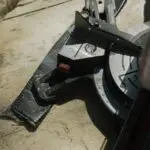
A circular saw uses a toothed metal disc or blade to cut wood. It is commonly used for straight-line cuts.
The following are the uses of a circular saw:
- Ripping: Cutting wood along the grain.
- Cross-cutting: Cutting wood across the grain.
- Mitre cuts: Making angular cuts for joints.
- Bevel cuts: Making angled cuts through the thickness of the wood.
- Dado cuts: Creating grooves or trenches in wood.
Uses of Wood Lathe
A wood lathe is a machine that rotates a piece of wood on its axis while a cutting tool is applied to shape it. It is used for creating symmetrical, rounded objects.
The following are the uses of a wood lathe:
- Spindle turning: Shaping long, cylindrical pieces like table legs, chair rungs, and balusters.
- Faceplate turning: Shaping flat, wide pieces like bowls, plates, and lamp bases.
- Creating decorative items: Producing intricate designs on wooden objects.
Uses of Band Saw
A band saw uses a continuous loop of metal blade, stretched between two or three wheels, to cut materials. It is known for its ability to cut irregular shapes and curves.
The following are the uses of a band saw:
- Cutting curves: Making intricate curved cuts in wood.
- Resawing: Cutting thick pieces of wood into thinner planks.
- Cutting irregular shapes: Useful for pattern cutting and artistic woodworking.
- Making compound cuts: Combining bevel and mitre cuts.
General Applications of Woodworking Machines
Woodworking machines are applied in various areas including:
- Furniture manufacturing.
- Construction industry (e.g., cutting lumber for frames).
- Crafts and artistic woodworking.
- Cabinet making.
- Making musical instruments.
Teaching Methods/Instructional Techniques
Discussion, Lecture, Demonstration, Question and Answer, Visual Aids
Instructional Procedures
Step 1: Introduction
Time: 5 minutes
Teaching Skill: Set Induction
Teacher’s Activity: The teacher greets the pupils and asks them to mention some hand tools used in woodworking. The teacher then introduces the topic by explaining that while hand tools are important, machines help to do work faster and more precisely.
Pupils’ Activity: Pupils respond to the teacher’s questions and listen attentively.
Learning Point: Pupils recall previous knowledge and are introduced to the lesson topic.
Step 2: Presentation of Circular Saw
Time: 10 minutes
Teaching Skill: Explanation/Demonstration
Teacher’s Activity: The teacher displays charts of a circular saw and explains its definition and various uses, giving practical examples where possible. The teacher emphasizes its role in straight cuts.
Pupils’ Activity: Pupils observe the charts, listen to the explanation, and ask questions for clarification.
Learning Point: Pupils understand what a circular saw is and its primary uses.
Step 3: Presentation of Wood Lathe
Time: 10 minutes
Teaching Skill: Explanation/Illustration
Teacher’s Activity: The teacher presents pictures or charts of a wood lathe, defining it and explaining its function in creating rounded and symmetrical wooden objects. Examples of products made with a lathe are mentioned.
Pupils’ Activity: Pupils observe the illustrations and learn about the wood lathe and its applications.
Learning Point: Pupils learn about the wood lathe and its specific uses in turning.
Step 4: Presentation of Band Saw
Time: 10 minutes
Teaching Skill: Explanation/Visualisation
Teacher’s Activity: The teacher displays visuals of a band saw, defines it, and explains its unique ability to cut curves and irregular shapes. The teacher contrasts its uses with those of the circular saw.
Pupils’ Activity: Pupils observe the band saw visuals and understand its definition and uses.
Learning Point: Pupils understand the band saw and its uses, especially for intricate cuts.
Step 5: General Machine Applications and Safety
Time: 5 minutes
Teaching Skill: Discussion/Reinforcement
Teacher’s Activity: The teacher leads a brief discussion on the general applications of these machines in various industries and briefly highlights the importance of safety when operating any woodworking machine.
Pupils’ Activity: Pupils contribute to the discussion and listen to safety points.
Learning Point: Pupils recognize the broad utility of machines and the need for safety.
Step 6: Evaluation/Review
Time: 5 minutes
Teaching Skill: Questioning/Assessment
Teacher’s Activity: The teacher evaluates the learning by asking the following questions:
- Define a circular saw.
- State two uses of a wood lathe.
- Mention three applications of a band saw.
- List two general areas where woodworking machines are used.
Pupils’ Activity: Pupils answer orally and in writing.
Learning Point: Pupils demonstrate understanding of the lesson.
Step 7: Conclusion
Time: 2 minutes
Teaching Skill: Summarization
Teacher’s Activity: The teacher summarizes the lesson by reiterating the main uses of the circular saw, wood lathe, and band saw. The teacher then gives pupils homework: “Draw and label a circular saw.”
Pupils’ Activity: Pupils listen to the summary and copy the homework.
Learning Point: Pupils consolidate their learning and prepare for independent practice.
Lesson Keywords
- Circular Saw – A power tool with a toothed metal blade used for making straight cuts in wood.
- Wood Lathe – A machine that rotates a piece of wood to allow shaping with cutting tools, creating cylindrical or rounded forms.
- Band Saw – A power tool with a continuous, flexible blade used for cutting curves and irregular shapes in wood.
- Woodworking Machines – Power-driven tools used to process wood efficiently.
Differentiation
The teacher will provide additional support to struggling pupils by offering simplified explanations and more visual aids. Advanced pupils will be encouraged to research other types of woodworking machines and their uses.
Note for teachers using this lesson plan
Teachers should ensure they have adequate visual aids or actual models of the machines for effective demonstration. Emphasize safety precautions related to machine operation, even if only discussed theoretically. Encourage pupils to ask questions and relate the lesson to real-life woodworking products.


Community Join the conversation Open discussion +