

Class: Senior Secondary School 1 (SS1, SS 1, SSS1, SSS 1)
Term: 3rd Term
Week: 7
Age: 15 years
Duration: 45 minutes
Subject: Wood Work
Curriculum Theme: Vocational Studies
Previous Lesson: Woodworking Machines Identification and Description.
Topic: Safety Precautions in Machine Use
Subject Matter: Machine Safety Rules, Safe Use of Circular Saw, Safe Use of Crosscut Saw
Specific Objectives
By the end of the lesson, pupils should be able to:
Cognitive Domain:
- Define machine safety rules.
- State general safety rules for using workshop machines.
- List specific safety precautions for operating a circular saw.
- Mention specific safety precautions for operating a crosscut saw.
Affective Domain:
- Appreciate the importance of observing safety rules in the workshop.
- Develop a cautious and safety-conscious attitude when around machines.
Psychomotor Domain:
- Identify safety features on workshop machines.
- Demonstrate correct posture and handling techniques for safe machine operation (simulated).
Social Domain:
- Cooperate with others to maintain a safe workshop environment.
Reference Materials
The following resources were used in planning this lesson:
- 9 Years Basic Education Curriculum for Wood Work (Senior Secondary Education)
- State Unified Scheme of Work for Senior Secondary Schools
- Wood Work for Senior Secondary Schools by A.O. Olaitan et al.
- Federal Ministry of Education Wood Work Curriculum
Instructional Materials
The teacher will teach this lesson with the aid of:
- Diagrams illustrating safe machine use
- Posters displaying workshop safety rules
- Pictures of circular saws and crosscut saws
- A model or actual (disconnected) circular saw and crosscut saw for demonstration
Rationale for the Lesson
This lesson helps pupils understand the critical importance of safety when working with machines in the wood workshop. Knowing and applying these precautions can prevent accidents, ensure personal well-being, and promote a productive learning environment.
Prerequisite/Previous Knowledge
Pupils have basic knowledge of general workshop safety and have been introduced to some hand tools in previous lessons.
Lesson Content/Board Summary
Safety Precautions in Machine Use
Machine Safety Rules
These are guidelines and practices designed to prevent injuries and accidents when operating machinery in the workshop.
The following are general machine safety rules:
- Wear appropriate personal protective equipment (PPE), such as safety glasses, ear protection, and dust masks.
- Ensure all machine guards are in place and functioning correctly before operation.
- Never operate a machine if you are not properly trained or authorized.
- Keep the work area clean, well-lit, and free from obstructions.
- Do not wear loose clothing, jewelry, or tie back long hair to prevent entanglement in moving parts.
- Always disconnect power before making adjustments, cleaning, or changing accessories.
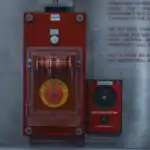
- Know the location of the emergency stop button and how to use it effectively.
- Do not distract others who are operating machines.
Safe Use of Circular Saw
A circular saw is a portable power tool with a flat, circular blade used for making straight cuts in wood and other materials.
The following are safety precautions for using a circular saw:
- Always use a sharp blade appropriate for the material being cut.
- Ensure the workpiece is firmly clamped or supported to prevent movement during cutting.
- Maintain a firm grip on the saw with both hands during operation.
- Keep the power cord clear of the cutting path to prevent damage and entanglement.
- Allow the blade to reach full speed before starting the cut.
- Avoid binding the blade in the material and be aware of potential kickback.
- Never bypass or tie back the blade guard.
- Ensure the base plate is flat on the material before starting the cut.
Safe Use of Crosscut Saw (Machine)
A crosscut saw (machine), such as a miter saw or radial arm saw, is a stationary power saw used for cutting wood across the grain.
The following are safety precautions for using a crosscut saw:
- Ensure the material is firmly held against the fence and table before cutting.
- Keep hands clear of the blade path and any hold-down areas.
- Allow the blade to come to a complete stop before removing cut pieces or adjusting the material.
- Always use the correct blade for the type of cut and material being used.
- Check for loose parts or damaged components on the machine before operation.
- Ensure the dust collection system is working efficiently, if available.
- Avoid reaching over the blade when the machine is running.
- Never force the blade through the material; let the saw do the work.
Teaching Methods/Instructional Techniques
Discussion, Lecture, Demonstration, Question and Answer, Visual Aids
Instructional Procedures
Step 1: Introduction
Time: 5 minutes
Teaching Skill: Set Induction
Teacher’s Activity: The teacher greets the pupils and asks them to recall any safety rules they remember from previous workshop lessons. The teacher then introduces the topic by emphasizing the importance of safety when using machines.
Pupils’ Activity: Pupils respond to the questions and listen attentively.
Learning Point: Pupils are reminded of the need for safety in the workshop and are prepared for the new topic.
Step 2: Machine Safety Rules
Time: 10 minutes
Teaching Skill: Explanation/Demonstration
Teacher’s Activity: The teacher explains what machine safety rules are and discusses the general rules using the board summary and posters. The teacher demonstrates appropriate PPE and how to check machine guards on a disconnected machine model.
Pupils’ Activity: Pupils listen, take notes, ask questions, and observe the demonstration.
Learning Point: Pupils understand the concept of machine safety rules and can state general rules.
Step 3: Safe Use of Circular Saw
Time: 10 minutes
Teaching Skill: Explanation/Demonstration
Teacher’s Activity: The teacher explains what a circular saw is and demonstrates, using a disconnected model, the specific safety precautions for its use, such as proper grip, checking the blade, and maintaining a clear path.
Pupils’ Activity: Pupils observe the demonstration, ask questions, and note the safety points.
Learning Point: Pupils learn the specific safety procedures for operating a circular saw.
Step 4: Safe Use of Crosscut Saw
Time: 10 minutes
Teaching Skill: Explanation/Demonstration
Teacher’s Activity: The teacher explains what a crosscut saw (machine) is and demonstrates, using a disconnected model or diagrams, the specific safety precautions for its use, such as securing the workpiece and keeping hands clear.
Pupils’ Activity: Pupils watch the demonstration, listen to explanations, and take notes.
Learning Point: Pupils understand the specific safety procedures for operating a crosscut saw.
Step 5: Evaluation/Review
Time: 5 minutes
Teaching Skill: Questioning/Assessment
Teacher’s Activity: The teacher evaluates the learning by asking the following questions:
- Define machine safety rules.
- Mention three general safety rules when using any machine in the workshop.
- List two safety precautions specific to using a circular saw.
- State two safety precautions specific to using a crosscut saw (machine).
Pupils’ Activity: Pupils answer orally and in writing.
Learning Point: Pupils demonstrate understanding of the lesson.
Step 6: Conclusion
Time: 5 minutes
Teaching Skill: Summarization
Teacher’s Activity: The teacher summarizes the key points of the lesson, reiterating the importance of always prioritizing safety in the workshop to prevent accidents. The teacher encourages pupils to always think about safety before operating any machine.
Pupils’ Activity: Pupils listen and ask any final questions.
Learning Point: Pupils consolidate their understanding of machine safety precautions.
Lesson Keywords
- Safety Precautions – Measures taken to prevent harm or danger.
- Machine Safety Rules – Guidelines for safe operation of machinery.
- Circular Saw – A power tool with a circular blade for cutting.
- Crosscut Saw – A power saw used for cutting wood across the grain.
- PPE – Personal Protective Equipment (e.g., safety glasses, ear protection).
- Kickback – A sudden, violent reaction of a machine or workpiece.
Differentiation
For pupils who grasp concepts quickly, the teacher may ask them to identify additional safety risks or suggest improvements to existing safety protocols. For pupils needing more support, the teacher will provide simplified explanations, one-on-one guidance, and allow them to refer to diagrams and posters more frequently.
Note for teachers using this lesson plan
Teachers should emphasize practical demonstrations using disconnected or simulated machines to ensure safety during the lesson. Constant reinforcement of safety practices is essential. Encourage pupils to ask questions about any safety concerns they may have.



Community Join the conversation Open discussion +