

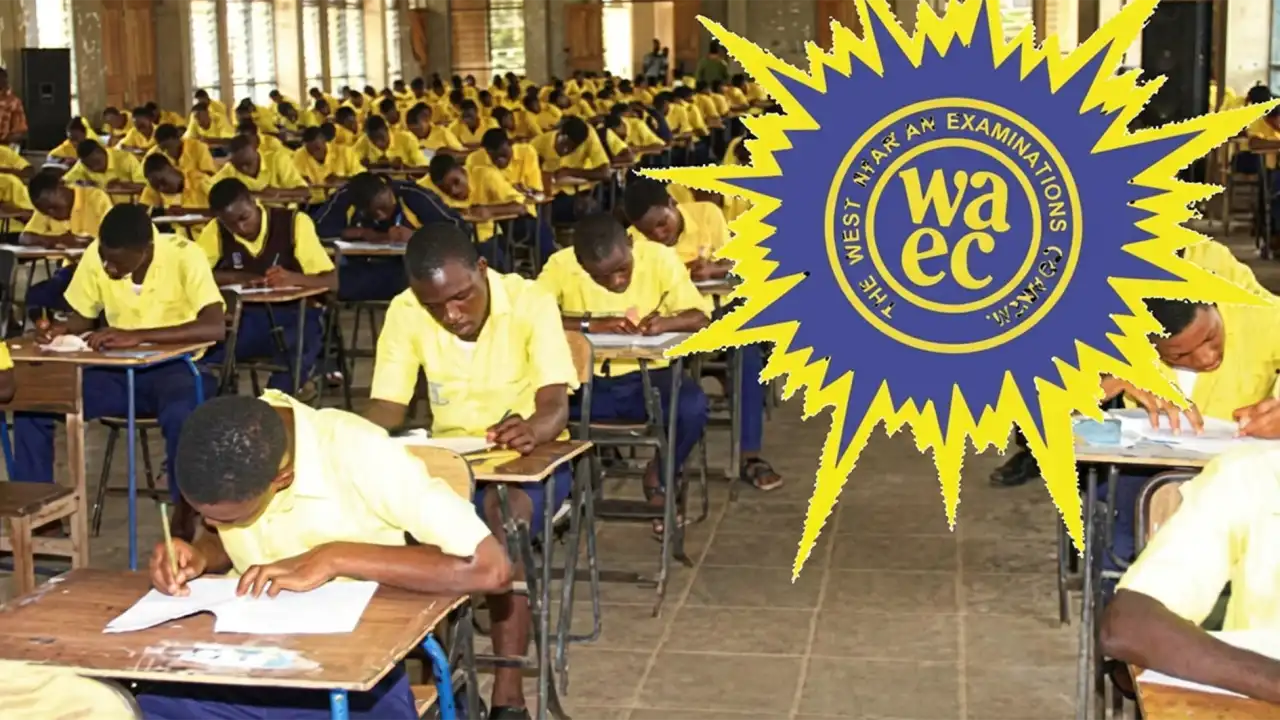
The West African Examinations Council has clarified the WAEC 2026 subject rules for Nigerian candidates, confirming that students registering for WASSCE in 2026 and 2027 will have only two examinable core subjects: English Language and General Mathematics.
The clarification is important because Nigeria’s revised senior secondary curriculum also identifies Citizenship and Heritage Studies Education and Digital Technologies among the core subjects. WAEC says those two new subjects will not be examined until 2028 because new curricula and examination syllabuses require a full period of implementation before candidates are assessed.
For the 2026 and 2027 examination cycles, candidates are therefore expected to take English Language and General Mathematics and select six or seven additional subjects, bringing their total registration to a minimum of eight and a maximum of nine subjects.
Why the 2028 Date Matters
The transition arrangement prevents students from being examined immediately in newly introduced subjects before the curriculum and examination syllabus have been fully implemented. It also gives schools time to build teaching capacity, timetables and learning resources for Citizenship and Heritage Studies Education and Digital Technologies.
The distinction is especially important for SS1 students, parents and school counsellors who may see the four subjects described as core in the emerging structure and assume all four must already appear in WASSCE registration. WAEC’s current guidance specifically separates the 2026–2027 arrangement from the structure expected when the two new subjects become examinable in 2028.
Students Still Need Eight or Nine Subjects
Having only two core subjects does not mean candidates will register for only two papers. WAEC requires school candidates to enter and sit for at least eight and not more than nine subjects.
Beyond English and Mathematics, available subject choices span science, humanities, business and approved trade areas. These include subjects such as Biology, Chemistry, Physics, Agriculture, Further Mathematics, Nigerian History, Government, Literature-in-English, Accounting, Commerce, Marketing and Economics, alongside approved vocational and trade options.
The right combination depends on a learner’s academic pathway and intended course after secondary school. Schools should therefore avoid choosing subjects merely to fill the eight- or nine-subject requirement without considering tertiary admission prerequisites.
What Schools Should Change Now
Principals, examination officers and guidance counsellors should align subject-registration advice with WAEC’s current rules and the revised curriculum transition timetable. Parents should also ask schools how a child’s chosen subjects connect with future university, polytechnic, college or vocational requirements.
Schools introducing Digital Technologies and Citizenship and Heritage Studies should continue teaching them according to the applicable curriculum even though WAEC says they will not become examinable until 2028. ‘Not examined yet’ should not be confused with ‘not taught’.
The WAEC 2026 subject rules therefore create a transition period: English Language and General Mathematics remain the two examinable core subjects for candidates in 2026 and 2027, while the system prepares for the new core subjects to enter WASSCE from 2028.


Community Join the conversation Open discussion +