

Class: Primary 6
Term: 3rd Term
Week: 1
Age: 11 years
Duration: 45 minutes
Subject: English Language Studies
Curriculum Theme: English Studies
Previous Lesson: .
Topic: Listening comprehension on public notices and safety, direct and indirect speech review, dictionary alphabetical order, formal letter writing
Subject Matter: Speech — listening comprehension on public notices and community safety, Structure — direct and indirect speech review and transformation rules, Vocabulary Development — dictionary principles and alphabetical order, Writing/Continuous Writing — formal letter writing with formal language
Specific Objectives
By the end of the lesson, pupils should be able to:
Cognitive Domain:
- Explain the importance of public notices and community safety.
- State the rules for changing direct speech to indirect speech and vice versa.
- List the principles of arranging words in alphabetical order.
- Identify the correct format and components of a formal letter.
Affective Domain:
- Listen attentively to a comprehension passage and instructions.
- Appreciate the clarity and importance of public notices.
- Value the use of dictionaries for vocabulary development.
Psychomotor Domain:
- Transform sentences from direct speech to indirect speech and vice versa.
- Arrange a given set of words in alphabetical order.
- Search for words in a dictionary using alphabetical order.
- Write a formal letter following the correct format and using appropriate language.
Social Domain:
- Participate actively in class discussions and group activities.
- Collaborate with peers to write a formal letter.
Reference Materials
The following resources were used in planning this lesson:
- 9 Years Basic Education Curriculum
- State Unified Scheme of Work
- New Oxford Primary English Course for Primary 6
- Pupil’s English textbook
- Pupil’s English workbook
- Oral English manual
- Essay manual
Instructional Materials
The teacher will teach this lesson with the aid of:
- Pupil’s English textbook
- Pupil’s English workbook
- Oral English manual
- Sound recorder (for comprehension passage)
- Essay manual
- Whiteboard/chalkboard
- Markers/chalk
- Dictionaries
- Sample public notices
- A sample formal letter
Rationale for the Lesson
This lesson helps pupils understand important messages from public notices, communicate accurately using direct and indirect speech, and expand their vocabulary with dictionaries. It also teaches them how to write formal letters, which is a necessary skill for school and future communication.
Prerequisite/Previous Knowledge
Pupils have basic knowledge of parts of speech, simple sentence structures, and can read and write simple sentences. They also have some understanding of common notices and messages.
Lesson Content/Board Summary
English Language Skills
Listening Comprehension: Public Notices and Community Safety
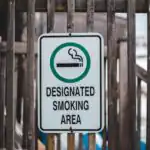
Public notices are official announcements or warnings displayed in public places or broadcast through media to inform the public about important matters, rules, or safety measures. They help keep the community informed and safe.
The importance of public notices includes:
- Informing the public about new laws or policies.
- Warning people about dangers or hazards (e.g., “Wet Floor,” “Danger! Keep Off”).
- Providing instructions for public services.
- Announcing community events or meetings.
Direct and Indirect Speech Review and Transformation Rules
Direct Speech: This is when the exact words spoken by a person are quoted directly. It is enclosed in quotation marks (” “).
Indirect Speech (Reported Speech): This is when the speaker’s words are reported without quoting them exactly. The quotation marks are removed, and often a conjunction like ‘that’ is used. There are usually changes in tense, pronouns, and time/place adverbs.
Rules for Changing Direct Speech to Indirect Speech:
When the reporting verb (e.g., said, told) is in the past tense:
- Tense Change:
- Present Simple changes to Past Simple. (e.g., “I am happy” → He said he was happy.)
- Present Continuous changes to Past Continuous. (e.g., “I am reading” → She said she was reading.)
- Present Perfect changes to Past Perfect. (e.g., “I have finished” → He said he had finished.)
- Past Simple changes to Past Perfect. (e.g., “I went” → She said she had gone.)
- ‘Will’ changes to ‘would’. (e.g., “I will come” → He said he would come.)
- ‘Can’ changes to ‘could’. (e.g., “I can swim” → She said she could swim.)
- ‘May’ changes to ‘might’. (e.g., “I may go” → He said he might go.)
- Pronoun Change: Pronouns change according to the subject and object of the reporting verb. (e.g., “I” changes to “he/she”, “my” changes to “his/her”).
- Time and Place Adverb Change:
- Now → then
- Today → that day
- Yesterday → the previous day/the day before
- Tomorrow → the next day/the following day
- Here → there
- This → that
- These → those
- Reporting Verbs: Use verbs like ‘said’, ‘told’ (followed by an object), ‘asked’ (for questions), ‘ordered’ (for commands), ‘requested’.
Examples:
1. Direct: John said, “I am going to school today.”
Indirect: John said that he was going to school that day.
(Note: Present Continuous ‘am going’ changed to Past Continuous ‘was going’, pronoun ‘I’ changed to ‘he’, and ‘today’ changed to ‘that day’.)
2. Direct: Mary said to me, “I finished my homework yesterday.”
Indirect: Mary told me that she had finished her homework the previous day.
(Note: Reporting verb ‘said to me’ changed to ‘told me’, Past Simple ‘finished’ changed to Past Perfect ‘had finished’, pronoun ‘my’ changed to ‘her’, and ‘yesterday’ changed to ‘the previous day’.)
How to solve for different scenarios:
- Questions: Use reporting verbs like ‘asked’, ‘enquired’. If it’s a ‘yes/no’ question, use ‘if’ or ‘whether’. If it’s a ‘wh-‘ question (what, where, when, why, who), use the ‘wh-‘ word.
- Direct: The teacher asked, “Are you ready?”
- Indirect: The teacher asked if they were ready.
- Direct: He asked, “Where do you live?”
- Indirect: He asked where I lived.
- Commands/Requests: Use reporting verbs like ‘ordered’, ‘commanded’, ‘requested’, ‘advised’, followed by ‘to’ and the infinitive verb.
- Direct: The principal said, “Close the door.”
- Indirect: The principal ordered them to close the door.
- Direct: She said, “Please help me.”
- Indirect: She requested me to help her.
Vocabulary Development: Dictionary Principles and Alphabetical Order
A dictionary is a book or electronic resource that lists words of a language in alphabetical order, giving their meaning, pronunciation, part of speech, and other information.
Principles of Alphabetical Order:
- First Letter: Words are arranged according to their first letter (A, B, C…).
- Second Letter: If the first letters are the same, words are arranged by their second letter. (e.g., ‘apple’ before ‘apply’).
- Third Letter: If the first two letters are the same, words are arranged by their third letter, and so on. (e.g., ‘cat’ before ‘catch’).
How to use a dictionary effectively:
- Guide Words: These are the two words at the top of each dictionary page. The left guide word is the first word on that page, and the right guide word is the last word on that page. All words on that page fall alphabetically between these two guide words.
- Entry Word: The word being defined.
- Pronunciation: Shows how to say the word, often using phonetic symbols.
- Part of Speech: Indicates if the word is a noun, verb, adjective, etc. (e.g., n. for noun, v. for verb).
- Meaning/Definition: Explains what the word means.
- Example Sentences: Show how the word is used in context.
NOTE: Remember that alphabetical order is essential for quickly finding words in a dictionary.
Writing/Continuous Writing: Formal Letter Writing
A formal letter is a letter written for official purposes to someone you do not know well or to an authority figure. It follows a specific format and uses polite, respectful, and objective language.
Characteristics of a Formal Letter:
- Clear and concise language.
- Objective and factual tone.
- Specific structure and format.
- Absence of slang or informal expressions.
Parts of a Formal Letter:
- Sender’s Address: Your full address, usually at the top right corner.
- Date: Written below the sender’s address (e.g., 23rd August, 2024).
- Receiver’s Address: The full address of the person or organization you are writing to, on the left side, below the date.
- Salutation: A polite greeting (e.g., Dear Sir/Madam, Dear Headmaster/Headmistress).
- Title/Subject: A short, clear statement of the letter’s purpose (e.g., APPLICATION FOR LEAVE, COMPLAINT ABOUT NOISE).
- Body: The main content of the letter, organized into paragraphs.
- First Paragraph: State the purpose of the letter.
- Middle Paragraphs: Provide details, explanations, or supporting points.
- Final Paragraph: State your expected outcome or action.
- Complimentary Close: A polite closing phrase (e.g., Yours faithfully, Yours sincerely).
- Signature: Your written signature.
- Full Name: Your typed or clearly written full name below the signature.
Teaching Methods/Instructional Techniques
Discussion, Lecture, Demonstration, Question and Answer, Visual Aids
Instructional Procedures
Step 1: Introduction
Time: 5 minutes
Teaching Skill: Set Induction
Teacher’s Activity: The teacher greets the pupils and asks them if they have ever seen signs like “Danger!”, “Keep Off!”, or “School Assembly Today.” The teacher then asks what these signs are called and why they are important.
Pupils’ Activity: Pupils respond by identifying the signs as public notices and explaining their importance for safety and information.
Learning Point: Pupils recall prior knowledge of public notices and are introduced to the lesson’s relevance.
Step 2: Listening Comprehension on Public Notices and Safety
Time: 8 minutes
Teaching Skill: Listening/Questioning
Teacher’s Activity: The teacher reads a short passage about the importance of public notices for community safety, using a sound recorder if available. After reading, the teacher asks oral questions to assess comprehension, such as: “What is the main purpose of public notices?” and “Give two examples of public notices you have seen.”
Pupils’ Activity: Pupils listen attentively to the passage and answer the comprehension questions orally.
Learning Point: Pupils understand the role of public notices in informing and ensuring community safety.
Step 3: Direct and Indirect Speech Review
Time: 10 minutes
Teaching Skill: Explanation/Demonstration
Teacher’s Activity: The teacher reviews direct and indirect speech, explaining the definitions and key rules for transformation (tense changes, pronoun changes, time/place adverb changes). The teacher provides clear examples on the board, demonstrating how to change sentences from direct to indirect speech and vice versa.
Pupils’ Activity: Pupils listen to the explanations, copy the rules and examples from the board, and ask questions for clarification.
Learning Point: Pupils understand the rules for converting direct speech to indirect speech and vice versa.
Step 4: Dictionary Principles and Alphabetical Order
Time: 7 minutes
Teaching Skill: Explanation/Demonstration
Teacher’s Activity: The teacher explains what a dictionary is and its usefulness. The teacher then explains and demonstrates the principles of alphabetical order using a few words, showing how to arrange them by the first, second, and third letters. The teacher also introduces guide words and how to use them to find words quickly.
Pupils’ Activity: Pupils observe the demonstration, note the principles, and practice arranging a few words given by the teacher in alphabetical order.
Learning Point: Pupils learn how to use alphabetical order and dictionary principles to locate words efficiently.
Step 5: Formal Letter Writing
Time: 10 minutes
Teaching Skill: Explanation/Guidance
Teacher’s Activity: The teacher explains the purpose of formal letters and discusses their main characteristics. The teacher then outlines and writes a sample formal letter on the board, clearly showing and explaining each part (sender’s address, date, receiver’s address, salutation, title, body, complimentary close, signature). The teacher guides pupils on using formal language.
Pupils’ Activity: Pupils observe the sample letter, copy the format and key points, and ask questions about the structure and language.
Learning Point: Pupils understand the structure and appropriate language for writing a formal letter.
Step 6: Evaluation/Review
Time: 5 minutes
Teaching Skill: Questioning/Assessment
Teacher’s Activity: The teacher evaluates the learning by asking the following questions:
- Mention two reasons why public notices are important.
- Change the following sentence to indirect speech: “She said, ‘I am reading a book now.'”
- Arrange these words in alphabetical order: ‘zebra’, ‘apple’, ‘mango’, ‘cat’.
- List any three parts of a formal letter.
Pupils’ Activity: Pupils answer orally and in writing.
Learning Point: Pupils demonstrate understanding of the lesson.
Step 7: Conclusion
Time: 2 minutes
Teaching Skill: Summarization
Teacher’s Activity: The teacher summarizes the key learning points of the lesson, emphasizing the importance of clear communication, vocabulary development, and proper writing skills. The teacher assigns homework: “Write a short formal letter to your class teacher requesting permission to be absent for a day.”
Pupils’ Activity: Pupils listen to the summary and copy the homework assignment.
Learning Point: Pupils consolidate their understanding and are given an opportunity to practice the learned skills.
Home Task: Write four correct English sentences that demonstrate the main language skill in Listening comprehension on public notices and safety, direct and indirect speech review, dictionary….
Lesson Keywords
- Public Notice – An official announcement or warning for the general public.
- Direct Speech – The exact words spoken by someone, enclosed in quotation marks.
- Indirect Speech – Reporting what someone said without using their exact words or quotation marks.
- Alphabetical Order – Arranging words or names in the order of the letters of the alphabet.
- Dictionary – A book or electronic resource listing words with their meanings, pronunciations, and other information.
- Formal Letter – A letter written for official or professional purposes, following a specific structure and using polite language.
- Reporting Verb – A verb (like ‘said’, ‘told’, ‘asked’) used to introduce reported speech.
Differentiation
For struggling learners, the teacher will provide simplified examples for direct/indirect speech transformation and offer more direct guidance during dictionary use and letter writing. They may work in pairs. For advanced learners, the teacher will provide more complex sentences for speech transformation and encourage them to independently draft a formal letter on a more challenging topic, focusing on nuanced formal expressions.
Note for teachers using this lesson plan
Teachers should ensure they have a suitable comprehension passage prepared for the listening activity and multiple clear examples for direct and indirect speech transformation. Emphasize the practical application of dictionary skills by having pupils practice finding words. For formal letter writing, provide a clear template and guide pupils through each section to ensure they grasp the correct format and formal language.


Community Join the conversation Open discussion +