

Class: Primary 6
Term: 3rd Term
Week: 2
Age: 11 years
Duration: 45 minutes
Subject: English Language Studies
Curriculum Theme: English Studies
Previous Lesson: Public Notices Listening, Direct and Indirect Speech Review, Dictionary Alphabetical Order and Formal Letter Writing.
Topic: Listening to posters on good health, direct and indirect speech practice, dictionary use and alphabetical order, writing on safety in the community
Subject Matter: Speech — listening and responding to health posters and charts, Structure — direct and indirect speech review with future tense examples, Vocabulary Development — dictionary use and alphabetical arrangement, Writing/Continuous Writing — writing on importance of safety in the community
Specific Objectives
By the end of the lesson, pupils should be able to:
Cognitive Domain:
- Listen attentively to information on health posters and charts.
- Identify key messages from health posters.
- Convert direct speech to indirect speech using future tense examples.
- Explain the importance of a dictionary.
- Arrange words in alphabetical order correctly.
- State reasons why safety is important in the community.
Affective Domain:
- Participate actively in class discussions about health and safety.
- Show interest in learning about direct and indirect speech.
- Appreciate the value of dictionaries for vocabulary development.
- Develop a positive attitude towards ensuring safety in their community.
Psychomotor Domain:
- Answer questions orally based on health posters.
- Practise converting sentences from direct to indirect speech.
- Use a dictionary to find meanings of words and check pronunciation.
- Write a short composition on the importance of safety in the community.
Social Domain:
- Work collaboratively in groups to practise speech transformations.
- Engage respectfully with peers during discussions.
Reference Materials
The following resources were used in planning this lesson:
- 9 Years Basic Education Curriculum
- State Unified Scheme of Work
- Effective English for Primary Schools 6
- Oral English manual
- Essay manual
Instructional Materials
The teacher will teach this lesson with the aid of:
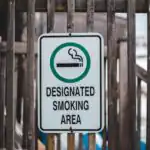
- Health posters and charts (e.g., “Smoking is dangerous”, “Wash your hands regularly”)
- Textbooks and workbooks
- Dictionaries
- Whiteboard or chalkboard
- Markers or chalk
- Sound recorder (optional)
Rationale for the Lesson
This lesson helps pupils understand important health and safety messages from their environment. It also improves their communication skills by teaching them how to report what others say and enhances their vocabulary and writing abilities, which are essential for academic success and daily life.
Prerequisite/Previous Knowledge
Pupils have basic listening and speaking skills, can read simple sentences, have some knowledge of present and past tenses, and can identify some letters of the alphabet.
Lesson Content/Board Summary
Understanding Communication, Vocabulary, and Writing Skills
Listening to Posters on Good Health
Health posters and charts provide visual information and short messages about how to stay healthy. Listening and responding to them means paying attention to the message and understanding what actions to take or avoid.
Examples of messages on health posters include:
- Wash your hands regularly.
- Eat balanced meals.
- Exercise daily.
- Smoking is dangerous to your health.
- Keep your environment clean.
Direct and Indirect Speech (Future Tense)
Direct speech reports the exact words spoken by someone, usually enclosed in quotation marks.
Example (Direct): She said, “I will go to the market tomorrow.”
Indirect speech (or Reported Speech) reports what someone said without using their exact words. Changes in tense, pronouns, and time/place expressions often occur.
Rules for converting future tense (will/shall) from direct to indirect speech:
- ‘Will’ or ‘shall’ in direct speech changes to ‘would’ in indirect speech.
- Time expressions also change (e.g., ‘tomorrow’ becomes ‘the next day’ or ‘the following day’).
Example 1:
- Direct: He said, “I will play football.”
- Indirect: He said that he would play football.
Example 2:
- Direct: She said, “I will visit my aunt tomorrow.”
- Indirect: She said that she would visit her aunt the next day.
Dictionary Use and Alphabetical Arrangement
A dictionary is a book that lists words in alphabetical order and gives their meanings, pronunciations, and other information.
Importance of using a dictionary:
- To find the meaning of unfamiliar words.
- To check the spelling of words.
- To learn how to pronounce words.
- To find synonyms and antonyms.
Alphabetical arrangement means putting words in order from A to Z. When words start with the same letter, you look at the second letter, then the third, and so on.
Example of arranging words alphabetically:
- Words: apple, zebra, car, book, dog
- Arranged: apple, book, car, dog, zebra
Example 2 (with similar starting letters):
- Words: cat, call, calm, cut
- Arranged: call, calm, cat, cut
Writing on Importance of Safety in the Community
Safety means being protected from danger or harm. Community safety refers to measures taken to ensure that people are safe in their local environment.
Importance of safety in the community:
- It prevents accidents and injuries.
- It reduces crime and makes people feel secure.
- It promotes peace and order.
- It allows people to go about their daily activities without fear.
Ways to ensure safety in the community:
- Reporting suspicious activities to adults or security agents.
- Obeying traffic rules.
- Avoiding walking alone in dark or isolated places.
- Being aware of surroundings.
- Participating in community watch programs.
Teaching Methods/Instructional Techniques
Discussion, Lecture, Demonstration, Question and Answer, Visual Aids, Group Work
Instructional Procedures
Step 1: Introduction
Time: 5 minutes
Teaching Skill: Set Induction
Teacher’s Activity: The teacher greets the pupils and asks them what they understand by “good health” and “safety.” The teacher then introduces the lesson by stating that they will be learning about how to understand health messages, report what people say, use dictionaries, and write about community safety.
Pupils’ Activity: Pupils respond to the teacher’s questions and listen attentively to the introduction.
Learning Point: Pupils are prepared for the lesson and understand the topics to be covered.
Step 2: Presentation of Health Posters
Time: 10 minutes
Teaching Skill: Explanation/Demonstration
Teacher’s Activity: The teacher displays various health posters and charts (e.g., “Wash your hands,” “Eat fruits and vegetables,” “Say no to smoking”). The teacher reads and discusses the messages on each poster, asking pupils questions about what they understand and why the messages are important.
Pupils’ Activity: Pupils listen to the teacher, observe the posters, and answer questions about the health messages. They also ask questions for clarification.
Learning Point: Pupils learn to listen to and respond to health-related information from visual aids.
Step 3: Direct and Indirect Speech (Future Tense)
Time: 10 minutes
Teaching Skill: Explanation/Modelling
Teacher’s Activity: The teacher reviews the concept of direct and indirect speech. The teacher then focuses on converting direct speech (future tense) to indirect speech, explaining the change from ‘will’ to ‘would’ and changes in time expressions. The teacher provides examples on the board and guides pupils through the transformation process.
Pupils’ Activity: Pupils listen to the explanation, copy notes and examples from the board, and practise converting sentences in groups.
Learning Point: Pupils understand how to convert direct speech in the future tense to indirect speech.
Step 4: Dictionary Use and Alphabetical Order
Time: 8 minutes
Teaching Skill: Demonstration/Practice
Teacher’s Activity: The teacher explains the importance of a dictionary and demonstrates how to use it, including looking at guide words. The teacher then explains the rules for arranging words in alphabetical order and provides a list of words for pupils to arrange.
Pupils’ Activity: Pupils observe the demonstration, participate in arranging words, and practise using their dictionaries to find meanings of words.
Learning Point: Pupils learn how to use a dictionary effectively and arrange words alphabetically.
Step 5: Writing on Community Safety
Time: 7 minutes
Teaching Skill: Guidance/Facilitation
Teacher’s Activity: The teacher leads a brief discussion on the meaning of community safety and why it is important. The teacher guides pupils on key points to include in a short composition about the importance of safety and ways to ensure it in the community.
Pupils’ Activity: Pupils contribute to the discussion and begin to outline or write a short composition on community safety based on the teacher’s guidance.
Learning Point: Pupils understand the importance of community safety and can write about it.
Step 6: Evaluation/Review
Time: 5 minutes
Teaching Skill: Questioning/Assessment
Teacher’s Activity: The teacher evaluates the learning by asking the following questions:
- Mention two messages you can find on a health poster.
- Convert the following into indirect speech: John said, “I will travel next week.”
- State two reasons why using a dictionary is important.
- Arrange these words in alphabetical order: school, student, subject, science.
- List two ways to ensure safety in your community.
Pupils’ Activity: Pupils answer orally and in writing.
Learning Point: Pupils demonstrate understanding of the lesson.
Step 8: Conclusion
Time: 0 minutes
Teaching Skill: Summarization
Teacher’s Activity: The teacher briefly summarizes the key learning points of the lesson, reinforcing the importance of good health, clear communication, vocabulary, and community safety.
Pupils’ Activity: Pupils listen to the summary.
Learning Point: Pupils recall the main aspects of the lesson.
Home Task: Write four correct English sentences that demonstrate the main language skill in Listening to posters on good health, direct and indirect speech practice, dictionary use and….
Lesson Keywords
- Health Poster – A visual display with messages about health and well-being.
- Direct Speech – The exact words spoken by someone, enclosed in quotation marks.
- Indirect Speech – Reporting what someone said without using their exact words.
- Dictionary – A book that lists words alphabetically and gives their meanings.
- Alphabetical Order – Arranging words or names in the order of the letters of the alphabet.
- Community Safety – Measures taken to protect people from harm in their local area.
Differentiation
For pupils who grasp concepts quickly, the teacher can provide more complex sentences for direct/indirect speech conversion or more challenging words for dictionary use. For pupils needing more support, the teacher will offer one-on-one guidance, simplify examples, or provide pre-arranged word lists for alphabetical practice.
Note for teachers using this lesson plan
Encourage active participation from all pupils, especially during discussions on health posters and community safety. Provide ample opportunities for pupils to practise using dictionaries and converting speech. Emphasize real-life application of these skills.



Community Join the conversation Open discussion +