

Note for teachers using this lesson plan
This lesson focuses on equipping students with essential dictionary skills, covering both traditional print and modern electronic versions. Ensure you have a variety of dictionaries available for practical demonstration and group activities. Emphasise the importance of accurate word usage and independent learning. By the end of the lesson, learners should confidently demonstrate the ability to find meanings, pronunciation, and other word information using either type of dictionary.
Class: SS 1
Term: First Term
Week: 5
Age: 15 years
Duration: 60 minutes
Subject: English Language
Curriculum Theme: Grammatical Accuracy
Focal competence: Using the dictionary
Key competencies/values: Communication; ICT and Digital Competencies; Digital Competencies; Collaboration; Information Literacy; Respect
Skills:
- use a dictionary to find meanings, pronunciation, parts of speech, word origin and other information
Previous Lesson: Analysing Tone Grammar Purpose and Appropriateness in Social Media Communication
Topic: Use Of Dictionary: Using Print And Electronic Dictionaries
Subject Matter: Using print and electronic dictionaries to find meanings, pronunciation, parts of speech
Specific Objectives
By the end of the lesson, pupils/students should be able to:
Cognitive Domain
- Define what a dictionary is.
- Differentiate between print and electronic dictionaries.
- Identify various types of information found in a dictionary (e.g., meaning, pronunciation, part of speech, word origin, synonyms, antonyms, idioms).
Affective Domain
- Appreciate the importance of using dictionaries for vocabulary development and accurate communication.
- Develop a positive attitude towards independent word research.
- Show respect for shared learning resources during group activities.
Psychomotor Domain
- Demonstrate the ability to locate specific words and their meanings in a print dictionary.
- Successfully navigate and extract information from an electronic dictionary.
- Accurately identify the part of speech and pronunciation of given words using a dictionary.
Social Domain
- Collaborate effectively in groups to search for specific information using different types of dictionaries.
Reference Materials
The following resources were used in planning this lesson:
- 2025 New Revised Senior Secondary Education Curriculum (SSEC)
- Relevant State Unified Scheme of Work
- Standard English Language Textbook for SS 1
- The HeadTeacher Scheme of work For The New Revised Senior Secondary Education Curriculum (SSEC)
Instructional Materials
The teacher will teach this lesson with the aid of:
- Standard English dictionaries (print)
- Digital dictionaries (e.g., dictionary apps on phones/tablets, online dictionary websites)
- Whiteboard/Blackboard and markers/chalk
- Projector (if using online dictionaries for demonstration)
Rationale for the Lesson
This lesson is essential for students to develop strong vocabulary and communication skills, which are fundamental to academic success and everyday life. Mastering dictionary use empowers students to understand new words, improve their pronunciation, and use language accurately. It also fosters independent learning and critical thinking, crucial skills in the digital age.
Prerequisite/Previous Knowledge
Students should have basic knowledge of alphabetical order and some familiarity with common English words.
Lesson Content/Board Summary
Use Of Dictionary: Using Print And Electronic Dictionaries
What is a Dictionary?
A dictionary is a reference book or electronic resource that lists words of a language, typically in alphabetical order, and gives their meanings, pronunciations, grammatical forms, and other linguistic information.
Types of Dictionaries
- Print Dictionaries: These are traditional physical books containing an alphabetical list of words with their definitions, pronunciations, and other details. They require manual searching based on alphabetical order.
- Electronic Dictionaries: These are digital versions of dictionaries available as software applications (apps) on devices like smartphones, tablets, and computers, or as websites accessible via the internet. They offer quick search functions and often include audio pronunciations.
Information Found in a Dictionary
Dictionaries provide a wealth of information about words, including:
- Meanings (Definitions): Explanations of what a word signifies. Many words have multiple meanings, which are usually numbered.
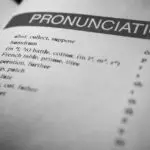
- Pronunciation: Indicated by phonetic symbols (e.g., /ˈdɪkʃənəri/) or respelling, often accompanied by stress marks. Electronic dictionaries may offer audio pronunciations.
- Parts of Speech: The grammatical category of a word (e.g., noun, verb, adjective, adverb, pronoun, preposition, conjunction, interjection). This is usually abbreviated (n., v., adj., adv., etc.).
- Word Origin (Etymology): The history of a word, showing its derivation from older languages or its development over time.
- Synonyms: Words that have similar meanings to the entry word.
- Antonyms: Words that have opposite meanings to the entry word.
- Idioms: Phrases or expressions whose meaning cannot be understood from the ordinary meaning of its words (e.g., “kick the bucket” means to die).
- Usage Examples: Sentences showing how the word is typically used in context.
- Inflected Forms: Plural forms of nouns, past tenses of verbs, comparative and superlative forms of adjectives/adverbs.
How to Use a Print Dictionary
- Locate the Entry Word: Use alphabetical order to find the word you are looking for. Guide words at the top of each page help in quick navigation.
- Identify the Part of Speech: Look for the abbreviation (e.g., n. for noun, v. for verb) next to the word.
- Understand the Pronunciation: Read the phonetic transcription or respelling to learn how to say the word correctly. Pay attention to stress marks.
- Read the Definitions: If there are multiple meanings, read all of them to find the one that fits your context.
- Check for Additional Information: Look for synonyms, antonyms, word origin, and example sentences.
How to Use an Electronic Dictionary
- Type the Word: Use the search bar to type the word you want to look up.
- Instant Results: Electronic dictionaries provide immediate results, often with suggestions as you type.
- Access Information: Click or tap on the word to view its full entry, including meanings, parts of speech, pronunciation (often with an audio option), synonyms, antonyms, and examples.
- Explore Hyperlinks: Many electronic dictionaries have hyperlinks that allow you to click on a synonym or related word to view its entry.
Teaching Methods/Instructional Techniques
Discussion, Demonstration, Guided Practice, Question and Answer, Explanation, Group Work, Individual Practice
Instructional Procedures
Step 1: Introduction
Time: 5 minutes
Teaching Skill: Questioning/Engagement
Teacher’s Activity: The teacher greets the students and asks them what a dictionary is and why they think it is important. The teacher then introduces the topic: “Use Of Dictionary: Using Print And Electronic Dictionaries.”
Pupils’ Activity: Pupils respond to the questions and listen attentively to the introduction.
Learning Point: Prior dictionary knowledge
Step 2: Exploring Types of Dictionaries
Time: 10 minutes
Teaching Skill: Explanation/Demonstration
Teacher’s Activity: The teacher displays both a print dictionary and an electronic dictionary (e.g., on a phone/tablet or projected online). The teacher explains the differences between the two, highlighting their advantages and disadvantages. The teacher asks students to identify examples of each type.
Pupils’ Activity: Pupils observe the dictionaries, listen to the explanation, and contribute examples of print and electronic dictionaries they know.
Learning Point: Dictionary types identified
Step 3: Information in a Dictionary
Time: 10 minutes
Teaching Skill: Explanation/Illustration
Teacher’s Activity: The teacher explains the various types of information found in a dictionary, such as meanings, pronunciation, parts of speech, word origin, synonyms, antonyms, and idioms. The teacher points out these features in both the print and electronic dictionaries.
Pupils’ Activity: Pupils listen, ask questions, and identify the different types of information as pointed out by the teacher.
Learning Point: Dictionary information types
Step 4: Guided Practice – Using Print Dictionaries
Time: 10 minutes
Teaching Skill: Guided Practice
Teacher’s Activity: The teacher divides students into groups and distributes print dictionaries. The teacher gives each group a list of words (e.g., “ubiquitous,” “benevolent,” “ephemeral”) and instructs them to find their meanings, parts of speech, and pronunciation using the print dictionaries.
Pupils’ Activity: Students work in groups, using the print dictionaries to find the requested information for the given words.
Learning Point: Print dictionary usage
Step 5: Guided Practice – Using Electronic Dictionaries
Time: 10 minutes
Teaching Skill: Guided Practice/Demonstration
Teacher’s Activity: The teacher demonstrates how to use an electronic dictionary (either an app or an online version) to find information. The teacher then provides another set of words and guides groups with access to electronic devices (if available) to search for the information. For groups without devices, the teacher can project and guide the search collectively.
Pupils’ Activity: Pupils observe the demonstration and then practice using electronic dictionaries (individually or in groups) to find information for the new set of words.
Learning Point: Electronic dictionary usage
Step 6: Application and Reinforcement
Time: 5 minutes
Teaching Skill: Collaborative Learning
Teacher’s Activity: The teacher asks each group to share their findings for one word from their search, explaining how they found the information and what they learned about the word. The teacher corrects any misconceptions and reinforces the importance of using both types of dictionaries.
Pupils’ Activity: Groups present their findings, and other pupils listen and ask questions. They participate in a brief discussion on the advantages of each dictionary type.
Learning Point: Practical dictionary application
Step 7: Evaluation/Review
Time: 5 minutes
Teaching Skill: Questioning/Assessment
Teacher’s Activity: The teacher evaluates the learning by asking the following questions:
- What is the main difference between a print and an electronic dictionary?
- Mention three types of information you can find in a dictionary.
- How would you find the pronunciation of a word in a print dictionary?
- Using a dictionary, find the meaning and part of speech for the word “resilient.”
Pupils’ Activity: Pupils answer orally and in writing.
Learning Point: Dictionary use skills
Step 8: Note-Taking
Time: 10 minutes
Teaching Skill: Guided Writing
Teacher’s Activity: The teacher guides pupils/students to copy the essential Board Summary notes on dictionary types, information found, and usage into their notebooks.
Pupils’ Activity: Pupils/students copy the notes carefully into their notebooks.
Learning Point: Key lesson concepts
Step 9: Conclusion
Time: 5 minutes
Teaching Skill: Summarisation
Teacher’s Activity: The teacher summarises the key points of the lesson, reiterating the importance of dictionaries as invaluable tools for learning and communication. The teacher encourages students to make dictionary use a regular habit.
Pupils’ Activity: Pupils listen to the summary and ask any final questions.
Learning Point: Dictionary importance reinforced
Continuous Assessment/Further Study
Type: Homework
Instruction: Use either a print or electronic dictionary to complete the following tasks:
- Find the meaning and part of speech for the words: “eloquent,” “serendipity,” “ubiquitous.”
- Write down the phonetic pronunciation for “conscientious.”
- Identify one synonym and one antonym for the word “optimistic.”
- Find an idiom that uses the word “hand” and explain its meaning.
Lesson Keywords
- Dictionary – A reference book or electronic resource listing words with their meanings and other information.
- Print Dictionary – A physical book containing an alphabetical list of words.
- Electronic Dictionary – A digital version of a dictionary, available as an app or online.
- Meaning – The definition or explanation of a word.
- Pronunciation – The way a word is spoken, often shown with phonetic symbols.
- Part of Speech – The grammatical category of a word (e.g., noun, verb, adjective).
- Word Origin – The history or derivation of a word.
- Synonym – A word with a similar meaning.
- Antonym – A word with an opposite meaning.
- Idiom – A phrase whose meaning is not obvious from its individual words.
Differentiation
For struggling learners: Provide simpler dictionaries or pre-select words with fewer meanings. Offer one-on-one guidance during group activities and focus on finding just the meaning and part of speech. Encourage them to use the audio feature in electronic dictionaries for pronunciation.
For advanced learners: Challenge them to find multiple meanings for a word and use it in different contexts. Ask them to research the etymology of specific words or identify less common idioms. Encourage them to compare entries for the same word across different dictionaries.
Suggested Lesson Videos
Search on YouTube for: how to use a dictionary for ss1 english
Community Join the conversation Open discussion +