

Note for teachers using this lesson plan
This lesson explores the rich history and contemporary relevance of traditional institutions and leadership systems in Nigeria. Teachers should prepare by gathering relevant visual aids such as maps and images of different traditional rulers and their regalia. Encourage students to share their knowledge of local traditional structures, fostering an appreciation for Nigeria’s diverse cultural heritage. By the end of the lesson, learners should be able to articulate the roles of these institutions and their relationship with modern governance.
Class: SS 1
Term: First Term
Week: 5
Age: 15 years
Duration: 60 minutes
Subject: Citizenship and Heritage Studies
Curriculum Theme: Nigerian Heritage and Cultural
Focal competence: Understanding indigenous governance systems and leadership roles
Key competencies/values: Critical Thinking; Information Literacy; Leadership
Skills:
- discuss the major traditional institutions and leadership systems in Nigeria
- explain the roles and functions of traditional rulers and leaders in community governance
Previous Lesson: Similarities and Differences Among Major Ethnic Groups in Nigeria, Diversity, Unity and Cultural Values
Topic: Traditional Institutions And Leadership Systems
Subject Matter: Major traditional institutions and leadership systems in Nigeria
Specific Objectives
By the end of the lesson, pupils/students should be able to:
Cognitive Domain
- discuss the major traditional institutions and leadership systems in Nigeria;
- explain the roles and functions of traditional rulers and leaders in community governance;
- discuss the relationship between traditional institutions and modern government systems;
- explain the leadership structures across different ethnic groups in Nigeria.
Affective Domain
- appreciate the cultural significance and historical continuity of traditional institutions;
- value the contributions of traditional rulers to community peace and development;
- show respect for diverse leadership structures across Nigerian ethnic groups.
Psychomotor Domain
- develop posters illustrating the relationship between traditional and modern government systems;
- present research findings on the roles of traditional rulers to the class.
Social Domain
- collaborate effectively in group activities to research and present information;
- participate in discussions about community governance and leadership.
Reference Materials
The following resources were used in planning this lesson:
- 2025 New Revised Senior Secondary Education Curriculum (SSEC)
- Relevant State Unified Scheme of Work
- A suitable Citizenship and Heritage Studies textbook for SS 1
- The HeadTeacher Scheme of work For The New Revised Senior Secondary Education Curriculum (SSEC)
Instructional Materials
The teacher will teach this lesson with the aid of:
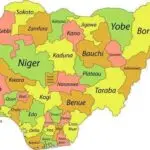
- Maps of Nigeria showing ethnic groups
- Charts illustrating traditional leadership structures
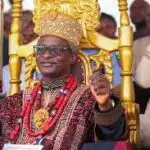
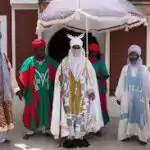
- Pictures of various traditional rulers (e.g., Emirs, Obas, Ezes)
- Digital devices (e.g., tablets, smartphones) with installed appropriate Apps for poster creation
- Markers and large sheets of paper for poster development
Rationale for the Lesson
This lesson is important for students to understand the historical foundations and contemporary relevance of traditional governance in Nigeria. It helps them appreciate the diversity of leadership systems across different ethnic groups and how these systems interact with modern democratic structures. This understanding fosters cultural identity, critical thinking about governance, and prepares students for responsible civic participation.
Prerequisite/Previous Knowledge
Students should have a basic understanding of governance, community structures, and the concept of leadership from their Junior Secondary Civic Education classes.
Lesson Content/Board Summary
Traditional Institutions And Leadership Systems
Major Traditional Institutions and Leadership Systems in Nigeria
Traditional institutions in Nigeria refer to the indigenous systems of governance, social organization, and cultural preservation that existed before colonial rule and continue to play significant roles in communities today. These systems are typically headed by traditional rulers who derive their authority from ancestry, tradition, and cultural norms.
Examples of major traditional institutions and leadership systems across Nigeria include:
- Emirate System (Northern Nigeria): Predominantly found among the Hausa-Fulani, led by an Emir. The system is hierarchical, with the Emir at the apex, supported by District Heads and Village Heads. It combines religious and administrative authority.
- Obaship System (South-Western Nigeria): Common among the Yoruba, led by an Oba (King). The Oba is assisted by a council of chiefs (Iwarefa or Ogboni), who play advisory and administrative roles. Authority is often hereditary and spiritually significant.
- Eze/Igwe System (South-Eastern Nigeria): Found among the Igbo people, where leadership can be more decentralized and democratic. An Eze or Igwe (King) may exist, but community governance often involves a council of elders (Ndi Ichie), age grades, and title holders (e.g., Ozo title holders). Leadership is often based on achievement, wisdom, and community consensus rather than strict heredity.
- Council of Chiefs/Elders (Middle Belt and other regions): Many ethnic groups in the Middle Belt and other parts of Nigeria (e.g., Tiv, Idoma, Edo, Ijaw, Efik, Ibibio) have diverse traditional leadership structures, often centered around a paramount ruler (e.g., Tor Tiv, Och’Idoma, Oba of Benin, Amanyanabo) supported by councils of chiefs, elders, and lineage heads.
Roles and Functions of Traditional Rulers and Leaders in Community Governance
Traditional rulers and leaders perform several vital functions within their communities, contributing to social cohesion, cultural preservation, and local development. These roles include:
- Custodians of Culture and Tradition: They preserve and promote the cultural heritage, customs, and traditions of their people, including language, festivals, and traditional practices.
- Peacekeeping and Conflict Resolution: Traditional rulers often serve as mediators in disputes, settling land cases, family quarrels, and minor civil conflicts, thereby maintaining peace and order at the grassroots level.
- Community Development: They mobilize their subjects for communal projects, attract development initiatives, and advocate for the welfare of their communities to government agencies and other stakeholders.
- Moral and Spiritual Guidance: Many traditional rulers are seen as spiritual heads and moral compasses, providing guidance and upholding ethical standards within their communities.
- Custodians of Land: In many traditions, they hold land in trust for their communities, overseeing its allocation and use.
- Advisory Role: They offer advice to local and state governments on matters concerning their communities, especially regarding cultural sensitivities and local issues.
Relationship Between Traditional Institutions and Modern Government Systems
The relationship between traditional institutions and modern government systems in Nigeria is complex and evolving. While traditional rulers no longer possess the executive and legislative powers they once held, they continue to exert significant influence, particularly at the local level. Key aspects of this relationship include:
- Advisory Capacity: Traditional rulers serve as advisors to local government councils and state governments, offering insights into community needs and sentiments.
- Cultural Ambassadors: They act as cultural representatives, promoting their people’s heritage and fostering unity.
- Maintenance of Law and Order: They often work in conjunction with law enforcement agencies to maintain peace and security, particularly through informal conflict resolution mechanisms.
- Mobilization for Government Programmes: Traditional rulers assist the government in mobilizing their communities for various programmes, such as census exercises, health campaigns, and voter registration.
- Recognition and Stipends: Modern governments formally recognize traditional rulers and provide them with stipends, official vehicles, and palaces, integrating them into the state apparatus.
- Limitations: Traditional rulers operate within the framework of the Nigerian constitution and state laws. They do not have independent executive or legislative powers and their decisions can be challenged in modern courts.
Leadership Structures Across Different Ethnic Groups in Nigeria
While there are commonalities, leadership structures vary significantly across Nigeria’s diverse ethnic groups, reflecting unique historical, social, and cultural contexts:
- Centralized Systems (e.g., Hausa-Fulani, Yoruba, Edo): These systems feature a clear hierarchy with a powerful paramount ruler (Emir, Oba) at the top, supported by a well-defined chain of command involving chiefs, district heads, and village heads. Authority is often hereditary and religiously sanctioned.
- Decentralized/Segmentary Systems (e.g., Igbo, Tiv, Idoma): In these systems, political authority is more diffused. Leadership might be based on age grades, lineage heads, title societies (e.g., Ozo in Igbo land), or councils of elders. While an Eze or Igwe may exist, their power is often more ceremonial or persuasive, with significant decisions requiring broad community consensus.
- Mixed Systems: Many groups exhibit a blend of centralized and decentralized elements, with a recognized paramount ruler alongside influential councils of elders or age grades.
These variations highlight the rich tapestry of indigenous governance that contributes to Nigeria’s unique heritage.
Teaching Methods/Instructional Techniques
Discussion, Group Work, Explanation, Question and Answer, Presentation, Guided Practice, Observation.
Instructional Procedures
Step 1: Introduction
Time: 5 minutes
Teaching Skill: Questioning/Engagement
Teacher’s Activity: The teacher greets the students and asks them to name any traditional ruler they know in their community or state. The teacher then introduces the topic: “Traditional Institutions And Leadership Systems.”
Pupils’ Activity: Pupils respond by naming traditional rulers and listen attentively to the introduction.
Learning Point: Introduction to traditional leadership
Step 2: Exploring Major Traditional Institutions
Time: 10 minutes
Teaching Skill: Explanation/Illustration
Teacher’s Activity: The teacher explains what traditional institutions and leadership systems are, providing examples from Northern, South-Western, and South-Eastern Nigeria (e.g., Emirate, Obaship, Eze/Igwe systems) using maps and charts to illustrate the diversity.
Pupils’ Activity: Pupils listen, observe the maps and charts, and ask questions for clarification.
Learning Point: Nigerian traditional systems
Step 3: Group Activity – Roles and Functions Research
Time: 10 minutes
Teaching Skill: Facilitation/Guidance
Teacher’s Activity: The teacher divides students into groups and guides them to use digital devices to search for relevant materials on the roles and functions of traditional rulers and leaders in community governance. The teacher circulates to provide support.
Pupils’ Activity: Pupils work in groups, using digital devices to research the roles and functions of traditional rulers.
Learning Point: Researching traditional roles
Step 4: Group Presentation – Roles and Functions
Time: 10 minutes
Teaching Skill: Presentation/Feedback
Teacher’s Activity: The teacher invites each group to make a brief presentation of their findings on the roles and functions of traditional rulers. The teacher provides feedback and consolidates key points.
Pupils’ Activity: Groups present their findings, and other pupils listen and ask questions.
Learning Point: Roles of traditional rulers
Step 5: Group Activity – Relationship with Modern Government Poster
Time: 10 minutes
Teaching Skill: Guidance/Collaboration
Teacher’s Activity: The teacher guides the same groups to use digital Apps (or provided materials) to develop posters illustrating the relationship between traditional institutions and modern government systems. The teacher ensures they highlight advisory roles, cultural preservation, and limitations.
Pupils’ Activity: Pupils collaborate in groups to design and create posters on the relationship between traditional and modern governance.
Learning Point: Traditional-modern government relationship
Step 6: Discussion on Leadership Structures
Time: 5 minutes
Teaching Skill: Explanation/Discussion
Teacher’s Activity: The teacher leads a discussion on the differences in leadership structures across various ethnic groups (e.g., centralized vs. decentralized systems), drawing from the students’ research and the poster activity.
Pupils’ Activity: Pupils participate in the discussion, sharing insights and comparing structures.
Learning Point: Diverse leadership structures
Step 7: Evaluation/Review
Time: 5 minutes
Teaching Skill: Questioning/Assessment
Teacher’s Activity: The teacher evaluates the learning by asking the following questions:
- Mention two major traditional institutions in Nigeria.
- State three roles of traditional rulers in community governance.
- How do traditional institutions relate with modern government systems?
- Give an example of a centralized and a decentralized traditional leadership system in Nigeria.
Pupils’ Activity: Pupils answer orally and in writing.
Learning Point: Understanding traditional governance
Step 8: Note-Taking
Time: 10 minutes
Teaching Skill: Guided Writing
Teacher’s Activity: The teacher guides pupils/students to copy the essential Board Summary notes on traditional institutions, their roles, and their relationship with modern government into their notebooks.
Pupils’ Activity: Pupils/students copy the notes carefully into their notebooks.
Learning Point: Recording lesson information
Step 9: Conclusion
Time: 5 minutes
Teaching Skill: Summarization
Teacher’s Activity: The teacher concludes the lesson by reiterating the importance of traditional institutions in preserving cultural identity and their complementary role in modern governance, encouraging students to respect and learn more about their local heritage.
Pupils’ Activity: Pupils listen and reflect on the lesson’s main points.
Learning Point: Importance of traditional heritage
Continuous Assessment/Further Study
Type: Homework/Further Reading
Instruction: Research and write a short essay (not more than two pages) on the traditional leadership structure of your own ethnic group or a neighbouring one. Include:
- The name of the paramount ruler and key chiefs/title holders.
- Their main roles and functions in the community.
- How their decisions are made and implemented.
- Any specific challenges or successes they have experienced in relating with the modern local government.
Lesson Keywords
- Traditional Institutions – Indigenous systems of governance and social organization based on customs and heritage.
- Traditional Rulers – Leaders who derive authority from ancestry, tradition, and cultural norms (e.g., Emirs, Obas, Ezes).
- Emirate System – A centralized traditional leadership system common in Northern Nigeria, headed by an Emir.
- Obaship System – A centralized traditional leadership system common in South-Western Nigeria, headed by an Oba.
- Eze/Igwe System – A traditional leadership system common among the Igbo, often decentralized with community councils and title holders.
- Community Governance – The way a local community is managed and led, often involving traditional and modern structures.
Differentiation
For struggling learners: Provide simplified reading materials and pre-highlighted key terms. Pair them with stronger students during group activities and offer more direct guidance during research and poster creation. Focus on identifying key traditional institutions and one or two major roles.
For advanced learners: Encourage them to explore the historical evolution of traditional institutions, analyze specific case studies of conflicts or collaborations between traditional and modern authorities, or research the legal frameworks governing traditional rulers in Nigeria. They can also take on leadership roles in group presentations.
Suggested Lesson Videos
https://www.youtube.com/results?search_query=traditional+institutions+nigeria+SS1

Community Join the conversation Open discussion +