

Class: Senior Secondary School 2 (SS2 / SSS 2)
Term: 2nd Term
Week: 6
Age: 16 years
Duration: 45 minutes
Subject: History
Curriculum Theme: Nigerian History and Governance
Previous Lesson: Origin of Nationalism: Meaning and Early Resistance Leaders.
Topic: NATIONALISTS MOVEMENT AFTER SECOND WORLD WAR
Subject Matter: Meaning of nationalist movement (organized struggle for self-rule), activities of the nationalists, formation of political parties, newspapers, conferences (1950, 1953, 1957)
Specific Objectives
By the end of the lesson, pupils should be able to:
Cognitive Domain:
- Define nationalist movement.
- List the various activities of Nigerian nationalists after World War II.
- Identify key political parties and newspapers formed during this period.
- Mention the major constitutional conferences held and their outcomes.
Affective Domain:
- Appreciate the efforts and sacrifices made by Nigerian nationalists.
- Value the importance of self-governance and national independence.
- Develop a sense of patriotism towards Nigeria.
Psychomotor Domain:
- Participate actively in discussions about the nationalist struggle.
- Locate on a map the regions associated with prominent nationalists or political parties.
- Present information about a specific nationalist activity or conference.
Social Domain:
- Discuss the impact of nationalist activities on national unity and development.
- Collaborate with peers in group activities to research aspects of the nationalist movement.
Reference Materials
The following resources were used in planning this lesson:
- Senior Secondary Schools Education Curriculum
- State Unified Scheme of Work
- Adeleye, J.A. (2018). Comprehensive History for Senior Secondary Schools. Ibadan: University Press PLC.
- https://www.britannica.com/place/Nigeria/The-nationalist-movement
- https://www.jstor.org/stable/217983
Instructional Materials
The teacher will teach this lesson with the aid of:
- Maps of Nigeria showing pre-independence regions
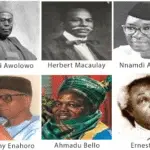
- Pictures of prominent nationalists (e.g., Nnamdi Azikiwe, Obafemi Awolowo, Ahmadu Bello)
- Copies of old Nigerian newspapers or facsimiles
- Charts illustrating timelines of nationalist activities and conferences
Rationale for the Lesson
This lesson helps pupils understand how Nigeria gained independence from colonial rule. It enables pupils to appreciate the struggles and contributions of early Nigerian leaders and the events that shaped the nation’s political landscape. Understanding this history is important for pupils to grasp the foundations of Nigeria’s governance and national identity.
Prerequisite/Previous Knowledge
Pupils have prior knowledge of the colonial era in Nigeria and the general concept of self-rule from their Junior Secondary School History lessons.
Lesson Content/Board Summary
NATIONALISTS MOVEMENT AFTER SECOND WORLD WAR
Meaning of Nationalist Movement
A nationalist movement is an organized struggle by the people of a country to achieve self-rule or independence from foreign domination. It involves a collective desire for political autonomy and the promotion of a distinct national identity.
Factors that Aided Nationalist Movement After WWII
The Second World War (1939-1945) significantly weakened European colonial powers and exposed their vulnerabilities. Other factors included:
- The Atlantic Charter (1941) which supported the right of all people to choose their own form of government.
- The return of Nigerian ex-servicemen who had fought alongside Europeans and experienced racial discrimination, leading to a demand for better treatment and self-rule.
- The rise of educated elites who were exposed to Western political ideas and advocated for independence.
- Economic hardship in Nigeria, which led to discontent and protests against colonial policies.
- The emergence of mass media (newspapers) that helped spread nationalist ideas.
- The Pan-African movement which inspired nationalists across Africa.
Activities of Nationalists After WWII
Nigerian nationalists engaged in various activities to achieve independence:
- Formation of Political Parties: These parties served as platforms to mobilize people and articulate demands for self-rule.
- Establishment of Newspapers: Nationalist newspapers were used to spread anti-colonial messages, educate the public, and criticize colonial policies.
- Organizing Conferences and Meetings: These gatherings were used to discuss strategies, present demands to the colonial government, and unify nationalist efforts.
- Protests and Demonstrations: Public demonstrations were held to express grievances and pressure the colonial administration.
- Sending Delegations to London: Nigerian leaders traveled to Britain to negotiate directly with the British government for constitutional reforms.
- Educational Campaigns: Nationalists embarked on campaigns to educate Nigerians about their rights and the benefits of self-governance.
Key Political Parties Formed
Some of the significant political parties that emerged during this period include:
- National Council of Nigeria and the Cameroons (NCNC): Formed in 1944, led by Herbert Macaulay and later Nnamdi Azikiwe. It was initially a broad-based movement.
- Action Group (AG): Formed in 1951, led by Obafemi Awolowo, primarily strong in the Western Region.
- Northern People’s Congress (NPC): Formed in 1951, led by Ahmadu Bello, dominant in the Northern Region.
- United National Independence Party (UNIP): A smaller party, often associated with specific regional or ethnic interests.
Prominent Nationalist Newspapers
Newspapers played a crucial role in publicizing nationalist ideas:
- West African Pilot: Founded by Nnamdi Azikiwe in 1937, it was highly influential in spreading nationalist messages across Nigeria.
- Daily Service: Associated with the Nigerian Youth Movement, it provided an alternative voice to the Pilot.
- Nigerian Tribune: Founded by Obafemi Awolowo in 1949, it became a voice for the Action Group.
- Other papers included the Comet, Southern Nigerian Defender, etc.
Major Constitutional Conferences
Several conferences were held to review and reform the Nigerian constitution, moving towards self-governance:
- 1950 Ibadan General Conference: This conference reviewed the Richards Constitution. It brought together representatives from across Nigeria and proposed significant changes, laying the groundwork for greater Nigerian participation in governance.
- 1953 London Constitutional Conference: Held in London, this conference addressed the shortcomings of the Macpherson Constitution and discussed the demand for a federal system and regional autonomy. It led to the introduction of a more federal structure.
- 1957 London Constitutional Conference: This conference was pivotal as it granted self-government to the Eastern and Western Regions. It also set the stage for Nigeria’s full independence, with discussions on the date for independence and the final structure of the federal government.
- 1958 London Constitutional Conference: This conference confirmed that Nigeria would become independent on October 1, 1960, and settled remaining issues regarding the federal structure and minority rights.
Teaching Methods/Instructional Techniques
Discussion, Lecture, Demonstration, Question and Answer, Visual Aids
Instructional Procedures
Step 1: Introduction
Time: 5 minutes
Teaching Skill: Set Induction
Teacher’s Activity: The teacher greets the pupils and asks them to recall any famous Nigerian leaders they know and what these leaders did for Nigeria.
Pupils’ Activity: Pupils respond by mentioning names like Nnamdi Azikiwe, Obafemi Awolowo, and Ahmadu Bello, and briefly state their contributions to Nigeria’s independence.
Learning Point: Pupils are reminded of key figures in Nigeria’s history and are prepared for the day’s topic.
Step 2: Meaning of Nationalist Movement
Time: 7 minutes
Teaching Skill: Explanation/Definition
Teacher’s Activity: The teacher explains the meaning of nationalist movement as an organized struggle for self-rule, providing context from the post-World War II era.
Pupils’ Activity: Pupils listen attentively and define nationalist movement in their own words.
Learning Point: Pupils understand the core concept of a nationalist movement.
Step 3: Factors Aiding Nationalist Movement
Time: 7 minutes
Teaching Skill: Discussion/Elaboration
Teacher’s Activity: The teacher discusses the various factors that aided the rise of nationalist movements in Nigeria after the Second World War, such as the Atlantic Charter and the role of ex-servicemen.
Pupils’ Activity: Pupils identify and list the factors that contributed to the growth of nationalism after WWII.
Learning Point: Pupils grasp the reasons behind the accelerated nationalist activities.
Step 4: Activities of Nationalists
Time: 7 minutes
Teaching Skill: Listing/Categorization
Teacher’s Activity: The teacher explains the different activities undertaken by nationalists, including the formation of political parties, establishment of newspapers, and organizing protests.
Pupils’ Activity: Pupils list the various activities nationalists engaged in to achieve independence.
Learning Point: Pupils identify the methods used by nationalists in their struggle.
Step 5: Political Parties and Newspapers
Time: 6 minutes
Teaching Skill: Identification/Illustration
Teacher’s Activity: The teacher discusses the key political parties (NCNC, AG, NPC) and prominent newspapers (West African Pilot, Nigerian Tribune) of the period, using charts and pictures.
Pupils’ Activity: Pupils mention the names of political parties and newspapers and identify nationalist leaders from pictures.
Learning Point: Pupils recognize the organizational and media tools of the nationalist movement.
Step 6: Constitutional Conferences
Time: 6 minutes
Teaching Skill: Chronology/Analysis
Teacher’s Activity: The teacher explains the major constitutional conferences (1950, 1953, 1957) and their significant outcomes regarding Nigeria’s path to self-governance.
Pupils’ Activity: Pupils recall the dates and main decisions of the key constitutional conferences.
Learning Point: Pupils understand the political negotiations that led to independence.
Step 7: Evaluation/Review
Time: 5 minutes
Teaching Skill: Questioning/Assessment
Teacher’s Activity: The teacher evaluates the learning by asking the following questions:
- Define nationalist movement.
- List three activities engaged in by Nigerian nationalists after World War II.
- Mention two prominent political parties and two nationalist newspapers from that era.
- State the year and a key outcome of the first London Constitutional Conference.
Pupils’ Activity: Pupils answer orally and in writing.
Learning Point: Pupils demonstrate understanding of the lesson.
Step 8: Conclusion
Time: 2 minutes
Teaching Skill: Summarization
Teacher’s Activity: The teacher summarizes the key points of the lesson, emphasizing the importance of the nationalist struggle in achieving Nigeria’s independence.
Pupils’ Activity: Pupils listen and ask any remaining questions.
Learning Point: Pupils consolidate their understanding of the nationalist movement.
Lesson Keywords
- Nationalism – A strong feeling of pride in and devotion to one’s country.
- Nationalist Movement – An organized effort by people to achieve political independence for their country.
- Self-rule – The ability of a country or region to govern itself without external control.
- Political Parties – Organizations that seek to achieve political power by electing members to public office.
- Constitutional Conference – A meeting held to discuss and revise the constitution of a country.
Differentiation
For pupils who grasp concepts quickly, they can be tasked with identifying specific nationalist leaders associated with each political party or constitutional conference. For pupils needing more support, the teacher will provide simplified notes and visual aids, focusing on the definition of nationalist movement and listing basic activities.
Note for teachers using this lesson plan
Teachers should encourage pupils to relate historical events to contemporary issues of nation-building and governance. Emphasize the diverse contributions of different regions and ethnic groups to the nationalist struggle to foster a sense of national unity. Utilize the provided instructional materials effectively to make the lesson engaging and impactful.


Community Join the conversation Open discussion +