

Class: Senior Secondary School 1 (SS1, SS 1, SSS1, SSS 1)
Term: 3rd Term
Week: 5
Age: 15 years
Duration: 45 minutes
Subject: Economics
Curriculum Theme: Economics
Previous Lesson: Demand and Supply, Schedules and Laws.
Topic: Money
Subject Matter: Definition of money; historical development of money; functions of money.
Specific Objectives
By the end of the lesson, pupils should be able to:
Cognitive Domain:
- Define money.
- Describe the historical development of money from barter to modern money.
- List major forms of money used at different times (commodity money, cowries, coins, bank notes).
- State and explain the functions of money.
- Explain why money is needed in an economy.
Affective Domain:
- Show appreciation for honest handling of money and responsible spending.
- Demonstrate positive attitude towards saving and careful use of money.
Psychomotor Domain:
- Identify different forms of money from real samples or pictures (cowries, coins, bank notes, commodity money).
- Sort examples into traditional money and modern money using classroom materials.
Social Domain:
- Work in groups to discuss how people used to trade before money and present findings.
- Share examples of how money is used in daily life in the home and community.
Reference Materials
The following resources were used in planning this lesson:
- 9 Years Basic Education Curriculum
- State Unified Scheme of Work
- Recommended Economics textbook for SSS 1 (e.g., Comprehensive Economics for Senior Secondary Schools)
- Central Bank of Nigeria (CBN) – Currency and Monetary Information
- Encyclopaedia Britannica – Money
- International Monetary Fund (IMF) – Understanding Money and Monetary Issues
Instructional Materials
The teacher will teach this lesson with the aid of:
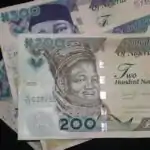
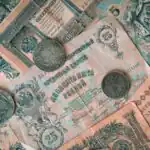
- Samples or pictures of coins and bank notes
- Samples or pictures of cowries
- Examples or pictures of commodity money (e.g., salt, kolanuts, livestock, grains)
- Chart showing the evolution of money from barter to modern money
- Whiteboard and markers
Rationale for the Lesson
This lesson helps pupils understand why money is used in daily transactions and how it makes buying and selling easier than barter. It also helps pupils know the main functions of money in homes, markets, and businesses.
Prerequisite/Previous Knowledge
Pupils have basic knowledge of buying and selling and have used money to purchase goods or pay for services.
Lesson Content/Board Summary
Money
Definition of Money
Money is anything that is generally accepted as a means of payment for goods and services and for settling debts.
Why Money Is Needed
The following are reasons money is needed:
- It removes the difficulty of exchange under barter.
- It makes buying and selling easier and faster.
- It provides a common measure for pricing goods and services.
- It makes it possible to save wealth for future use.
Historical Development of Money
The following are stages in the historical development of money:
- Barter system: direct exchange of goods for goods without money.
- Commodity money: use of items like salt, cattle, grains, and kolanuts as money.
- Cowries and manillas: use of shells and metal objects as a common medium of exchange in many communities.
- Coins: use of metal coins issued by authorities to standardise exchange.
- Bank notes: paper money issued by the government or central bank for easier transactions.
- Modern money and electronic payments: use of bank deposits, transfers, cards, and other digital means of payment.
Functions of Money
The following are functions of money:
- Medium of exchange: used to buy and sell goods and services.
- Unit of account: used to measure and express value and prices.
- Store of value: used to keep wealth for future use.
- Standard of deferred payment: used to settle debts and pay later for goods and services.
- Means of transferring value: used to transfer purchasing power from one person or place to another.
Teaching Methods/Instructional Techniques
Discussion, Lecture, Demonstration, Question and Answer, Visual Aids
Instructional Procedures
Step 1: Introduction
Time: 5 minutes
Teaching Skill: Set Induction
Teacher’s Activity: The teacher displays coins and bank notes and asks pupils to mention what they use money for daily, then introduces the topic as money and its roles.
Pupils’ Activity: Pupils mention examples such as buying food, transport fare, and paying for services.
Learning Point: Money is used daily for payment and exchange.
Step 2: Definition and Need for Money
Time: 7 minutes
Teaching Skill: Explanation
Teacher’s Activity: The teacher defines money and guides pupils to list reasons money is needed, writing the key points on the board.
Pupils’ Activity: Pupils copy the definition and list reasons money is needed.
Learning Point: Money is generally accepted for payment and it solves problems of barter.
Step 3: Barter System and Its Limitations
Time: 6 minutes
Teaching Skill: Discussion
Teacher’s Activity: The teacher explains barter and leads pupils to mention difficulties of barter such as lack of double coincidence of wants and difficulty of pricing.
Pupils’ Activity: Pupils discuss and state at least two limitations of barter in short points.
Learning Point: Barter has difficulties that made people develop money.
Step 4: Historical Development of Money
Time: 8 minutes
Teaching Skill: Demonstration/Use of Visual Aids
Teacher’s Activity: The teacher uses cowries, pictures, and a chart to explain the stages in the development of money from commodity money to coins and bank notes.
Pupils’ Activity: Pupils identify each form of money displayed and arrange the stages in the correct order in their notes.
Learning Point: Money developed from barter to commodity money, cowries, coins, and bank notes.
Step 5: Functions of Money
Time: 7 minutes
Teaching Skill: Explanation/Illustration
Teacher’s Activity: The teacher explains the functions of money and gives simple daily examples for each function.
Pupils’ Activity: Pupils match each function with an example from daily life and copy the points.
Learning Point: Money serves as medium of exchange, unit of account, store of value, and standard of deferred payment.
Step 6: Class Activity (Daily Life Examples)
Time: 4 minutes
Teaching Skill: Reinforcement
Teacher’s Activity: The teacher guides pupils in pairs to write short examples showing money functions in school and home and collects a few responses for correction.
Pupils’ Activity: Pupils write and share examples such as paying fees, buying books, saving, and paying later for goods.
Learning Point: Money functions can be identified in common daily transactions.
Step 7: Evaluation/Review
Time: 5 minutes
Teaching Skill: Questioning/Assessment
Teacher’s Activity: The teacher evaluates the learning by asking the following questions:
- Define money.
- List four stages in the historical development of money.
- State four functions of money.
- Explain two reasons money is needed in an economy.
Pupils’ Activity: Pupils answer orally and in writing.
Learning Point: Pupils demonstrate understanding of the lesson.
Step 8: Conclusion
Time: 3 minutes
Teaching Skill: Summarization
Teacher’s Activity: The teacher summarizes the lesson and gives an assignment for pupils to write short notes on barter and list five uses of money in their community.
Pupils’ Activity: Pupils copy the assignment and ask final questions where needed.
Learning Point: Money developed over time and performs key functions that support exchange.
Lesson Keywords
- Money – Anything generally accepted for payment of goods and services and settlement of debts.
- Barter – Direct exchange of goods for goods without using money.
- Commodity Money – Items like salt or cattle used as money in earlier times.
- Medium of Exchange – The use of money to buy and sell goods and services.
- Unit of Account – The use of money to measure and express prices and value.
- Store of Value – The ability of money to keep wealth for future use.
- Deferred Payment – Payment made later for goods and services received now.
Differentiation
Pupils who need support will use a prepared list of stages and functions to match correctly, while faster learners will write a short comparison between barter and money, stating at least four differences with examples.
Note for teachers using this lesson plan
Use real samples or clear pictures to make the development of money easy to understand. Emphasise simple daily examples for each function so pupils can answer exam questions clearly and correctly.
Community Join the conversation Open discussion +