

Class: Senior Secondary School 1 (SS1, SS 1, SSS1, SSS 1)
Term: 3rd Term
Week: 11
Age: 15 years
Duration: 45 minutes
Subject: Government
Curriculum Theme: Government
Previous Lesson: Types of Electoral System.
Topic: ELECTORAL COMMISSION/ELECTORAL OFFICIALS
Subject Matter: Meaning of electoral commission, roles and functions of electoral commission, duties of electoral officials, problems facing electoral commission.
Specific Objectives
By the end of the lesson, pupils should be able to:
Cognitive Domain:
- Define electoral commission.
- State at least three roles and functions of an electoral commission.
- List at least four duties of electoral officials.
- Identify at least three problems facing electoral commissions in Nigeria.
Affective Domain:
- Appreciate the importance of a credible electoral commission for democratic governance.
- Recognise the challenges faced by electoral commissions in conducting free and fair elections.
Psychomotor Domain:
- Analyse information related to electoral processes and officials from various sources.
- Participate actively in discussions about electoral issues.
Social Domain:
- Collaborate with peers to discuss solutions to electoral problems.
- Engage in respectful dialogue about the roles of electoral bodies.
Reference Materials
The following resources were used in planning this lesson:
- 9 Years Basic Education Curriculum for Senior Secondary Schools.
- State Unified Scheme of Work for Government.
- Essential Government for Senior Secondary Schools by D.C. Nwaubani.
Instructional Materials
The teacher will teach this lesson with the aid of:
- Charts of electoral bodies (e.g., INEC logo and structure).
- Civic posters showing election processes.
- Newspaper reports on elections and electoral issues.
Rationale for the Lesson
This lesson helps pupils understand the body responsible for organising elections and the people who work during elections. It enables pupils to appreciate the efforts involved in ensuring fair elections and to identify common challenges, preparing them for future civic participation.
Prerequisite/Previous Knowledge
Pupils have a basic understanding of government, democracy, and the general concept of elections from previous lessons.
Lesson Content/Board Summary
ELECTORAL COMMISSION AND ELECTORAL OFFICIALS
Meaning of Electoral Commission
An electoral commission is an independent body established by law to organise, supervise, and conduct elections in a country. Its main goal is to ensure free, fair, and credible elections.
Roles and Functions of Electoral Commission
The following are the key roles and functions of an electoral commission:
- Registration of political parties.
- Registration of voters and compilation of voters’ register.
- Delimitation of electoral constituencies.
- Monitoring of political campaigns and party finances.
- Provision of electoral materials (ballot papers, ballot boxes, etc.).
- Recruitment, training, and deployment of electoral officials.
- Conduct of elections, including voting, collation of results, and declaration of winners.
- Reviewing electoral processes and recommending reforms.
Duties of Electoral Officials
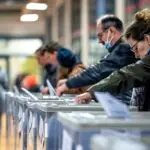
The following are the duties of electoral officials at polling units:
- Setting up the polling unit.
- Accrediting voters using the voters’ register and card reader (if applicable).
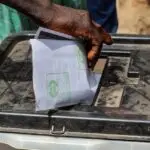
- Issuing ballot papers to accredited voters.
- Ensuring secrecy of voting.
- Maintaining order at the polling unit.
- Counting votes after the close of polling.
- Recording and announcing results at the polling unit.
- Forwarding results to the collation centre.
Problems Facing Electoral Commissions
The following are some problems often faced by electoral commissions:
- Inadequate funding and logistical challenges.
- Political interference and lack of independence.
- Insecurity during elections.
- Voter apathy and low turnout.
- Electoral malpractice (e.g., ballot snatching, vote buying).
- Lack of public trust in the electoral process.
- Late release of electoral materials.
- Inadequate training of electoral officials.
Teaching Methods/Instructional Techniques
Discussion, Lecture, Demonstration, Question and Answer, Visual Aids
Instructional Procedures
Step 1: Introduction
Time: 5 minutes
Teaching Skill: Set Induction
Teacher’s Activity: The teacher reviews the previous lesson on elections and asks pupils to name the body responsible for conducting elections in Nigeria. The teacher then introduces the topic: Electoral Commission/Electoral Officials.
Pupils’ Activity: Pupils respond to questions and listen attentively to the introduction.
Learning Point: Pupils recall previous knowledge and are introduced to the new topic.
Step 2: Meaning of Electoral Commission
Time: 8 minutes
Teaching Skill: Explanation/Definition
Teacher’s Activity: The teacher explains the meaning of an electoral commission, emphasizing its independence and mandate to conduct elections. The teacher uses the chart of electoral bodies to show examples.
Pupils’ Activity: Pupils listen, take notes, and ask questions for clarification.
Learning Point: Pupils understand the definition of an electoral commission.
Step 3: Roles and Functions of Electoral Commission
Time: 10 minutes
Teaching Skill: Discussion/Elaboration
Teacher’s Activity: The teacher leads a discussion on the various roles and functions of an electoral commission, using civic posters to illustrate points like voter registration and delimitation. The teacher encourages pupils to give examples.
Pupils’ Activity: Pupils contribute to the discussion, list roles, and ask questions.
Learning Point: Pupils identify and explain the functions of an electoral commission.
Step 4: Duties of Electoral Officials
Time: 7 minutes
Teaching Skill: Listing/Explanation
Teacher’s Activity: The teacher explains the specific duties of electoral officials at the polling unit level, highlighting their importance in the election process. The teacher can use a scenario to demonstrate.
Pupils’ Activity: Pupils listen, list the duties, and discuss their understanding.
Learning Point: Pupils understand the practical duties performed by electoral officials.
Step 5: Problems Facing Electoral Commission
Time: 8 minutes
Teaching Skill: Problem-Solving/Critical Thinking
Teacher’s Activity: The teacher guides pupils to discuss common challenges faced by electoral commissions, using newspaper reports on past elections as examples. The teacher encourages pupils to suggest possible solutions.
Pupils’ Activity: Pupils identify and discuss problems, contributing their ideas and observations.
Learning Point: Pupils recognise the challenges and their implications for election credibility.
Step 6: Evaluation/Review
Time: 5 minutes
Teaching Skill: Questioning/Assessment
Teacher’s Activity: The teacher evaluates the learning by asking the following questions:
- What is an electoral commission?
- Mention three roles of an electoral commission.
- State two duties of electoral officials at a polling unit.
- Identify two problems faced by electoral commissions.
Pupils’ Activity: Pupils answer orally and in writing.
Learning Point: Pupils demonstrate understanding of the lesson.
Step 8: Conclusion
Time: 2 minutes
Teaching Skill: Summarisation/Assignment
Teacher’s Activity: The teacher summarises the key points of the lesson, reiterating the importance of a functional electoral system for democracy. The teacher assigns homework: “Research and write a short paragraph on how political interference affects the independence of an electoral commission.”
Pupils’ Activity: Pupils listen to the summary and copy the homework assignment.
Learning Point: Pupils consolidate their learning and are given a task to reinforce understanding.
Lesson Keywords
- Electoral Commission – An independent body responsible for organizing elections.
- INEC – Independent National Electoral Commission (Nigeria’s electoral body).
- Elections – A formal and organised choice by vote of a person for a political office.
- Voters’ Register – A list of eligible citizens who are registered to vote in an election.
- Delimitation – The process of defining electoral boundaries for constituencies.
- Electoral Officials – Individuals employed by the electoral commission to conduct elections.
- Polling Unit – The specific location where voters cast their ballots.
Differentiation
For pupils who grasp concepts quickly, they will be encouraged to research current news articles about electoral reforms. For pupils needing more support, the teacher will provide simplified definitions and examples, and pair them with stronger pupils for group activities.
Note for teachers using this lesson plan
Teachers should encourage active participation and link the lesson content to real-life examples from Nigerian elections. Using visual aids like charts and newspaper clippings will help make the lesson more engaging and relevant for pupils.


Community Join the conversation Open discussion +