


A private primary school in Lagos that once accepted plastic bottles as school fees is drawing fresh public attention for its innovative approach to tackling both out-of-school children and environmental waste.
Located on Ijoro Badia Street, the school — Slum Art PET Bottle School — was founded by Adetunwase Adele, a Guinness World Record holder and founder of the Slum Art Foundation. The initiative began in 2018 as an after-school arts mentoring programme but later evolved into a full primary school after the founder discovered that many children in the community were not enrolled in formal education.
According to Adele, the organisation initially operated as an arts platform focused on mentoring children for socio-economic development. However, during community engagement, the team realised that the number of children out of school far exceeded those attending the programme. That discovery led to the establishment of a tuition-free primary school aimed at bridging the access gap.
To reduce financial barriers for families, the school at one point asked each pupil to bring five used PET bottles instead of paying traditional school fees. The idea reportedly emerged from the children themselves, who wanted to help build their learning space while cleaning up plastic waste in the area. The collected bottles were used in constructing parts of the school building, giving rise to its popular name.
However, as the recycling value of PET bottles increased, parents began selling them to support household income. The school subsequently discontinued the bottle-for-fees system, retaining a symbolic bottle as a reminder of its beginnings.
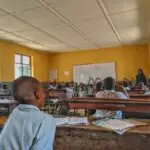
Today, the school has grown from 21 pupils at inception to 63 learners. It provides uniforms, books, bags, and other essential learning materials at no cost to parents. Teachers are largely recruited from within the community, while volunteers contribute to curriculum development and instructional support. The founder confirmed that the school has completed the required state accreditation process.
The facility itself stands on reclaimed land that was previously considered unusable due to refuse dumping and swamp conditions. Beyond primary education, the foundation also operates an art school and animation studio as part of broader environmental and youth empowerment initiatives.
Community partnerships have played a role in the school’s expansion and renovation. Supporters say the project aligns with efforts to empower young people and promote sustainable development within underserved areas.
Parents have also expressed appreciation. One parent noted that her children’s reading and communication skills have significantly improved since enrolling in the school, describing it as a lifeline for families unable to afford conventional private education.
The school is currently preparing its first set of Primary Five pupils for the upcoming Common Entrance Examination — a milestone that reflects its steady growth and academic ambitions.
Adele maintains that the long-term goal remains clear: reducing the number of out-of-school children while promoting environmental responsibility and community ownership of education. The foundation is now seeking additional partnerships to sustain and scale its programmes.



Community Join the conversation Open discussion +