

Note for teachers using this lesson plan
Prepare the relevant maps, diagrams, photographs or charts before the lesson. Emphasise climate change, desertification, flooding, drought and solutions, and require accurate interpretation of places, processes and spatial relationships; supervise map and diagram work carefully. By the end, students should be able to explain the principal geographical ideas and apply them to maps, diagrams or real situations.
Class: Senior Secondary School 3 (SS3 / SSS 3)
Term: 1st Term
Week: 7
Age: 17 years
Duration: 45 minutes
Subject: Geography
Curriculum Theme: Geography
Previous Lesson: Climate Change, Causes and Consequences
Topic: Climate change Contd
Subject Matter: Consequences of climate change such as desertification, flooding, drought, eye irritation and health issues linked to climate conditions, solutions to climate change including afforestation, reafforestation, zero carbon emission, population reduction strategies, legislation and enforcement measures
Specific Objectives
By the end of the lesson, students should be able to:
Cognitive Domain:
- Identify and explain the consequences of climate change.
- List various solutions to mitigate climate change effects.
- Explain how these solutions can help reduce climate change.
Affective Domain:
- Participate actively in discussions about climate change effects and solutions.
- Appreciate the importance of collective action in addressing climate change.
Psychomotor Domain:
- Suggest practical community and government actions to tackle climate change.
- Present local examples of climate change effects.
Social Domain:
- Collaborate with peers to discuss and brainstorm solutions to climate change.
- Share personal observations and experiences related to climate change impacts.
Reference Materials
The following resources were used in planning this lesson:
- FCT-ERC SS 3 Scheme of Work, September 2014 curriculum.
- Relevant State Unified Scheme of Work.
- A suitable Geography textbook for SS 3.
Instructional Materials
The teacher will teach this lesson with the aid of:
- Photographs of areas affected by desertification, flooding, and drought.
- Posters illustrating the effects of climate change.
- Newspaper cuttings reporting on climate change issues.
- Documentary clips on climate change.
- Charts on afforestation, reafforestation, and zero carbon emission strategies.
Rationale for the Lesson
This lesson helps students understand the serious impacts of climate change on their environment and health. It also enables them to learn about practical steps and strategies that can be taken by individuals, communities, and governments to address these challenges, promoting a sense of responsibility and action.
Prerequisite/Previous Knowledge
Students have prior knowledge of the definition and causes of climate change from the previous lesson.
Lesson Content/Board Summary
Climate Change: Consequences and Solutions
Consequences of Climate Change
Climate change leads to various negative impacts on the environment and human well-being. These consequences are often interconnected and can worsen over time.
The following are major consequences of climate change:
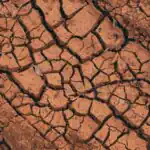
- Desertification: This is the process where fertile land becomes desert, typically as a result of drought, deforestation, or inappropriate agriculture. It reduces agricultural land and can lead to food scarcity.
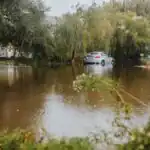
- Flooding: Increased global temperatures lead to melting glaciers and ice caps, contributing to rising sea levels. Extreme weather events also cause heavier rainfall, resulting in rivers overflowing their banks and widespread flooding, displacing communities and destroying infrastructure.
- Drought: Prolonged periods of abnormally low rainfall, leading to water shortage. Droughts severely impact agriculture, water supply, and can lead to famine and displacement of populations.
- Eye Irritation: Increased temperatures and air pollution, often linked to climate change, can worsen air quality. This can lead to higher concentrations of airborne allergens and pollutants, causing eye irritation and other respiratory issues.
- Health Issues linked to Climate Conditions: Climate change contributes to various health problems. These include heat stress, respiratory illnesses due to increased air pollution, spread of vector-borne diseases (like malaria and dengue) due to changes in vector habitats, and mental health issues from climate-related disasters.
Solutions to Climate Change
Addressing climate change requires a combination of individual, community, and governmental efforts focused on reducing greenhouse gas emissions and adapting to the changing climate.
The following are key solutions to climate change:
- Afforestation: This is the process of planting trees in an area where there were no trees previously, creating a new forest. Trees absorb carbon dioxide, a major greenhouse gas, helping to clean the atmosphere.
- Reafforestation: This involves replanting trees in areas that have been deforested or cleared, restoring existing forests. It helps to restore ecological balance and carbon sequestration capacity.
- Zero Carbon Emission: This refers to reducing all greenhouse gas emissions to zero, or offsetting any emissions produced. It involves transitioning to renewable energy sources, improving energy efficiency, and adopting sustainable practices across all sectors.
- Population Reduction Strategies: While a sensitive topic, some strategies suggest that managing population growth through education, family planning, and empowerment can indirectly reduce overall resource consumption and carbon footprint per capita.
- Legislation and Enforcement Measures: Governments can enact laws and regulations to control industrial emissions, promote renewable energy, protect forests, and set carbon emission targets. Strict enforcement of these laws is essential for their effectiveness.
Illustrative Examples and Applications
- Prolonged drought and advancing desert conditions illustrate climate-related pressure in parts of northern Nigeria.
- Sea-level rise and intense rainfall can increase the risk of coastal and urban flooding.
- Reducing deforestation, improving energy efficiency and protecting vegetation are examples of measures that reduce climate-change risks.
Teaching Methods/Instructional Techniques
Discussion, Lecture, Demonstration, Question and Answer, Visual Aids
Instructional Procedures
Step 1: Introduction and Recall
Time: 4 minutes
Teaching Skill: Set Induction
Teacher’s Activity: The teacher greets the students, reviews the previous lesson on the causes of climate change, and introduces the topic for the day: "Climate Change: Consequences and Solutions." The teacher asks students to briefly recall one cause of climate change discussed previously.
Students’ Activity: Students respond to the teacher's greeting, recall a cause of climate change, and listen attentively to the introduction of the new topic.
Learning Point: Prior climate change knowledge.
Step 2: Exploring Consequences of Climate Change
Time: 5 minutes
Teaching Skill: Explanation/Discussion
Teacher’s Activity: The teacher explains the major consequences of climate change, such as desertification, flooding, drought, and related health issues, using photographs, newspaper cuttings, and charts as visual aids. The teacher encourages students to share their understanding and ask questions.
Students’ Activity: Students observe the visual aids, listen to the explanations, ask questions for clarification, and engage in a brief discussion.
Learning Point: Effects of climate change.
Step 3: Local Examples and Discussion
Time: 5 minutes
Teaching Skill: Inquiry/Participation
Teacher’s Activity: The teacher leads a discussion, prompting students to share local examples of flooding, drought, or desert encroachment they may have witnessed or heard about. The teacher guides them to link these examples to climate change.
Students’ Activity: Students actively participate by sharing relevant local examples and discussing how these events relate to climate change.
Learning Point: Local Examples concepts.
Step 4: Introducing Solutions to Climate Change
Time: 5 minutes
Teaching Skill: Explanation/Lecture
Teacher’s Activity: The teacher introduces various solutions to climate change, including afforestation, reafforestation, zero carbon emission, population reduction strategies, and legislation and enforcement measures. The teacher uses charts and documentary clips to illustrate these solutions.
Students’ Activity: Students listen attentively, observe the instructional materials, and take notes.
Learning Point: Climate change solutions explained.
Step 5: Elaboration on Solutions
Time: 5 minutes
Teaching Skill: Explanation/Questioning
Teacher’s Activity: The teacher elaborates on how each solution can help reduce climate change effects, ensuring students understand the mechanisms. The teacher asks questions to check for comprehension.
Students’ Activity: Students listen, ask questions, and answer the teacher's questions, demonstrating their understanding of how solutions work.
Learning Point: Climate change solutions explained.
Step 6: Community and Government Actions
Time: 5 minutes
Teaching Skill: Collaborative Learning/Brainstorming
Teacher’s Activity: The teacher leads students to suggest specific community and government actions that can be taken to implement the discussed solutions. The teacher encourages creative and practical suggestions.
Students’ Activity: Students brainstorm and suggest various actions that individuals, communities, and the government can take to combat climate change.
Learning Point: Community Government Actions.
Step 7: Evaluation/Review
Time: 5 minutes
Teaching Skill: Questioning/Assessment
Teacher’s Activity: The teacher evaluates the learning by asking the following questions:
- Mention three consequences of climate change.
- Explain how desertification impacts people and the environment.
- List two solutions to climate change.
- How can afforestation help reduce the effects of climate change?
Students’ Activity: Students answer orally and in writing, showing working or giving examples where the lesson requires it.
Learning Point: Climate change skills assessed.
Step 8: Note-Taking
Time: 8 minutes
Teaching Skill: Guided Writing
Teacher’s Activity: The teacher guides students to copy the essential Board Summary on climate change into their notebooks, drawing attention to the key rules, examples, diagrams or distinctions already taught.
Students’ Activity: Students copy the essential notes carefully into their notebooks and correct any errors in their earlier work.
Learning Point: Climate change notes recorded.
Step 9: Conclusion
Time: 3 minutes
Teaching Skill: Reinforcement/Summarization
Teacher’s Activity: The teacher summarizes the key learning points on the consequences and solutions to climate change.
Students’ Activity: Students listen to the summary and copy down the homework assignment.
Learning Point: Climate change concepts consolidated.
Continuous Assessment/Further Study
Type: Homework / Map Work
Instruction: Complete the following tasks using the Board Summary, relevant maps or diagrams, and examples from the lesson.
- Prepare a one-page revision note on Consequences of Climate Change, using at least two examples from the Board Summary.
- Draw a labelled diagram, sketch or outline map that illustrates Solutions to Climate Change where appropriate, and add a short explanation.
- Write one examination-style paragraph explaining an important relationship or application in climate change.
- State and explain three key facts about climate change that would be useful in an examination answer.
- State and explain three key facts about climate change that would be useful in an examination answer.
Lesson Keywords
- Desertification – The process by which fertile land becomes desert.
- Flooding – The overflowing of water onto land that is normally dry.
- Drought – A prolonged period of abnormally low rainfall.
- Afforestation – Planting trees in areas where there was no forest before.
- Reafforestation – Replanting trees in areas that have been deforested.
- Zero Carbon Emission – Releasing no carbon dioxide into the atmosphere.
- Legislation – Laws enacted by a legislative body.
Differentiation
The teacher will provide additional support to struggling students by simplifying explanations and using more visual examples. Advanced students will be encouraged to research and present on specific climate change initiatives in Nigeria or globally. Group discussions will allow students of varying abilities to contribute and learn from each other.
Suggested Lesson Videos
Search YouTube for Climate Change, Desertification, Flooding, Drought and Solutions Geography SS 3


Community Join the conversation Open discussion +