


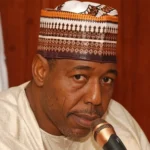
Babangida Umara Zulum has commissioned several major projects aimed at strengthening education access and rebuilding communities affected by insurgency in Borno State.
The projects were unveiled during an event in Maiduguri attended by the World Bank Country Director for Nigeria, Matthew Verghis, who commended the state government for prioritising education and long-term human development.
New Schools to Boost Learning Access
Among the newly commissioned projects are three large schools designed to expand classroom space and improve learning conditions for pupils and students. The schools include a 30-classroom Government Secondary School in Mainusari, Mairi, a 30-classroom Mega Primary School in Maimusari, and a 20-classroom Command Secondary School in Maiduguri.
According to Dr. Verghis, the new schools send a powerful message to communities that education remains a priority even after years of insecurity.
Progress in Reducing Out-of-School Children
Governor Zulum explained that more than 5,000 classrooms were destroyed during the insurgency, contributing to an estimated 2.2 million children being out of school in the state.
To address the crisis, the administration has constructed 104 new schools and rehabilitated 2,931 classrooms across Borno. As a result, the number of out-of-school children has reportedly dropped by over 70 percent, bringing the figure down to fewer than 800,000.
School enrolment has now increased significantly, with more than 1.4 million children currently attending school across the state.
Learning Materials and Student Support
To improve classroom participation, the state government has distributed large quantities of learning resources, including over 20 million exercise books, two million textbooks, 1.5 million school uniforms, and about 700,000 school bags.
Additional programmes introduced by the government include a school feeding initiative benefiting about 50,000 pupils each year and the distribution of 10,000 bicycles to help rural students travel to school more easily.
Skills Development and Alternative Education
Beyond basic education, the state government is investing in skills training through Technical and Vocational Education and Training (TVET) programmes. Five Vocational Enterprise Institutes and three Second-Chance Women and Girls Skills Entrepreneurship Schools have been established, while nine vocational centres have been revived.
The administration is also modernising the Tsangaya education system, with plans to establish Higher Islamic Colleges across the state’s 27 local government areas.
Infrastructure to Support Urban Development
Alongside education projects, the state government commissioned major infrastructure works including the West End Flyover Bridge and several dual carriageway roads such as the Sultan Mainalari Road, Bursari Road, and Shehu Sanda Kura Road.
In total, the projects include 7.44 kilometres of dual carriageways, nearly 15 kilometres of drainage systems, and the state’s third flyover bridge, with additional road and drainage construction ongoing.
Governor Zulum said the initiatives reflect the government’s broader commitment to rebuilding communities and improving opportunities for young people after years of conflict.


Community Join the conversation Open discussion +