


The Lagos State Government has announced a new school feeding initiative that will provide daily nutritional support to about 30,000 pupils in public primary schools across the state.
The programme, known as “Adopt A School for Snacks for Thought – PBAT FEEDS!”, was launched through a partnership between the Lagos State Government and the Renewed Hope National Home-Grown School Feeding Programme. The initiative aims to tackle classroom hunger and improve learning outcomes among primary school pupils.
The programme is scheduled to begin with a pilot phase from June 30 to July 2. During this period, selected pupils will receive nutritious snacks and beverages each school day as part of efforts to enhance their health and academic performance.
A key highlight of the launch was the introduction of a digital dashboard that will help monitor the programme’s implementation. The platform is expected to improve transparency, accountability, and stakeholder participation by providing real-time information on school adoption, sponsorship commitments, and beneficiary data.
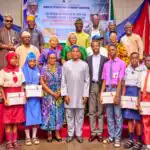
Speaking during the launch event in Ikeja, the National Programme Manager of the Renewed Hope National Home-Grown School Feeding Programme, Aderemi Adebowale, emphasized the importance of proper nutrition in education. She noted that many children come to school eager to learn but are unable to perform at their best because of hunger and inadequate nutrition.
According to her, studies have consistently shown that poor nutrition negatively affects concentration, memory retention, classroom participation, attendance, and overall academic achievement. She stressed that addressing hunger is essential to improving educational outcomes and helping children reach their full potential.
Adebowale explained that the initiative supports the Federal Government’s efforts to strengthen human capital development under the Renewed Hope Agenda. She described school nutrition as more than a welfare programme, calling it a strategic investment in the future productivity and development of the nation.
To encourage broader participation, the programme introduces a school adoption model that allows individuals, companies, alumni associations, faith-based groups, development partners, professional bodies, communities, and government agencies to support schools at different levels.
Under the model, sponsors can choose to adopt a classroom, an entire school, multiple schools, a local government area, a senatorial district, or even a whole state. The digital dashboard will make it easier for supporters to identify schools, access enrolment data, complete sponsorship processes, and track the impact of their contributions.
The Commissioner for Agriculture and Food Systems, Abisola Olusanya, highlighted the programme’s potential to support local farmers who will supply food items for the initiative. She noted that the project would not only improve child nutrition but also create economic opportunities within the agricultural sector.
Similarly, the Commissioner for Basic and Secondary Education, Tolani Ali-Balogun, described the programme as a significant step toward reducing learning poverty and improving academic performance among pupils. He reiterated that children learn better when they have access to adequate nutrition.
The Commissioner for Information and Strategy, Gbenga Omotoso, also commended the initiative, describing it as an investment in the future of Nigerian children. He noted that improved nutrition could boost school attendance and contribute to reducing the number of out-of-school children.
The Lagos State Government expressed optimism that the programme would strengthen ongoing efforts to improve education outcomes and support the overall development of pupils through better access to nutritious food.
As stakeholders continue to seek solutions to educational challenges, initiatives such as this demonstrate the important connection between nutrition, learning, and long-term national development.



Community Join the conversation Open discussion +