

Note for teachers using this lesson plan
This lesson introduces Senior Secondary 1 students to essential terminologies used in livestock production for cattle, goats, sheep, and poultry. Teachers should prepare charts or visual aids displaying different livestock and their associated terms. Emphasise the importance of accurate terminology for effective farm management and communication. By the end of the lesson, students should be able to correctly identify and explain these terms and recognise some challenges in livestock farming.
Class: SS 1
Term: First Term
Week: 3
Age: 15 years
Duration: 60 minutes
Subject: Livestock Farming
Curriculum Theme: Livestock production mind-set
Focal competence: Recognize the value of livestock production and identify terminologies used in livestock production
Key competencies/values: Communication; ICT and Digital Competencies; Digital Competencies
Skills:
- identify the challenges associated with livestock production
Previous Lesson: Challenges in livestock production
Topic: Concepts And Terminologies In Livestock Production: Terminologies Used In Livestock Production (I)
Subject Matter: Terminologies used in livestock production
Specific Objectives
By the end of the lesson, pupils/students should be able to:
Cognitive Domain
- Define common terminologies for cattle, goats, sheep, and poultry.
- Identify common terminologies for cattle, goats, sheep, and poultry from charts.
- State the observable characteristics associated with each livestock terminology.
- Explain the practical management significance of various livestock terminologies.
- Identify challenges associated with livestock production.
Affective Domain
- Appreciate the importance of using correct terminologies in livestock farming.
- Value the role of livestock production in the economy.
Psychomotor Domain
- Classify livestock based on their terminologies using provided charts.
- Observe and discuss the characteristics of different livestock categories.
Social Domain
- Discuss in groups the importance of livestock production.
Reference Materials
The following resources were used in planning this lesson:
- 2025 New Revised Senior Secondary Education Curriculum (SSEC)
- Relevant State Unified Scheme of Work
- Agricultural Science for Senior Secondary Schools textbook
- The HeadTeacher Scheme of work For The New Revised Senior Secondary Education Curriculum (SSEC)
Instructional Materials
The teacher will teach this lesson with the aid of:
- Charts showing different livestock animals (cattle, goats, sheep, poultry) and their associated terminologies.
- Pictures or video clips of livestock farms/markets.
- Whiteboard and markers.
- Textbooks on Livestock Farming/Agricultural Science.
Rationale for the Lesson
Understanding correct livestock terminology is fundamental for effective communication and management in animal husbandry. This lesson equips students with the precise vocabulary needed to describe different ages, sexes, and states of farm animals. This knowledge is essential for accurate record-keeping, breeding programs, and overall efficient livestock production, preparing students for future careers in agriculture.
Prerequisite/Previous Knowledge
Students should have basic knowledge of common farm animals and their general importance in agriculture.
Lesson Content/Board Summary
Concepts And Terminologies In Livestock Production: Terminologies Used In Livestock Production (I)
Introduction to Livestock Terminology
Livestock terminology refers to the specific words used to describe different farm animals based on their species, age, sex, and reproductive status. Using correct terminology is crucial for clear communication among farmers, veterinarians, and agricultural experts, aiding in proper management, breeding, and record-keeping.
Terminologies for Cattle (Bovine)
Cattle are large domesticated ruminant animals raised for meat, milk, hide, and draught power. Key terms include:
- Bull: An adult male cattle, usually uncastrated and used for breeding. Its observable characteristics include a muscular build, large size, and often aggressive temperament. Management significance involves its role in herd reproduction.
- Cow: An adult female cattle that has given birth at least once. Cows are primarily raised for milk production or breeding calves.
- Heifer: A young female cattle that has not yet given birth. Heifers are typically raised to become future cows.
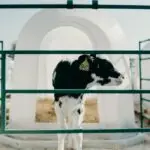
- Calf: A young cattle of either sex, usually under one year old. Calves are dependent on their mothers for milk.
- Steer: A male cattle that has been castrated, typically raised for beef production. Castration makes them more docile and improves meat quality.
- Ox: A castrated male cattle, usually trained and used for draught work (pulling carts or ploughs).
- Herd: A group of cattle.
Terminologies for Goats (Caprine)
Goats are small ruminants kept for milk, meat, fiber, and skins. Key terms include:
- Buck (or Billy): An adult male goat. Bucks are known for their strong odour, especially during breeding season. Management significance includes their role in breeding.
- Doe (or Nanny): An adult female goat. Does are raised for milk production and breeding kids.
- Kid: A young goat of either sex, typically under one year old. Kids are born relatively small and grow quickly.
- Wether: A male goat that has been castrated, usually raised for meat. Castration helps in managing aggression and improving meat quality.
- Herd: A group of goats.
Terminologies for Sheep (Ovine)
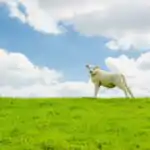
Sheep are domesticated ruminants typically raised for wool, meat (lamb and mutton), and milk. Key terms include:
- Ram (or Tup): An adult male sheep. Rams are known for their strong build and often possess horns. They are used for breeding.
- Ewe: An adult female sheep. Ewes are raised for breeding lambs and wool production.
- Lamb: A young sheep of either sex, usually under one year old. Lambs are highly dependent on their mothers for milk and care.
- Wether: A male sheep that has been castrated, primarily raised for meat (mutton) or wool. Castration makes them more docile.
- Flock: A group of sheep.
Terminologies for Poultry (Avian)
Poultry refers to domesticated birds kept by humans for their eggs, meat, or feathers. Common poultry include chickens, turkeys, ducks, and geese. Key terms for chickens include:
- Cock (or Rooster): An adult male chicken. Roosters are known for their crowing and aggressive behaviour. They are kept for breeding.
- Hen: An adult female chicken that lays eggs. Hens are the primary egg producers on a farm.
- Chick: A young chicken, typically newly hatched up to a few weeks old. Chicks require warmth and special care.
- Pullet: A young female chicken, usually less than one year old, that has not yet started laying eggs. Pullets are raised to become laying hens.
- Cockerel: A young male chicken, usually less than one year old. Cockerels are raised for meat or to become future roosters.
- Broiler: A chicken specifically bred and raised for meat production, typically slaughtered at a young age.
- Layer: A chicken specifically bred and raised for egg production.
- Flock: A group of poultry.
Challenges Associated with Livestock Production
Livestock production faces several challenges that can affect profitability and sustainability:
- Diseases and Pests: Outbreaks of diseases (e.g., Foot and Mouth Disease, Avian Influenza) and infestations by pests (e.g., ticks, flies) can lead to significant animal losses and reduced productivity.
- Feed Scarcity and Cost: Availability and high cost of quality feed are major challenges, especially during dry seasons or in areas with limited grazing land.
- Poor Management Practices: Inadequate housing, improper feeding, poor sanitation, and lack of veterinary care can lead to low productivity and high mortality rates.
- Climate Change: Extreme weather conditions like droughts, floods, and heat stress can negatively impact animal health, pasture availability, and water sources.
- Market Access and Price Fluctuations: Farmers often struggle with poor road networks, lack of storage facilities, and unstable market prices for their livestock products.
- Lack of Capital: Insufficient funds for purchasing quality breeds, modern equipment, feed, and veterinary services can hinder expansion and improvement.
- Theft and Insecurity: Livestock theft is a significant problem in many regions, leading to financial losses for farmers.
Teaching Methods/Instructional Techniques
Discussion, Explanation, Question and Answer, Group Work, Visual Aids (Charts/Pictures), Guided Practice
Instructional Procedures
Step 1: Introduction
Time: 5 minutes
Teaching Skill: Activating Prior Knowledge
Teacher’s Activity: The teacher greets the students and asks them to name some animals commonly raised on farms in Nigeria and their uses. The teacher then introduces the topic: “Terminologies Used In Livestock Production.”
Pupils’ Activity: Pupils respond by naming animals like cows, goats, chickens, and stating their uses (e.g., meat, milk, eggs).
Learning Point: Farm animals and uses
Step 2: Identification of Cattle Terminologies
Time: 10 minutes
Teaching Skill: Visual Identification/Explanation
Teacher’s Activity: The teacher displays charts showing cattle and guides students to identify and define terms like bull, cow, heifer, calf, steer, and ox. The teacher explains the characteristics and management significance of each term.
Pupils’ Activity: Pupils observe the charts, identify the animals, and participate in defining the terms, noting their characteristics.
Learning Point: Cattle terminologies identified
Step 3: Identification of Goat Terminologies
Time: 8 minutes
Teaching Skill: Guided Discussion
Teacher’s Activity: The teacher moves to charts showing goats and guides students to identify and define terms such as buck, doe, kid, and wether. The teacher encourages students to discuss the differences and uses of each category.
Pupils’ Activity: Pupils identify goat terminologies and discuss their characteristics and uses in groups.
Learning Point: Goat terminologies discussed
Step 4: Identification of Sheep Terminologies
Time: 8 minutes
Teaching Skill: Comparative Analysis
Teacher’s Activity: The teacher presents charts on sheep and guides students to identify and define terms like ram, ewe, lamb, and wether. The teacher highlights similarities and differences with goat terminologies.
Pupils’ Activity: Pupils identify sheep terminologies, compare them with goat terms, and state their significance.
Learning Point: Sheep terminologies distinguished
Step 5: Identification of Poultry Terminologies
Time: 8 minutes
Teaching Skill: Categorisation/Explanation
Teacher’s Activity: The teacher uses charts or pictures of poultry (chickens) to guide students in identifying and defining terms like cock, hen, chick, pullet, cockerel, broiler, and layer. The teacher explains their specific roles in poultry production.
Pupils’ Activity: Pupils identify poultry terminologies and learn their specific roles and characteristics.
Learning Point: Poultry terminologies learned
Step 6: Discussing Challenges in Livestock Production
Time: 6 minutes
Teaching Skill: Brainstorming/Problem-Solving
Teacher’s Activity: The teacher initiates a discussion on challenges faced by livestock farmers, drawing from students’ prior knowledge or observations from simulated farm visits (pictures/videos). The teacher guides them to identify key challenges.
Pupils’ Activity: Pupils contribute ideas and identify various challenges associated with livestock production.
Learning Point: Livestock production challenges
Step 7: Evaluation/Review
Time: 5 minutes
Teaching Skill: Questioning/Assessment
Teacher’s Activity: The teacher evaluates the learning by asking the following questions:
- Define a “heifer” and a “pullet.”
- What is the difference between a “buck” and a “ram”?
- Name two challenges faced by livestock farmers.
- Why is it important to use correct livestock terminology?
Pupils’ Activity: Pupils answer orally and in writing.
Learning Point: Understanding livestock terms
Step 8: Note-Taking
Time: 10 minutes
Teaching Skill: Guided Writing
Teacher’s Activity: The teacher guides pupils/students to copy the essential Board Summary notes on livestock terminologies and challenges into their notebooks.
Pupils’ Activity: Pupils/students copy the notes carefully into their notebooks.
Learning Point: Recording lesson notes
Step 9: Conclusion
Time: 5 minutes
Teaching Skill: Summarisation
Teacher’s Activity: The teacher summarises the key terminologies learned for cattle, goats, sheep, and poultry, reiterating their importance and briefly touching on the challenges in livestock farming. The teacher encourages students to observe these animals in their communities.
Pupils’ Activity: Pupils listen attentively and ask any final clarifying questions.
Learning Point: Terminologies reinforced
Continuous Assessment/Further Study
Type: Homework/Further Reading
Instruction: Research and write down the terminologies for pigs and rabbits, including their sex, age, and reproductive status. Also, suggest two possible solutions to any two challenges of livestock production discussed in class.
- List five terminologies for pigs and five for rabbits.
- For each terminology, state its meaning (e.g., age, sex).
- Choose two challenges of livestock production discussed in class.
- For each chosen challenge, suggest one practical solution.
Lesson Keywords
- Bull – Adult male cattle
- Cow – Adult female cattle that has given birth
- Heifer – Young female cattle before first calving
- Calf – Young cattle
- Buck – Adult male goat
- Doe – Adult female goat
- Kid – Young goat
- Ram – Adult male sheep
- Ewe – Adult female sheep
- Lamb – Young sheep
- Cock/Rooster – Adult male chicken
- Hen – Adult female chicken that lays eggs
- Chick – Young chicken
- Pullet – Young female chicken before laying
- Cockerel – Young male chicken
- Wether – Castrated male goat or sheep
- Steer – Castrated male cattle
Differentiation
For students who grasp concepts quickly, encourage them to research additional livestock terminologies for other animals like pigs or rabbits. Provide struggling students with simplified charts or flashcards for repetitive identification and definition practice, focusing on the most common terms first.
Suggested Lesson Videos
YouTube search for livestock terminology cattle goats sheep poultry SS1
Community Join the conversation Open discussion +